Cast Iron or Carbon Steel: Which Pan Is Right for Your Kitchen?
If you love your cast iron, thinking about adding a carbon steel pan can make you question how they differ in seasoning and care. I’ve used both for years, and comparing them comes down to a few practical points that affect your cooking every day.
- How the weight and heat retention of cast iron stacks up against carbon steel’s lighter feel and responsiveness.
- Why seasoning both pans is similar but not identical, and what that means for your maintenance routine.
- The best cooking jobs for each pan, from slow braises in cast iron to quick stir-fries in carbon steel.
- My personal take on when to grab the cast iron from my rack and when carbon steel is the smarter choice.
How to Spot Cast Iron vs. Carbon Steel at a Glance
Walking into a kitchen shop, two black pans might look identical. Pick them up, and the truth becomes clear. The cast iron piece will feel like a dense, solid ingot in your hand. The carbon steel pan will be noticeably lighter, more like a sturdy stainless steel skillet.
The weight difference comes directly from how they’re made: cast iron is poured molten into a mold, allowing for thick walls, while carbon steel is stamped and rolled from a sheet of steel, resulting in a much thinner profile. Run your finger across the cooking surface. A modern cast iron skillet often has a textured, pebbly finish straight from the factory, while carbon steel typically starts with a smoother, more uniformly metallic feel.
Your ears can help, too. Give the pan a gentle tap with your fingernail. A carbon steel pan will produce a clear, high-pitched *ping* that rings for a moment. A cast iron pan answers with a dense, low *thud* with almost no resonance. Finally, look at the handle. While cast iron handles are usually one solid piece with the pan, carbon steel handles are often long, slender, and riveted on, designed to stay cooler for tossing food.
Why Weight and Heat Behavior Are the Biggest Dividers
This isn’t just about muscle versus ease. The weight defines how each pan manages heat, which changes everything about how you cook with it.
Think of cast iron as a heat battery. It takes a while to charge up, but once hot, it holds that energy stubbornly and distributes it evenly across its surface. That lingering heat invites a closer look at why cast iron holds heat so well. Thermodynamics explains it in terms of high heat capacity and slow, gradual heat transfer to the surface. Carbon steel acts more like a heat conduit. It transfers heat from your burner to your food rapidly, but it doesn’t store much energy itself. I like to say my cast iron skillets are like a slow, steady freight train-hard to get moving, hard to stop. My carbon steel wok is like a nimble sports car, ready to accelerate or brake on a dime.
This leads to two different mindsets in the kitchen: with cast iron, you plan ahead to avoid cold spots, and with carbon steel, you stay attentive to manage quick temperature swings.
What the Heft of Cast Iron Gets You
That incredible thermal mass is why a cast iron skillet gives you a peerless sear on a steak. It doesn’t flinch when you add a cold piece of meat; the pan’s temperature barely dips, creating that perfect crust. This same property makes it fantastic for dishes that start on the stovetop and finish in the oven, like frittatas or cornbread. The pan stays consistently hot from burner to oven.
The trade-off is time. You need to preheat cast iron low and slow for several minutes to ensure even heating. It also holds heat for a long time after you turn the burner off, so you must use a trivet and remember it will stay hot on your counter.
Where Carbon Steel’s Responsiveness Shines
Carbon steel heats up in about a minute. This makes it the champion for techniques that need instant, high heat and quick adjustments, like searing scallops, making a stir-fry, or cooking a French omelet. You can change the temperature of the pan almost as fast as you can turn your burner knob.
This responsiveness requires a bit of technique. Because the metal is thinner, it can develop hot spots if your burner flame is too small for the pan’s base. For best results, match your carbon steel pan to a burner that covers most of its bottom to ensure even heating.
The Seasoning Story: A Shared Bond with a Subtle Twist
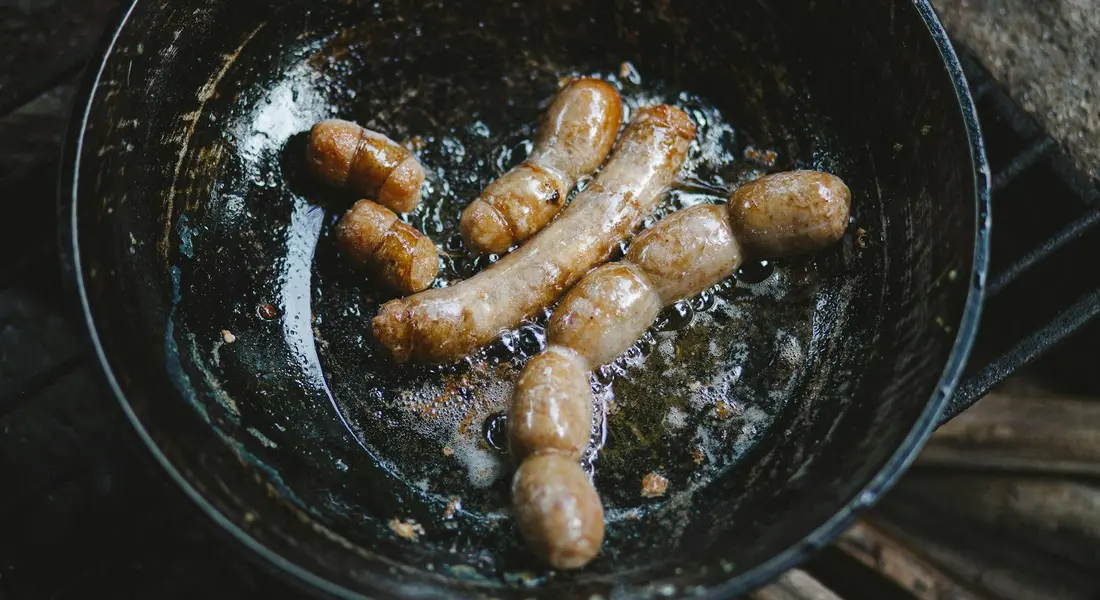
Think of seasoning as building up thin, durable coats of paint. For both cast iron and carbon steel, the “paint” is polymerized oil. You apply a whisper-thin layer of oil and heat it past its smoke point. This transforms the liquid oil into a hard, slick coating bonded to the metal. This process creates the non-stick surface you love and provides the primary defense against rust. From a chemistry perspective, seasoning relies on polymerization—the oil molecules link to form a durable, non-stick film on the cast iron. This polymerized layer is what gives the surface its slick feel and rust resistance.
The main difference isn’t in the chemistry, but in the canvas. Carbon steel’s surface is generally much smoother from the start, like a fine-grit sandpaper. This smoothness allows that polymerized oil to form an even, glassy patina often a bit quicker. My carbon steel skillet felt slick after just a few uses. Cast iron has a more textured surface, like a rugged pebble finish. That texture holds oil wonderfully, but building that initial, perfectly even layer can feel more gradual. Carbon steel and cast iron have their unique characteristics, but both can develop a lovely patina with care.
Both are champions at developing a better non-stick surface over a lifetime of use. The benefits of mastering this process apply to your entire kitchen arsenal.
Is the Initial Seasoning Process Different?
The core ritual is virtually identical. If you can season one, you can season the other. The fundamental rules never change: use a thin layer of a high-smoke-point oil and apply enough heat to polymerize it. Where you might find a small twist is in the very first step.
New carbon steel pans are often coated in a thick, clear factory wax to prevent rust during shipping. This isn’t seasoning, and it must be completely removed. You’ll need to scrub it off with very hot, soapy water and a scouring pad. Cast iron typically arrives either preseasoned or with a light coating of food-grade wax that washes off easily.
Once the metal is bare and clean, the oven method is the same for both. This side-by-step list shows how their care aligns from day one.
| Step | Cast Iron | Carbon Steel |
|---|---|---|
| 1. Initial Clean | Wash with warm, soapy water to remove any storage coating. | Scrub vigorously with hot, soapy water to remove factory wax coating. |
| 2. Dry Thoroughly | Dry with a towel, then heat on the stovetop to evaporate all moisture. | Dry with a towel, then heat on the stovetop to evaporate all moisture. |
| 3. Apply Oil | Apply a tiny amount of oil, then buff aggressively until it looks dry. | Apply a tiny amount of oil, then buff aggressively until it looks dry. |
| 4. Bake | Place upside-down in a 450°F+ oven for 1 hour. Let cool in oven. | Place upside-down in a 450°F+ oven for 1 hour. Let cool in oven. |
| 5. Repeat | Repeat steps 3 and 4 for 2-3 layers for a strong base. | Repeat steps 3 and 4 for 2-3 layers for a strong base. |
See? The same steps build the same protective layer. Your technique doesn’t need to change.
Daily Care and Feeding: Routines for Two Similar Pets
Maintaining these pans is less about complicated routines and more about consistent, simple habits. Think of them like two similar pets. They thrive on the same care but might prefer a slightly different brush. The golden rule for both is universal: clean while the pan is still warm, dry it completely, and sometimes apply a microscopic coat of oil.
This consistent maintenance prevents 99% of common problems and makes rust removal a rarity in your kitchen.
How to Clean Them Without Harming the Seasoning
Let’s settle this first. Modern dish soap is perfectly safe for both cast iron and carbon steel seasoning. The old myth comes from a time when soap contained lye, which would strip seasoning. Today’s mild soaps won’t hurt that polymerized oil layer. Don’t let food bits fester for fear of soap.
For cleanup, use warm water, a gentle sponge, and a drop of soap if you used it. For stuck-on food, your tool of choice might differ. The rugged surface of cast iron is a perfect match for a chainmail scrubber, which knocks off crusty bits without damaging the seasoned surface. For the smoother finish of carbon steel, a stiff nylon brush or even a handful of coarse salt often does the trick without being as abrasive.
The Critical Step They Both Share: Preventing Rust
This is the single most important habit. Both materials will rust if left damp. Towel-drying is a good start, but it’s rarely enough. Water hides in the pores of the iron and the rivets of the handle.
The only way to be absolutely sure your pan is dry is to apply gentle heat. After washing and towel-drying, clean and maintain your cast iron skillet by placing it on a stovetop burner over low to medium heat for a few minutes. You’ll see any remaining moisture evaporate. Once the pan is warm to the touch and completely dry, you can turn off the heat. If the seasoning looks dry or you live in a humid climate, you can then apply a drop of oil and buff it in while the pan is warm. This stovetop dry method is your best defense, ensuring your maintenance routine keeps rust at bay for good.
Choosing Your Champion: A Practical Kitchen Checklist

Think of your cookware like tools in a workshop. You wouldn’t use a sledgehammer to drive a small nail, and you wouldn’t use a finishing hammer to break up concrete. Picking the right pan works the same way. Forget about which one is objectively “better.” The real question is: which one is better for you right now?
I keep both in my kitchen because they do different jobs. Here’s a simple way to decide.
| Your Cooking Goal | Cast Iron’s Strength | Carbon Steel’s Strength |
|---|---|---|
| Heavy-Duty Searing & Baking (e.g., steak, cornbread, frittata) |
Superb. Its mass holds intense, even heat for a perfect crust. Goes straight from stove to oven. | Good for searing, but can have slight hot spots. Oven-safe, but lighter weight means less thermal mass for baking. |
| Fast, Agile Cooking (e.g., stir-fry, omelet, crepe, dosa) |
Slower to heat and very heavy to lift and toss food. Can work, but is not ideal. | Excellent. Heats quickly, has sloped sides for tossing, and is much lighter for wrist action. |
| Maintenance & Care | Very forgiving. Thick seasoning builds over time. More resistant to thermal shock. | Requires a bit more finesse. Seasons faster but can be prone to warping if heated too aggressively empty. |
| Physical Handling | Heavy. A 12-inch skillet is a serious arm workout. | Noticeably lighter. Easier to pour from and maneuver. |
Get a cast iron skillet if your kitchen style leans toward foundational, one-pan meals where you build flavors and want a tool that doubles as bakeware. It’s the tank. My oldest lodge lives on the stove for searing chops and finishing in the oven.
Choose a carbon steel pan if speed and agility are your priorities, like whipping up a quick vegetable stir-fry or a delicate French omelet. It’s the nimble workhorse. This is why you see so many recommendations for carbon steel for making dosa or crepes on cooking forums; the quick, even heat and lightweight design are perfect for it.
Consider owning both if you have the space and want the ultimate flexibility. I use my cast iron for deep searing and baking, and my carbon steel for almost everything else that requires speed or a lighter touch. They complement each other perfectly. If you’re weighing cast iron vs carbon steel skillets, which is right for you depends on your cooking style and maintenance preferences. I’ll break down the key differences in the next section.
When Things Go Wrong: Troubleshooting for Both Pans
The beautiful part about these pans is that almost every problem has the same solution. Don’t panic if you see rust or a sticky patch. I’ve brought back pans that looked like they were pulled from a creek. If rust appears, don’t panic—re-season the pan. Keep using it regularly to maintain the seasoning.
For both materials, the maintenance mantra is: clean it, dry it, oil it.
- Sticky Residue: This usually means leftover food or oil polymerized onto the surface. Scrub it off with a paste of coarse salt and a drop of water, or use a chainmail scrubber. Rinse, dry completely, and apply a thin layer of oil.
- Rust: Surface rust is not the end. Scrub the area vigorously with vinegar or a dedicated rust remover until the bare metal is clean, then immediately dry and re-season the spot.
- Flaking Seasoning: If a patch of your black coating is peeling up, that area needs reconditioning. You don’t always need to strip the whole pan. Scrub the flaky area back to bare metal, then re-season it through a few oven cycles.
One quirk unique to carbon steel: it can develop colorful blotches or a blueish-purple hue when subjected to very high heat. This is called “bluing” and is completely normal. It’s a visual sign of the steel tempering and does not affect performance or mean your pan is damaged. Just season over it.
Is Sticking or Flaking a Sign of a Bigger Problem?
Not usually. Most sticking is a simple fix. It often means you need a bit more cooking fat for that particular food, or your overall seasoning layer is still young and needs more cooking to build up.
You can tell a true seasoning failure from a simple thin spot by how the surface looks and feels. A thin spot might look lighter or feel slightly rough, but food releases with a gentle nudge. True failure looks like cracking paint or shows visible rust underneath the flake. The metal feels exposed and food bonds to it aggressively.
If only a small area is problematic, spot-treat it. For widespread failure, a full strip and re-season is the best, most permanent fix. It’s not a setback. It’s a fresh start, and both cast iron and carbon steel can handle dozens of these fresh starts over a lifetime.
Common Questions

Is cast iron more forgiving than carbon steel when it comes to maintenance?
Yes, absolutely. Its sheer mass makes it resistant to warping from rapid temperature changes, a common carbon steel concern. The textured surface also holds seasoning tenaciously, so minor scratches or scrapes are less critical. Just stick to the core routine: clean it, dry it completely with heat, and you’re set.
How often should I re-season my cast iron skillet?
For a pan used regularly, a full oven re-seasoning is rarely needed. You should only do this if the seasoning is flaking off or you’ve stripped it due to rust. For daily upkeep, a quick wipe with a micro-thin layer of oil after the stovetop dry is perfect maintenance. Your primary seasoning comes from simply cooking with it.
What’s the best way to store cast iron to prevent rust?
Always store it completely dry and in a place with good air circulation. I keep mine in a dry cabinet, sometimes with a single paper towel inside to absorb any ambient moisture. Avoid sealing it in an airtight bag or container where humidity can get trapped against the metal.
The Lasting Value of a Well-Maintained Cast Iron Skillet
Pick cast iron when you need a pan that holds heat for even searing and forgiving, slow cooking. Your main job is to keep it seasoned by using it often and drying it thoroughly after washing. From there, learning about initial seasoning or handling heat spots can build your confidence.
Citations and Authoritative Sources
- r/Cooking on Reddit: Cast iron vs carbon steel vs stainless steel
- Carbon Steel vs. Cast Iron: Which One Should You Buy?
- Carbon Steel or Cast Iron? Your FAQs Answered – Smithey Ironware
- Carbon Steel: How Does It Compare To Cast Iron? – The Stone Soup Cook
Joseph Gerald
A material science expert by profession, Joseph is also an avid cook. He combines his 10+ years expertise in material science and metallurgy with his passion for cast iron cookware to bring you best hands on advice. His expertise ranges from types of cast iron cookware to best seasoning tips as well as restoration of vintage cast iron utensils. Joe is here to help you solve all your cast iron cookware queries and questions.