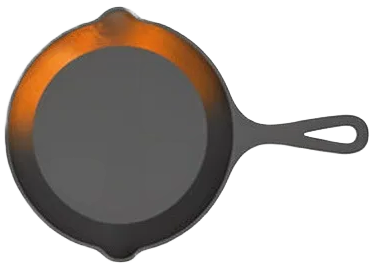
How Do You Season a New Lodge Cast Iron Skillet?
You just pulled a shiny new Lodge skillet from its box, but that thin, factory pre-seasoning might leave you wondering what to do next. Taking the time to season it yourself transforms it from a generic tool into your own durable, non-stick kitchen workhorse.
This guide walks you through the entire process, from that first wash to the final bake. Here’s what we’ll cover:
- Why your pre-seasoned Lodge skillet needs a boost from your own oven.
- The one best oil for the job and how to apply it the right way.
- My tried-and-true, step-by-step oven seasoning method.
- The single most common mistake people make and how to avoid it.
- How to test your new seasoning and keep it improving for years.
Does a New Lodge Skillet Really Need Seasoning?
The short answer is yes, you should season it. The longer, more helpful answer is that Lodge’s factory seasoning is a fantastic head start, but it’s not the finish line. Think of it as a gift of time saved, not a completed job.
Your goal with a home seasoning session isn’t to strip away what’s there, but to build upon it for your own cooking style and kitchen. The factory coat prevents rust on the store shelf. Your added layers create a slick, custom cooking surface that gets better every time you use it.
This directly answers the common search, “do I need to season my lodge cast iron”. You don’t *need* to in an emergency, but you absolutely *should* for superior performance. The factory seasoning is like a primer coat on a wall. It’s a necessary base that protects the iron, but you still want to add your own durable, smooth top coats of paint.
What the Factory Finish Does (and Doesn’t Do)
Lodge pre-seasons its pans by spraying them with a thin layer of soybean oil and baking them. This process, called polymerization, hardens the oil into a plastic-like coating bonded to the metal.
This baked-on layer does one job very well: it stops the bare iron from rusting between the factory and your home. It’s a durable, food-safe finish right out of the box.
Its limitation is that it’s a single, industrial application. It can be a bit thin and textured. When you start cooking, especially with acidic foods or proteins like eggs, this lone layer can wear unevenly. You might notice some initial sticking, which is perfectly normal and your cue to add more of your own seasoning.
What Helped Me: The First Bacon Test
I remember the first time I used a brand-new Lodge skillet. I was so excited I threw some bacon in right away. While it cooked fine, I was left with a patchy pan where the bacon had been. Little bits stuck, and the beautiful black finish looked dull and uneven in those spots. That moment made me curious about how to clean and maintain it after cooking. I soon learned that proper care would restore the sheen and keep the seasoning intact.
That experience taught me that the factory finish is a shield for shipping, not a perfected non-stick surface for cooking. One round of home seasoning after that made all the difference. The next batch of bacon slid right out, and the pan’s appearance was uniform and rich.
Gathering Your Simple Seasoning Toolkit
You don’t need specialty gear. The essentials are likely already in your kitchen:
- Your new Lodge skillet
- A high-smoke point oil or fat
- A lint-free cloth (more on this below)
- An oven
Choosing your oil is where most questions arise. The key is the smoke point. You need to heat the oil past this point so it breaks down and polymerizes. Different oils have different strengths.
For beginners, I recommend simple Crisco or grapeseed oil-they are forgiving and effective. You’ll see advice on “cast iron seasoning crisco temperature”; aim for 375°F to 400°F for about an hour. While commercial seasoning pastes and sprays exist, a basic kitchen oil is simpler, cheaper, and just as good—especially compared to other options for seasoning cast iron.
The One Tool You Shouldn’t Use
Avoid standard paper towels. They are my number one frustration in the workshop. As you rub oil into the warm pan, paper towels disintegrate and leave behind a film of tiny lint particles.
These lint bits bake into your new seasoning layer, creating a rough, speckled surface that food can stick to. Instead, use a piece of lint-free cotton cloth, an old t-shirt, or those sturdy blue shop towels from the hardware store. They hold up to the heat and pressure without leaving a mess behind.
The Step-by-Step Seasoning Process

Seasoning your new pan is not a complex science project. Think of it as a simple, meditative kitchen ritual. You are not building a rocket, you are building a protective layer, one thin coat at a time.
Step 1: The Initial Scrub and Dry
Your new Lodge skillet comes with a factory-applied seasoning coat. This is a great start, but the pan has been handled and packaged, so it needs a quick clean. Wash it with warm water, a dab of dish soap, and a non-abrasive scrub brush or sponge. After cleaning, follow the clean, season, and maintain routine to protect the seasoning and keep your skillet in top cooking shape. It sets you up for a longer-lasting, well-seasoned pan.
Dry it immediately and completely with a towel. This next part is non-negotiable. To guarantee absolute dryness, place the pan on a stovetop burner over low heat for 2-3 minutes. This heat drives off every trace of water that your towel missed, and a perfectly dry surface is the only foundation for good seasoning.
Step 2: Applying the Oil Coat (The “Wipe On, Wipe Off” Dance)
With your pan warm and dry, pour about a half-teaspoon of your chosen oil onto it. Using a paper towel or cloth, rub the oil over every single surface, inside, outside, and handle.
Now, get a fresh, clean cloth or paper towel. This is the crucial part. Buff the entire pan again, wiping off as much oil as you possibly can. Act as if you are trying to completely remove the oil you just put on; your pan should look barely oiled and completely matte, not shiny or wet. Any oil left sitting on the surface will become sticky during baking.
Step 3: The Polymerization Bake
Place your oven rack in the middle position and preheat your oven to 450°F. Place your oiled skillet upside down on the rack. I always put a sheet of aluminum foil on the rack below to catch any microscopic drips.
Bake the pan for one hour, then turn the oven off. Let the pan cool completely inside the oven as it cools down. Do not rush this. The magic of seasoning happens when oil is heated past its smoke point, a process called polymerization, where the liquid oil transforms into a hard, slick coating. This is the core of the season cast iron oven temperature time process. When done correctly, the timing and heat ensure the coating polymerizes into a durable, slick finish. A temperature between 450°F and 500°F reliably achieves this for most common seasoning oils.
Step 4: Repeating for a Strong Foundation
One coat is a start, but it’s thin and fragile. For a new pan, I always do at least two, and ideally three, complete cycles of this oil-and-bake process. Think of building your seasoning like applying thin coats of varnish to wood; multiple light layers create a far more durable and even finish than one thick, gloppy coat. This foundational work pays off with a skillet that performs better and is easier to maintain from its very first use.
Fixing Common New-Pan Seasoning Issues
If your first seasoning attempt didn’t look like the glossy picture in your head, don’t worry. These hiccups are normal and, more importantly, they are all easy to fix.
Why Is My Newly Seasoned Skillet Sticky or Gummy?
This is the most common issue by far. It has one primary cause: too much oil was left on the pan before it went into the oven. The excess oil couldn’t fully polymerize and instead became a tacky, semi-cured layer.
The fix is simple-gently scrub the sticky spots with a paste of coarse salt and a drop of water, which acts as a mild abrasive, then wipe it clean, dry it thoroughly, and apply one new, very thin coat of oil. This time, remember the “wipe on, wipe off” dance. Your pan should look dry before it heats up.
Dealing with Patchy or Splotchy Seasoning
You might notice your new seasoning looks uneven-darker in some spots, lighter in others, or even a little bronze-colored. This is completely normal, especially on the rough texture of a new Lodge skillet. The oil may polymerize slightly differently across the surface.
Uneven color does not mean the seasoning has failed; it will smooth out and darken beautifully with regular cooking and stovetop seasoning. Do not strip the pan and start over. Just start cooking with it. The only time you need to intervene is if those splotchy areas are sticky to the touch, in which case you should address the stickiness as described above.
Can You Use Wax or Special Compounds?
You might see references to “cast iron seasoning wax” or specialty blends. These products are fantastic for one job: long-term storage. They create a heavier barrier against humidity to prevent rust on pans you won’t use for months.
For the cooking surface of a skillet you plan to use regularly, stick with pure, food-safe oils like grapeseed, canola, or flaxseed. They polymerize correctly with heat to create your cooking surface. Think of the wax as a winter coat for storage, and your thin layers of cooking oil as the daily wear that forms the actual non-stick patina.
Caring for Your Freshly Seasoned Lodge Skillet
Your pan now has a great foundation, but that new layer needs protection. Think of your skillet like a new leather boot. It’s tough, but you need to break it in and care for it to reach its peak performance. The goal is to build on what you’ve started, not start over.
How to Clean It Without Hurting the Seasoning
Cleaning is the most important habit for maintaining your pan. You want to remove food, not seasoning. I clean my daily driver right after dinner, while it’s still warm. After cooking, I follow a quick post-use routine to keep the seasoning intact. A complete post-use guide for cleaning your cast iron pan can walk you through the steps.
- Let the pan cool slightly, then rinse it under hot water.
- Use a soft brush, sponge, or chainmail scrubber for stuck bits. For gentle cleaning, coarse salt and a paper towel work wonders.
- Modern dish soap is perfectly safe. The old rule about avoiding soap applied to lye-based soaps, which haven’t been common for decades.
- Dry the pan immediately and completely with a towel.
- Place it on a warm stove burner for one minute to evaporate any hidden moisture.
- Apply a micro-thin coat of your seasoning oil to the entire cooking surface with a paper towel, then buff it off like you’re trying to remove it all. This leaves a protective film.
This post-cook routine of clean, dry, and oil is what builds a durable, non-stick patina over time.
How to Know When It’s Time to Re-Season
Your skillet will tell you when it needs help. Re-seasoning isn’t a failure, it’s routine maintenance. I often touch up just the cooking surface of my favorite skillet every few months.
Watch for these signs:
- Food sticks persistently, even with proper preheating and oil.
- You see dull, grayish metal showing through the black seasoning.
- You spot any orange or reddish rust specks.
Re-seasoning is simply repeating the oven process you just learned, often only on the problem area. For a small patch of bare iron or rust, scrub the spot with vinegar and steel wool, dry it, then apply oil and bake. You don’t always need to strip and re-season the entire pan. If rust appears, address the spot promptly and re-season as needed. Then keep using the pan regularly to maintain its seasoned surface.
Common Questions
What’s the difference between a seasoning wax and a cooking oil for seasoning?
Seasoning waxes and compounds are designed for creating a thick, protective barrier for long-term storage to prevent rust. For building and maintaining the actual cooking surface on a skillet you use regularly, a pure cooking oil like grapeseed or canola is the correct choice. The oil polymerizes into a hard, slick patina with heat, while a wax is more like a preservative coating.
Are commercial seasoning sticks or sprays better than basic kitchen oil?
Not necessarily. These products offer convenience and consistency, but a simple, food-safe oil from your pantry works just as well. Their main advantage is that they are formulated to be applied thinly, which is the key to success. For most caretakers, a basic oil and a diligent “wipe-on, wipe-off” technique is the most practical and cost-effective method.
Why is the specific polymerization temperature so critical?
Heating the oil past its smoke point is the non-negotiable chemical trigger for polymerization-the process that turns liquid oil into a hard, bonded coating. An oven temperature of 450°F reliably achieves this for most recommended oils. Going significantly lower may leave the oil tacky, while going much higher risks burning off your new seasoning layer before it can properly form.
The Lifetime of Your Lodge Skillet
Remember, the single best thing you can do for your new skillet is to start with a proper oven seasoning and then cook with it regularly. That consistent use, paired with gentle cleaning and occasional oil rubs, is what transforms a factory finish into your own durable, non-stick patina. For care of cast iron cookware—skillets, pans, and more—these basics apply. Regular seasoning, gentle cleaning, and smart storage keep your collection in shape. If you’re curious about daily care or how to fix minor scratches, our other articles explore those topics in detail.
Expert Resources and Citations
- Cleaning & Care – Lodge Cast Iron
- r/cookingforbeginners on Reddit: What to do about a new Lodge cast iron pan’s seasoning?
- Seasoned Cast Iron Cleaning & Care – Lodge Cast Iron
Joseph Gerald
A material science expert by profession, Joseph is also an avid cook. He combines his 10+ years expertise in material science and metallurgy with his passion for cast iron cookware to bring you best hands on advice. His expertise ranges from types of cast iron cookware to best seasoning tips as well as restoration of vintage cast iron utensils. Joe is here to help you solve all your cast iron cookware queries and questions.