Does Cooking with Cast Iron Add Iron to Your Food?
If you’re concerned about whether your favorite skillet is changing your meal’s nutrition, you’re not alone. Cooking with cast iron can add a small amount of iron to your food, and for most people, that’s a helpful benefit.
Based on my experience seasoning and using these pans for years, here’s what we’ll cover:
- How iron moves from your pan into different foods.
- What makes some meals absorb more iron than others.
- Why this extra iron is generally safe and useful for your health.
- How your pan’s seasoning layer influences this whole process.
The Short Answer: How Cast Iron Changes Your Meal
Yes, a small amount of iron transfers from your pan into your food.
This happens because of two main factors: heat and acidity. When you cook, the heat causes tiny, microscopic interactions between the food and the metal surface of the pan. If you’re cooking something acidic like tomato sauce, the acid can very gently react with the iron, encouraging a tiny bit of it to migrate into your meal.
Think of your pan’s seasoning not as an impermeable shell, but more like a well-worn leather jacket. It’s a fantastic protective layer, but it’s still part of a living, breathing material that interacts with its environment. This iron transfer is a normal part of cooking with cast iron. For most people, it’s a positive side effect that can contribute to your dietary iron intake.
Your cast iron skillet doesn’t just cook your food; it interacts with it, adding a trace amount of iron through heat and acidity.
What the Science Says About Iron Transfer
Research on this topic goes back decades. One often-cited study from the 1980s found that cooking spaghetti sauce in a cast iron skillet increased its iron content. Another classic experiment involved cooking applesauce, which saw its iron content rise significantly.
Let’s put those findings into practical terms you can use. The amount of iron added depends on what you’re cooking, how long you cook it, and the condition of your pan’s seasoning.
- Cooking a moist, acidic food like tomato sauce for an hour might add around 3 to 5 milligrams of iron to the entire batch.
- Frying an egg or searing a steak in a well-seasoned pan would add far less, perhaps less than 1 milligram.
So, can cooking with cast iron give you iron? Absolutely. The next logical question is how much that actually matters for your health. In particular, many wonder if cast iron leaches iron into food. We’ll examine the health implications and separate facts from myths.
To understand that, let’s compare it to the recommended daily amounts. Adult men need about 8 milligrams of iron per day. Adult women need about 18 milligrams.
One serving of a long-simmered acidic dish cooked in cast iron could provide a meaningful portion of your daily iron, while other cooking methods add negligible amounts.
This means using your skillet for a pot of chili does more than just build flavor. It can quietly boost the nutritional value of your meal in a way a stainless steel or non-stick pot simply cannot.
Who Might Benefit from This Extra Iron?

Many people wonder, can cooking with cast iron help anemia? The answer isn’t a simple yes or no. Cooking in a cast iron skillet can provide a dietary boost of iron, but it is not a medical treatment. Think of it as a helpful, passive supplement that comes from the process of cooking itself.
Certain groups are more likely to have lower iron levels. This includes some women of childbearing age, people who follow vegetarian or vegan diets, and individuals with certain medical conditions. For them, choosing to cook with cast iron could be a practical way to add a little more of this essential mineral to their meals.
Cooking with cast iron can increase iron levels in your food, providing a potential benefit for those looking to passively support their dietary iron intake. It’s a tool, not a cure, but for many, that extra bit makes a meaningful difference. As you consider using cast iron, you can explore the healthy truth about iron absorption and safety to cook with awareness.
Factors That Control How Much Iron Gets Into Food
The amount of iron that transfers into your food is not a fixed number. It changes based on what you’re cooking, the tool you’re using, and how you use it. You have direct control over these factors.
The Food You’re Cooking: Acidity is Key
Acidic foods are powerful at pulling iron from the surface of your pan. They create a chemical reaction that releases small amounts of iron into the sauce or liquid. With the right technique, you can cook acidic foods in cast iron without damaging the seasoning. This balance lets you enjoy bright flavors while preserving your pan.
- High-acid foods that pull the most iron: tomato sauce, dishes with wine or vinegar, chili, or long-simmered stews with tomatoes.
- Low-acid, dry-cooked foods that pull very little: searing a steak, frying eggs, baking cornbread, or roasting vegetables.
A simple rule of thumb is this: if what you’re cooking is wet, acidic, and sits in the pan for a while, it will absorb more iron. My skillet used for Sunday gravy always contributes more than the one I use exclusively for pancakes.
The State of Your Pan’s Seasoning
Your pan’s seasoning is your first line of defense, and it plays a big role here. That dark, slick coating isn’t just for non-stick cooking.
A thick, well-polymerized seasoning layer acts like a durable, baked-on shield. It partially seals the raw iron surface, reducing how much iron can react with your food. This is why a beloved, frequently-used pan with a deep black patina may transfer less iron than a brand new one.
In contrast, a new, stripped, or poorly seasoned skillet has more exposed, reactive iron, which means it can transfer mineral content more readily. This directly connects your maintenance routine to this health topic. Good seasoning isn’t just about cooking performance.
Cooking Time and Technique
Time and action matter. A quick, high-heat sear that takes five minutes leaves little opportunity for iron to migrate into your food. The food doesn’t interact with the pan’s surface for long.
A long, gentle simmer or a two-hour braise is a different story. The extended contact time gives the chemical reaction between food and iron plenty of opportunity to occur.
Even your utensils play a part. Using metal tools can microscopically abrade the seasoning and iron surface during cooking. This tiny, almost invisible wear can release minute iron particles into your food. I use metal spatulas all the time for their scraping power, and this is one subtle effect of that choice.
New Skillet vs. Vintage: Which Leaches More Iron?

You often hear that cooking in cast iron adds iron to your food. But does the age of your pan change how much? Let’s look at the difference between a brand-new pan and one that’s seen decades of use.
The key factor isn’t the age of the iron. It’s the seasoning. The polymerized oil layers that make your pan non-stick also act as a subtle barrier between the raw iron and your food.
Think of it like this. A new, factory-seasoned skillet has a thin, uniform coat of seasoning. A well-loved vintage pan, like my 1950s skillet, might have decades of built-up layers. That thicker, more established seasoning can reduce the direct contact food has with the iron surface. In general, a vintage pan with a robust, untouched patina may transfer slightly less iron during cooking than a new pan.
But here’s the big catch. That only applies if the vintage piece hasn’t been stripped. If you find a rusty pan at a flea market and sand it down to bare metal, then re-season it, you’ve essentially reset the clock. A freshly restored vintage piece will behave just like a new pan when it comes to iron leaching.
One thing stays the same. The iron content of the metal itself is virtually identical whether the pan was made in 1920 or 2020. The chemistry of the cast iron doesn’t change. What changes is the protective layer you’ve built on top of it.
Cast Iron vs. Other Common Cookware Materials
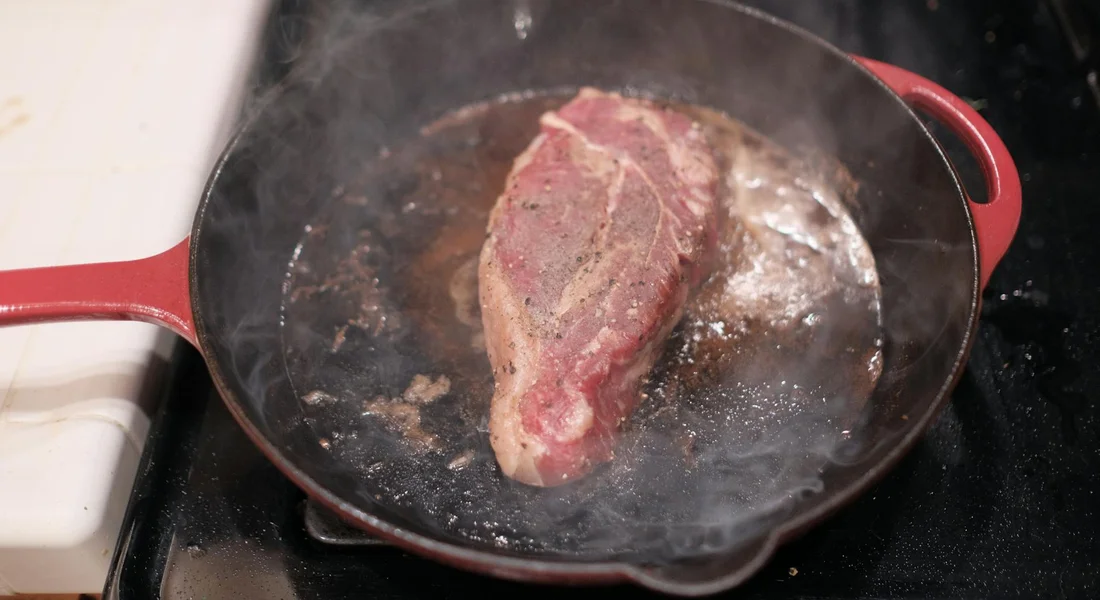
To really understand cast iron’s place, it helps to see how it compares to other pans in your kitchen. The main question is: which ones can add a nutritional boost of iron to your meal? Beyond iron content, the big question is: which pan really wins home cooking—cast iron or nonstick? We’ll weigh durability, heat performance, and everyday practicality to help you decide what’s best in your kitchen.
Stainless Steel and Carbon Steel
These are often mentioned alongside cast iron. They’re durable and great for high-heat cooking, but they don’t work the same way for iron intake.
High-quality stainless steel is an alloy. It contains chromium and nickel to prevent rust. While it’s incredibly stable, it can leach tiny, trace amounts of those other metals into food, especially when cooking acidic dishes. It does not leach meaningful dietary iron.
Carbon steel is closer to cast iron in feel and maintenance. It also develops a seasoning layer. However, it’s made from a different type of steel and is not designed to leach iron into your food in the same measurable way cast iron does. For a potential dietary iron boost, stainless and carbon steel are not your tools.
Nonstick Coatings and Aluminum
These materials are chosen for easy food release, not for mineral transfer.
Modern nonstick coatings like Teflon are inert. They create a slippery barrier specifically designed to prevent any interaction between your food and the pan’s base metal. They do not add iron.
Aluminum pans are excellent heat conductors. Like stainless steel, they are alloys. They may release minuscule amounts of aluminum, especially when pitted or scratched, but they contribute no iron to your food.
If your goal includes the possibility of increasing the iron content of your meals, cast iron is the only common cookware material that reliably does this. The other options have their own strengths, but this particular benefit is unique to cooking with bare iron.
| Material | Adds Iron to Food? | Key Note |
|---|---|---|
| Cast Iron | Yes, measurably. | The only common material that does this. Amount varies with food, cook time, and seasoning. |
| Carbon Steel | No. | Seasons like cast iron but made from a different iron/steel alloy. |
| Stainless Steel | No. | May release trace chromium/nickel. Prized for its neutrality. |
| Nonstick Coated | No. | Coating is designed to prevent any metal transfer. |
| Aluminum | No. | Great conductor, but no iron content to leach. |
Your Practical Checklist for Managing Iron Transfer

You have control over how much iron gets into your food. Think of your pan’s seasoning as your primary defense. A strong, polymerized layer acts like a non-stick barrier between the raw iron and your dinner.
Here is a straightforward list you can use every time you cook.
If You Want More Iron in Your Diet
This can be helpful for individuals, like some vegetarians or those with a known deficiency, who are looking for a simple dietary boost.
- Cook moist, acidic foods in a newer or less-seasoned pan. Dishes like tomato sauce, chili, or a wine-based stew will pull more iron from a base layer that isn’t fully built up.
- Use your newest pan. A modern Lodge skillet fresh from the box will transfer more iron than your great-grandmother’s heirloom with decades of patina.
- Simmer for longer periods. The extended contact time between the acidic food and the iron increases the transfer.
My newest pan is my go-to for cooking lentil soup, as I know it gives me a little extra mineral boost from the lengthy simmer.
If You Want to Minimize Iron Transfer
This is the standard approach for maintaining your seasoning’s integrity and controlling flavor.
- Build a robust seasoning layer first. Before tackling a highly acidic dish, make sure your pan has a good foundation. Cook other foods like cornbread, sauté vegetables, or fry potatoes in it several times to strengthen the polymerized coat.
- Cook your acidic dishes quickly. A quick pan sauce or a brief simmer of tomatoes is less impactful than a three-hour stew.
- Never, ever store acidic leftovers in your cast iron. Always transfer them to a glass or ceramic container after cooking. Leaving tomato sauce in the pan, even for an hour, can compromise your seasoning and lead to a metallic taste.
- Re-season promptly after cooking acidic foods. Once you’re done, clean the pan gently, dry it thoroughly, and give it a quick stovetop seasoning with a thin layer of oil. This repairs any tiny weak spots in the finish.
A glossy, well-seasoned pan is your best tool for cooking acidic foods without noticeable iron transfer or off-flavors.
When to Consider Talking to a Doctor
For the vast majority of people, the iron from cookware is a safe, minor contribution to their diet. Your body naturally regulates how much iron it absorbs from food. When it comes to cast iron cookware, the discussion centers on safe health benefits vs toxicity concerns explained. This framing helps you understand what to expect in everyday cooking.
There is one important medical exception: hemochromatosis.
This is a condition where the body absorbs and stores too much iron, which can damage organs over time. If you have been diagnosed with hereditary hemochromatosis (iron overload), your dietary iron is medically managed.
If you have hemochromatosis, you must consult your physician or a registered dietitian about using cast iron cookware. They can provide guidance based on your specific treatment plan and iron levels. For you, it may be advised to use well-seasoned pans exclusively or to avoid them altogether in favor of stainless steel or enameled cast iron.
For everyone else, this is simply an interesting aspect of cooking with cast iron. You can adjust your technique based on your dietary preferences, but there is no need for medical concern. The amount of iron you get is comparable to what’s added to fortified cereals. Cast iron isn’t the right choice for everyone.
Common Questions
Does a vintage pan’s age affect its iron transfer?
A pan’s age matters less than the condition of its seasoning. A vintage piece with a thick, undisturbed patina acts as a superior barrier, potentially transferring less iron than a new pan. However, a stripped and re-seasoned vintage skillet will behave just like new, with more exposed iron.
How do I assess a vintage piece’s condition for use?
Look for a smooth cooking surface and a solid, black, glossy patina. Avoid pieces with pitting, deep rust, or cracks. A pan’s true value for cooking lies in its intact seasoning, not just its brand or age.
Is a vintage pan always better for seasoning?
Not necessarily. While a smooth vintage surface can be easier to season initially, any pan develops a superior, non-stick patina through consistent use and proper care. Focus on building and maintaining your seasoning through regular cooking and correct cleaning, regardless of the pan’s era.
Understanding Iron from Your Cast Iron
If you want to increase the iron in your meals, cooking acidic foods like tomato sauce in your cast iron skillet is a simple, effective way to do it. Unlike some acidic foods, tomatoes are generally safe for cooking in cast iron. For everyday cooking, just keep your pan’s seasoning in good shape-this natural layer manages iron transfer and protects your food’s flavor. Our site has plenty more on core cast iron skills, from fixing a stripped season to storing your pieces for decades.
Relevant Resources for Further Exploration
- r/Cooking on Reddit: I have been cooking almost everything in my cast iron. Am I screwed?
- Are cast iron pans unsafe? – Examine
- sauce – How do you know that the cast iron seasoning does not leach into your food? – Seasoned Advice
- Can You Cook Acidic Ingredients in Cast-Iron Skillets? | America’s …
- Cooking With Cast-Iron? – DrWeil.com
Joseph Gerald
A material science expert by profession, Joseph is also an avid cook. He combines his 10+ years expertise in material science and metallurgy with his passion for cast iron cookware to bring you best hands on advice. His expertise ranges from types of cast iron cookware to best seasoning tips as well as restoration of vintage cast iron utensils. Joe is here to help you solve all your cast iron cookware queries and questions.