How Do You Build a Lasting Non-Stick Surface on Cast Iron?
If your food still sticks or your seasoning feels fragile, you might wonder if cast iron can ever be truly non-stick. I promise it can, and achieving that slick surface relies more on consistent care than any secret trick.
This guide will walk you through the entire process, from the science of seasoning to daily upkeep. Here’s what we’ll cover:
- The simple chemistry behind a non-stick finish and why it’s like building layers of paint.
- A foolproof, step-by-step method for seasoning new or stripped pans.
- My go-to techniques for cooking and cleaning that protect your seasoning.
- How to spot and fix common issues like sticky spots or thin patches.
How a Cast Iron Pan Becomes Non-Stick: It’s Not Magic, It’s Chemistry
Think of a well-seasoned pan not as coated in oil, but coated in a thin, hard plastic. That is essentially what seasoning is. When you heat a very thin layer of oil past its smoke point, it doesn’t just burn off. It transforms, linking its molecules together and bonding to the iron in a process called polymerization.
This creates a slick, semi-flexible layer that fills the microscopic pores of the iron, creating a surface that food struggles to stick to.
So, are cast iron pans non-stick? Yes, but not in the way a Teflon pan is. A factory-coated non-stick surface is a separate material applied to the metal. Your cast iron’s seasoning is the metal itself, transformed. Food release gets better and better as this bonded layer builds up over time.
Are enameled cast iron pans non-stick? This is a different question. Enamel is a layer of glass fused to the iron. It is non-porous and easy to clean, but it doesn’t polymerize or build up a patina. Its non-stick properties are static, based on the smoothness of the glass coating, and it can chip if abused. Your seasoned bare iron improves with use. Behind that improvement is seasoning chemistry: oils polymerize during heating to form a non-stick layer. Repeated heating and oiling builds this polymerized coating.
The transformation is key. You start with a liquid oil that feels sticky. Apply heat, and those molecules begin to cross-link. With enough heat and time, they form a solid, stable layer. This bonded surface is non-porous, so there’s nothing for food proteins to grab onto and fuse with, which is the root cause of sticking.
Your Non-Stick Surface: A Layer You Can Trust
That slick black coating on a brand-new “pre-seasoned” pan? It’s a good start, but it’s often thin and applied in a factory setting that prioritizes speed. The seasoning you build yourself through cooking and care is more durable and tailored to how you use the pan.
I remember the first time I cooked an egg in my grandfather’s old skillet, not one I had restored, but one he had used for decades. The surface was like dark glass. I used a little butter, and the egg slid out like it was on a air hockey table. That’s the feeling you’re after. It wasn’t the pan, it was the decades of built-up, carbon-rich polymer layers that made it perform that way. That trust isn’t manufactured, it’s earned through consistent, proper care.
Choosing Your Oil: The Foundation of a Great Finish
The best oil for seasoning cast iron isn’t necessarily the most expensive or trendy one. You want an oil with a relatively high smoke point and low moisture or impurity content. Oils with high polyunsaturated fat content, like grapeseed or flaxseed, polymerize very well.
But here is the most practical advice I can give you. The very best oil is often the one you already have in your kitchen and will remember to use consistently. A perfect seasoning layer built once with a specialty oil is less useful than a good, maintained layer built with the oil you actually cook with every week. Seasoning with oil isn’t a one-time step. You’ll maintain your cast iron cookware by applying a thin layer after each use.
Oils and Fats at a Glance: A Quick Snapshot
| Oil/Fat | Best For | A Note of Caution |
|---|---|---|
| Grapeseed Oil | Building durable initial layers. It’s a reliable, modern favorite. | A great all-around choice with a good smoke point for seasoning. |
| Crisco/Shortening | Easy, even application for beginners. It’s solid at room temp, so it’s hard to over-apply. | Can feel waxy if too thick. Some prefer liquid oils. |
| Avocado Oil | Very high heat cooking and seasoning. Excellent for stovetop seasoning methods. | Often more expensive. Ensure you have a refined version, not extra virgin. |
| Flaxseed Oil | Creating a hard, glassy finish that looks incredible when new. | Prone to flaking for many users over time. I find it too brittle. |
What About Olive Oil or Animal Fats?
Bacon fat and lard are questions I get all the time. They are fantastic for stovetop maintenance cooking a steak or frying potatoes, where the fat polymerizes a bit during cooking. For a dedicated oven seasoning session, they can work, but their impurity content can sometimes lead to a spotty or sticky finish. If you use them, strain them first.
Olive oil, especially extra virgin, has a lower smoke point and contains plant solids. This makes it fine for a quick stovetop touch-up after cooking, but it can burn and become sticky during the high, prolonged heat of an oven seasoning. For oven work, a more refined oil is a safer bet.
How to Build Your Non-Stick Surface, Step-by-Step
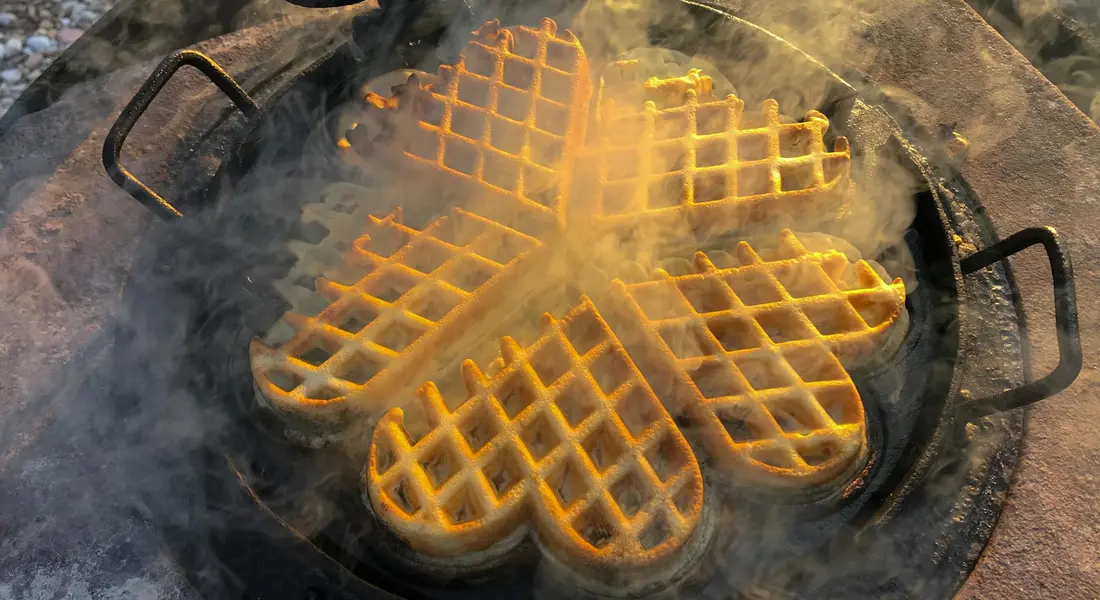
Think of building your seasoning like painting a piece of fine furniture. You want multiple thin, even coats, not one thick, gloppy layer. This process, often called “oven seasoning,” is the foundation for everything else.
- Clean the Bare Iron: If you’re starting with a new, bare, or freshly stripped pan, wash it with warm, soapy water to remove any factory dust or stripping residues. Dry it completely.
- Heat the Pan: Place the pan in a cold oven, then set the oven to 200°F (about 95°C). Let it warm for 15 minutes. This opens the pores of the metal slightly and ensures it’s completely dry.
- Apply the First Oil Coat: Using a lint-free cloth, apply a very small amount of your chosen oil (like flaxseed, grapeseed, or canola) to the warm pan. Cover every surface, inside and out, including the handle.
- The Most Important Step: Wipe it ALL Off: Take a second, clean, dry cloth and wipe the pan as if you made a terrible mistake and are trying to remove every last drop of oil. You want the pan to look practically dry. Any oil you leave behind will polymerize into sticky gunk, not a hard, slick layer. This answers the core confusion in your question-after the initial coating, you do a vigorous dry wipe-down.
- Bake it Upside Down: Place the pan upside down on the middle rack of your oven. Put a sheet of foil or a baking sheet on the rack below to catch any microscopic drips. Heat the oven to 450-500°F (230-260°C), depending on your oil’s smoke point. Bake for one hour.
- Cool Completely: Turn the oven off and let the pan cool down inside it for at least two hours, or until it’s room temperature. Do not rush this.
- Repeat: For a new base layer, repeat steps 2 through 6 at least two more times. Three thin coats are a great starting point.
Remember, the goal is to bake on a layer of oil so thin it feels dry to the touch, creating a hard, polymerized finish that becomes your non-stick surface.
The Tools You’ll Need (It’s a Short List)
You don’t need specialty products. The best tools are simple and probably already in your home.
- High-Smoke Point Oil: Grapeseed, avocado, or refined coconut oil work wonderfully. I keep a bottle of grapeseed oil just for my cast iron.
- Lint-Free Cloths: Old cotton t-shirts or flour sack towels are perfect. Paper towels can leave fibers behind.
- Your Oven: A reliable home oven is all you need.
- Oven Mitts (Optional but Smart): The pan and oven racks get dangerously hot. Protect your hands.
The Core Seasoning Method: Low, Slow, and Patient
Let’s walk through the philosophy behind those steps. First, cleaning and drying is non-negotiable. Any moisture or grit will be sealed under your new seasoning.
The microscopic oil layer is the secret. When you heat oil past its smoke point in the presence of iron, it undergoes a chemical change called polymerization. It transforms from a liquid into a hard, plastic-like coating bonded to the metal. A thick layer can’t fully polymerize, leaving a tacky residue.
To directly answer your question: you do not add more oil before the final 60-minute bake. After you apply oil and then wipe it all off with a dry cloth in step 4, that’s it. The pan goes into the oven. You are baking the vanishingly thin film that remains. Adding more oil at that point would create the sticky spots you want to avoid.
Patience during the cool-down is part of the process; letting the pan cool slowly in the turned-off oven helps the new seasoning layer harden and bond properly.
Alternatives: The Stovetop Seasoning Touch-Up
Oven seasoning is for building base layers. The stovetop method is for quick maintenance. Did you just cook something acidic that dulled a spot? Did a bit of food stick? This is your fix.
- Clean and dry your pan as you normally would after cooking.
- Place it on a burner over medium heat until fully dry and warm.
- Add ½ teaspoon of oil and use a cloth to spread an ultra-thin coat over the cooking surface.
- Let the pan heat until it just starts to smoke, then let it cool.
Use stovetop seasoning to maintain and repair small areas, but rely on the oven method to build the durable, even foundation your pan needs.
Your Daily Routine: How to Maintain the Non-Stick Finish
A well-seasoned pan isn’t fragile. Maintain it with simple habits after each use, and you’ll rarely need a major re-seasoning project. This routine takes less than five minutes. Just a quick clean and oil wipe after cooking keeps it ready for the next use. Clean, season, and maintain your cast iron skillet for long-lasting performance.
Cleaning Without Stripping: The After-Use Ritual
Forget the old myth. Using mild dish soap on a well-seasoned pan is perfectly safe. Modern soaps don’t contain lye, which is what strips seasoning. The real enemy is abrasive scrubbing on a hot pan or letting food cement itself on.
Here’s my routine, whether I’m cleaning a skillet, a Dutch oven, or a non stick cast iron skillet with lid:
- Let the pan cool slightly, but clean it while it’s still warm.
- Add a little warm water to the pan and use a wooden spatula or a chainmail scrubber to gently loosen any stuck-on bits.
- Wash with warm water, a soft brush or sponge, and a drop of mild dish soap if needed.
- Rinse and dry immediately. For stubborn spots, a paste of coarse salt and a drop of water makes a great gentle abrasive.
A quick post-cooking wash prevents food residue from carbonizing onto your hard-earned seasoning, keeping your surface slick.
Drying and the Final, Crucial Step
Cast iron and water are enemies. Towel-drying is not enough. You must use heat to evaporate every last molecule of water from the porous metal surface. Moisture left on the surface can trigger rust and compromise the metal over time. Understanding how water moisture affects cast iron helps explain why thorough drying and proper seasoning matter.
- After washing, place your pan on a stovetop burner over low to medium heat.
- Let it heat for 2-3 minutes until all traces of moisture are gone and the pan is completely dry to the touch.
- Turn off the heat. While the pan is still warm (not scorching hot), apply 3-4 drops of oil to the cooking surface.
- Use a clean cloth to spread the oil into a microscopically thin coat over the entire interior, then buff away any visible oil until the pan looks dry.
This is your five-minute insurance policy against rust. That vanishingly thin layer of oil protects the iron during storage. Store your pan in a dry place, and it will be ready for your next meal. I do this with every single one of my pieces, every single time I wash them. To keep rust at bay over the long term, store cast iron cookware properly to prevent rust damage. A simple storage routine goes a long way toward keeping your pan ready for the next meal.
Fixing Common Non-Stick Problems
It’s completely normal to run into a few snags as you build up your pan’s perfect surface. Nothing here is permanently broken. Cast iron is incredibly forgiving, and every problem has a simple fix.
Sticky, Gummy, or Spotty Seasoning
This is the most common issue for anyone’s first seasoning attempt, and I’ve been there myself. That sticky or tacky feeling means you used a bit too much oil. Think of seasoning like applying a very thin coat of paint. If the paint is too thick, it stays wet and gummy underneath.
The solution is simple: just bake the pan again to finish the job. Put your sticky pan in a cold oven, heat it to 350°F (175°C), let it warm for about 15 minutes, then use a dry cloth or paper towel to wipe away the excess liquefied oil. You’re not adding more oil, you’re just helping the existing layer polymerize completely.
I keep an old, dedicated cotton rag in my kitchen just for this. After a quick wipe on a warm pan, the sticky spots are gone and the surface feels dry and slick.
Flaking or Peeling Seasoning
Seeing black flakes in your food is disheartening, but it answers the frequent question, “Why is my nonstick cast iron flaking?” It happens for two main reasons: seasoning layers that were applied too thickly, or subjecting a hot pan to a sudden temperature change (thermal shock). Thick layers can’t bond properly to the iron and will chip off. A proper fix often means reseasoning to repair and restore the surface. Seasoning done right can solve sticky, flaky, and damaged areas and prevent future flaking.
To fix flaking, you need to remove the unstable top layers and start fresh with thin, even coats. You don’t always need to strip the pan bare. Often, a light scouring with coarse salt or a chainmail scrubber to knock off the loose bits, followed by one or two rounds of proper seasoning, will solve it.
This can also happen with some enameled cast iron pieces, particularly around the cooking surface edges. It’s a good reminder that while enamel provides a hard, glass-like surface, it is not a “seasoning” in the traditional sense. The answer to “are enamel cast iron pans non stick” is that a high-quality enamel finish can be very slick, but it won’t improve with use like bare iron seasoning does.
Common Mistakes and How to Avoid Them
Avoiding these few pitfalls will save you most of the headaches.
- Using Too Much Oil: This is mistake number one. After applying oil, wipe it out as if you changed your mind and are trying to remove it all. The pan should look nearly dry.
- Not Preheating the Pan: Food sticks to cold iron. Always give your pan 3-5 minutes on a low to medium heat to warm up evenly before adding fat and food.
- Cooking Acidic Foods on New Seasoning: Tomatoes, wine, or vinegar can break down young, fragile seasoning layers. Wait until you have a few months of good cooking on the pan, or use a well-seasoned vintage piece for those jobs.
- Storing While Damp: Even a little moisture left in the pores of the iron will cause rust. Always dry your pan thoroughly on the stovetop after washing, and give it a tiny, ultra-thin wipe of oil before putting it away.
When to Start Over: The Complete Reset
Sometimes, the best path forward is a clean slate. You should consider a full strip and reset if you see any of these signs:
- Heavy, pitted rust that covers most of the cooking surface.
- A thick, uneven layer of baked-on carbon gunk that feels crumbly.
- Seasoning that persistently flakes off even after you’ve tried to fix it multiple times.
Starting over isn’t a failure, it’s good maintenance. Safe home methods include using a yellow-cap oven cleaner (the lye-based kind) in a trash bag, an electrolysis tank, or a diluted vinegar bath for rust. Each method has its place, and for a truly thick, damaged coat, the oven cleaner method is often the most straightforward first step.
Common Questions
Why is my nonstick cast iron flaking, and how do I stop it?
Flaking means your seasoning was applied too thickly or the pan suffered thermal shock. To fix it, scrub off the loose flakes with coarse salt or a chainmail scrubber, then apply one or two new, *very thin* layers of oil using the oven method. Prevent it by always wiping your oil coat until the pan looks dry before baking.
Does a non stick cast iron Dutch oven require different care?
No, the care principles are identical. The key is ensuring the entire interior surface, including the walls and underside of the lid, is seasoned, dried, and lightly oiled after each use. Just be extra thorough with drying, as the deep walls and lid can trap moisture and lead to rust.
How do I maintain a non stick cast iron skillet with a lid?
Treat the lid as part of the cookware. After cooking, wash, dry, and apply a microscopic coat of oil to the underside of the lid—where condensation forms—just as you would the cooking surface. This prevents rust and maintains a consistent environment for your seasoning to thrive.
Keeping Your Cast Iron Non-Stick for Years
Build a durable non-stick surface by applying impossibly thin layers of oil and baking them on thoroughly. Protect that hard-earned seasoning by always preheating your pan and using a metal spatula to smooth the cooking surface as you go. I often get questions about stripping old seasoning or comparing flaxseed to crisco, which I cover in other guides on the site.
Deep Dive: Further Reading
- Experience the difference: a cast iron pan with or without non-stick coating – Skottsberg
- Cast Iron vs. Non-Stick: Which is better for cooking? – Stahl Kitchens
- Enameled Cast Iron vs. Non Stick Skillets: What Are the Differences? – Made In
- How to Create A Non-Stick Surface on Your Cast Iron • A Traditional Life
Joseph Gerald
A material science expert by profession, Joseph is also an avid cook. He combines his 10+ years expertise in material science and metallurgy with his passion for cast iron cookware to bring you best hands on advice. His expertise ranges from types of cast iron cookware to best seasoning tips as well as restoration of vintage cast iron utensils. Joe is here to help you solve all your cast iron cookware queries and questions.