Can You Cook Pasta, Rice, and Sauces in Cast Iron? A Complete Guide
You might worry that cooking tomato sauce or boiling pasta will harm your cast iron’s hard-earned seasoning. I cook these foods regularly in my own well-loved skillets, and with a few simple steps, you can too without any damage.
This guide will give you the confidence to use your cast iron for any meal. Here are the key points we’ll cover:
- Selecting the right cast iron piece for wet or acidic dishes to keep your seasoning safe.
- Preventing rice and pasta from sticking, so cleanup is a breeze.
- Cleaning after saucy meals in a way that maintains your pan’s non-stick surface.
Key Takeaways
You can absolutely cook pasta, rice, and sauces in your cast iron. The trick is adjusting your approach to account for three things: water, heat, and acid.
Think of your pan’s seasoning like a good raincoat. A little water is fine, but soaking it for hours will cause problems. You manage this by controlling cooking time, drying the pan instantly, and keeping your seasoning strong.
Why It’s Worth the Effort
- Superior, Even Heat: A heavy cast iron Dutch oven heats steadily, which is perfect for simmering a sauce for hours without hot spots that can cause burning.
- Excellent for Baked Dishes: From a creamy risotto to a baked pasta casserole, cast iron’s ability to go from stovetop to oven seamlessly is a major advantage.
- One-Pan Cooking: You can often brown your meat, sauté aromatics, and build your sauce all in the same vessel, which builds incredible flavor.
What to Watch Out For
- Potential for Rust: This is the biggest risk. Starchy pasta water or leftover rice grains left sitting in the pan can quickly lead to surface rust.
- Starch Buildup: Starchy foods can leave a filmy, sometimes sticky residue on your seasoning that needs proper cleaning.
- Acid Attack: Long-simmered tomato sauces or wine-based reductions can, over time, degrade your hard-earned seasoning layer, making it dull or patchy.
- Not for Long-Term Storage: Never store leftover food in your seasoned cast iron cookware. The prolonged contact with moisture and acids will damage the pan.
Your best tool for this job is a well-seasoned cast iron Dutch oven or an enameled Dutch oven. The high sides and large capacity are made for boiling and simmering. An enameled model completely removes the worry about seasoning and acidity, making it my go-to for all-day tomato sauce.
The Quick-Start Checklist for Success
Think of this as your cheat sheet. Do these things, and you’ll avoid 99% of the problems people have when cooking wet foods in cast iron.
- Start with a confidence check. Run your fingers over the cooking surface. Is it smooth and slick, or does it feel rough or grabby? A strong, well-maintained seasoning is your first line of defense.
- Use plenty of water when boiling. This prevents starchy pasta water from reducing down to a thick, sticky glue on the bottom of your pan.
- Never let it soak. As soon as the food is out, fill the pan with hot water and start your cleanup. Letting it sit is an invitation for rust.
- Dry the pan thoroughly, immediately. After washing, place the clean Dutch oven on a stovetop burner over low heat for 3-5 minutes until all moisture evaporates. This heat-drying step is non-negotiable.
- Apply a microscopic coat of oil. While the pan is still warm from drying, add a few drops of a neutral oil and wipe it over the entire interior surface. Then, using a clean towel, buff until it looks dry. You’re protecting the metal, not adding cooking oil.
- For acidic sauces, consider your pan’s history. A brand new or recently restored pan with fresh seasoning is more vulnerable. For long simmers, use your most mature, jet-black skillet or an enameled piece.
Your Cast Iron Toolkit: Choosing the Right Pan
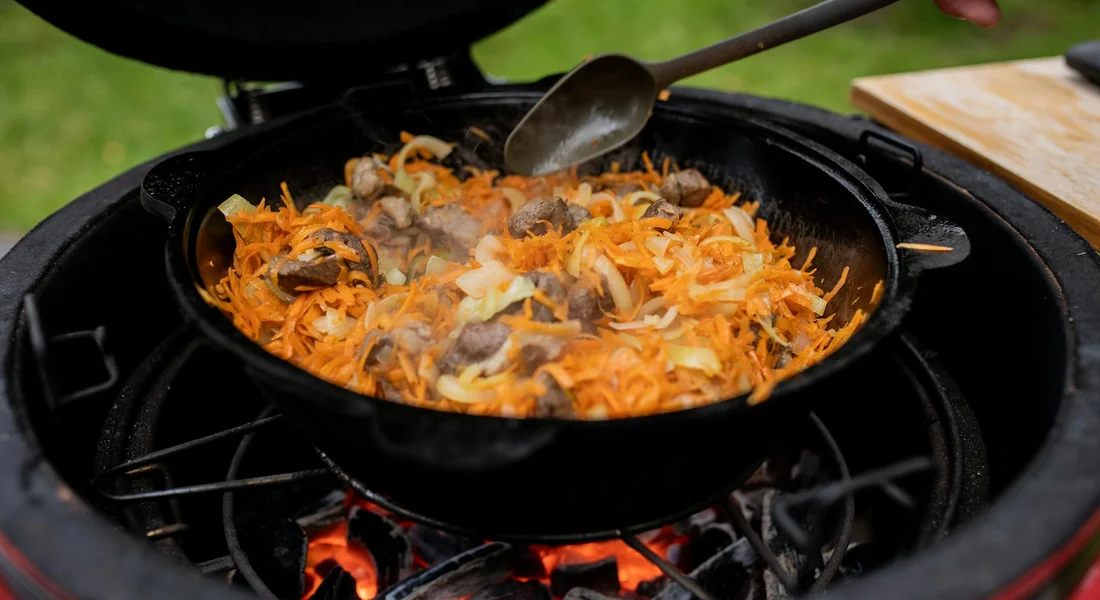
Not every pan is suited for every task. Picking the right tool from your collection is the first step to success.
The MVP: The Dutch Oven
For boiling water and simmering sauces, a Dutch oven is your best friend. Its high sides and generous capacity prevent messy boil-overs. The heavy lid seals in heat and moisture perfectly, making it the ideal cast iron pasta pot for everything from cooking noodles to finishing a sauce.
You can use either enameled or traditional bare cast iron here. Both excel at holding a steady, gentle simmer.
Can I Use a Deep Skillet?
A deep skillet, sometimes called a chicken fryer, can work in a pinch. I’ve used mine for shallow poaching or making a quick pan sauce. The problem comes when you need to boil a large volume of water for pasta. The lower sides mean water can easily slosh over the rim. For a full pound of spaghetti, choose your Dutch oven. For a single serving of orzo, your deep skillet might be just fine.
Enameled vs. Bare Cast Iron: The Showdown
This choice matters for sauces and acidic foods. Here’s a quick comparison.
- Enameled Cast Iron (like Le Creuset or Staub)
- Pro: The glass-like enamel coating is completely non-reactive. You can simmer tomato sauce for hours without a second thought.
- Pro: Cleanup is often simpler; food doesn’t bond to the slick surface.
- Con: You must use wood, silicone, or plastic utensils. Metal can chip the enamel.
- Con: It responds to heat changes a bit slower than bare iron.
- Bare Cast Iron (Your seasoned skillet or Dutch oven)
- Pro: You can use any utensil you like, including metal.
- Pro: It heats slightly faster and can develop a superior non-stick surface over time.
- Con: Prolonged cooking of acidic foods can degrade the seasoning and sometimes impart a slight metallic taste.
- Con: It requires more vigilant drying and oiling after cooking with water.
Think of your enameled piece as a specialized cast iron pasta pan for acidic, long-cooked dishes. Your bare iron is the versatile workhorse for everything else.
Is My Pan’s Seasoning Ready for This Job?
Before you pour in a gallon of water, check your pan’s armor. A weak seasoning layer will fail under a boiling assault.
Do the water bead test. Sprinkle a few drops of water onto the warm, dry cooking surface. In a well-seasoned pan, the water will bead up and roll around like mercury. If it soaks in or sits flat, your seasoning is thirsty.
You can also just look and feel. The surface should be uniformly dark, from a rich brown to a slick black. Run your finger over it. It should feel smooth, like a polished stone, not rough or chalky.
If your seasoning looks thin or patchy, do a quick stovetop seasoning before you cook. Heat the pan, apply a microscopically thin layer of oil, and let it smoke for 10 minutes. This quick refresh can save you from a sticky disaster. This is the most important prep step. It’s what stands between your pan and rust.
The Big Questions, Answered
Let’s tackle the most common worries head-on.
Can I Boil Water and Pasta in Cast Iron?
Yes, you absolutely can. But you must be smart about it.
Here’s the chemical reality. Prolonged boiling of plain water is one of the fastest ways to soften and strip your hard-earned seasoning. It also leaves the bare iron wet, inviting immediate flash rust the moment the pan is empty.
The safe method has three parts.
- Use well-salted water. The salt raises the boiling point slightly and seems to provide a buffer for the seasoning.
- Don’t let it simmer empty. Once you drain the pasta, get the sauce in or the pan off the heat immediately. An empty, water-logged pan on a hot burner is trouble.
- Begin the drying ritual right away. Don’t let the wet pan sit. Dry it thoroughly with a towel, then place it on a low stovetop burner for 5-10 minutes until it’s completely, bone-dry hot. A drop-in pasta insert, sometimes called a cast iron pasta maker, can make draining easier and get the pan dry faster.
Follow these steps, and your seasoning will survive just fine.
Will Rice or Starchy Sauces Ruin My Seasoning?
I understand the fear. A pot of rice or a starchy pasta water reduction can leave a stubborn, gluey film.
This happens because the starches gelatinize and bond to the pan’s surface. A strong, polymerized seasoning layer resists this bond much better than a weak one. The slick surface gives the starchy glue less to grab onto.
My pro tip is to use fat. Add a teaspoon of oil or butter to your cooking water for rice. For a pan sauce, make sure you have a good foundation of fat before deglazing. That thin layer of oil acts as a protective barrier between the sticky food and your pan’s seasoning.
This is why a cast iron pasta bake works so well. You’re often combining pasta with a fatty cheese sauce or meat in a well-oiled dish. The fat protects the pan while everything gets deliciously crispy.
The Care Routine: Before, During, and After
This guide follows your pan’s journey from stove to shelf. Think of it as a maintenance checklist, not a recipe. Getting these steps right protects your seasoning and keeps your pan ready for anything.
Prep Work That Prevents Problems
You wouldn’t pour water into a cold, dry frying pan to make eggs. The same logic applies here. Always start with the “heat and fat” method.
Place your dry pan over medium heat for 2-3 minutes. Add a small drizzle of a high-smoke-point oil (like canola or grapeseed) and swirl it to coat the bottom. You’re not frying anything. You’re creating a slick, hydrophobic barrier between your pan’s seasoning and the water you’re about to add. This thin layer of hot oil significantly reduces the chance of food sticking and helps safeguard your seasoning during the boil.
Pan size matters. Filling a 10-inch skillet to the brim to boil spaghetti is asking for a boil-over and a stovetop mess. It also leads to uneven cooking. For pasta, a deep cast iron Dutch oven is ideal. For rice or simmering sauce, match the food volume to the pan. You want room for bubbles and stirring without spillage.
Your Instant Post-Cook Protocol
This is the most important part of the process. Your pan is hot, wet, and vulnerable. Do not let it sit in the sink.
As soon as you drain your food, start this 5-minute routine:
- Quick Scrub: While the pan is still warm (not scalding hot), rinse it with the hottest tap water you have. Use a soft brush or sponge. The starchy water often cleans up easily without soap. If you used soap, that’s perfectly fine.
- Thorough Dry: Towel dry it immediately. Then, place it back on a warm stovetop burner (low heat) for 2-3 minutes. This drives off every last bit of moisture you can’t see.
- Micro-Thin Oil: Once the pan is dry and slightly warm, apply 1/2 teaspoon of oil with a paper towel. Wipe the entire cooking surface, then use a clean paper towel to buff off as much oil as you possibly can. It should look dry to the touch.
This protocol is non-negotiable because boiling water exposes the bare iron pores in your seasoning; immediate drying and oiling prevents flash rust and keeps your base layer intact. I do this with my daily driver skillet every single time, and it’s never failed me.
When to Do a Full Re-seasoning Cycle
Even with perfect care, cooking lots of starchy rice or acidic tomato sauce can wear down the top layer of your seasoning. You don’t need to strip the pan. You just need to refresh it.
Look for these signs: the cooking surface looks dull or dry (not shiny), feels slightly sticky, or has rough, patchy spots. A single maintenance seasoning session in the oven will smooth everything out and restore that slick, protective surface.
This is a world apart from a full strip-and-restore, which is for severe rust or gunk buildup. If you follow the post-cook protocol, you’ll almost never need to do that.
For a refresh, clean your pan as normal, then:
- Apply that micro-thin layer of oil (canola, grapeseed, or flaxseed) and buff it until it seems dry.
- Place the pan upside-down in a cold oven.
- Set the oven to 450°F (232°C) and bake for one hour.
- Turn the oven off and let the pan cool inside completely.
That’s it. Your pan is restored.
Common Troubles and How to Fix Them
Don’t worry if you hit a snag. Every cast iron user has. Here are simple fixes for the most common issues when cooking with water.
My Pasta Water Left a White or Chalky Film
This is a classic sign of hard water. Those white mineral deposits (mostly calcium) are left behind when the water evaporates. The good news? It’s just limescale, not damaged seasoning, and it wipes right off with a little acid.
Make a 50/50 solution of white vinegar and water. Lightly scrub the film with the solution using a non-scratch scrubber. Rinse well, dry completely on the stove, and apply a thin coat of oil. Your pan’s seasoning is fine underneath.
The Rice Stuck Horribly to the Bottom
This usually comes down to three things: the heat was too high, you didn’t use the “heat and fat” prep method, or your seasoning layer was weak and porous.
To fix the mess, let the pan cool slightly, then add an inch of warm water and let it soak for 15-20 minutes. Use a flat-edged wooden or nylon spatula to gently coax the stuck bits free. Avoid metal scrapers that can gouge the iron.
For next time, ensure a medium-low simmer, always preheat with fat, and consider giving your pan a maintenance oven seasoning to strengthen its surface before trying again.
I See Orange Spots After Boiling Water
First, take a breath. This is flash rust, and it’s superficial. It happens when bare iron is exposed to water and air before a protective oil layer can be applied. It’s not deep, structural rust.
To remove it, make a paste with a tablespoon of oil and two tablespoons of coarse salt or baking soda. Scrub the spots gently with the paste and a cloth. Rinse, dry immediately on the stove, and then apply oil to the affected area. Flash rust is a reminder to dry your pan faster, not a sign your pan is ruined. A single seasoning cycle will bond that oil and seal the spot perfectly.
Smart Alternatives: When Not to Use Cast Iron
Loving your cast iron means knowing when to give it a night off. Using the right tool for the job isn’t a critique of your skillet. It’s smart stewardship that protects your seasoning for the long haul.
Choosing another pan for a specific task is a strategic move, not a surrender.
Tasks That Test Your Pan’s Limits
Think of your cast iron’s seasoning like the paint on a cherished piece of furniture. It’s durable, but constant scrubbing or harsh chemicals will wear it down over time. Some cooking jobs are the equivalent of that constant scrubbing, even if you’ve clean and season your skillet properly.
Boiling a massive pot of water for pasta every single night is one of them. Cast iron excels at holding heat, not at heating a large volume of water quickly. Your stovetop will work harder, and your energy bill will reflect it. For daily pasta boils, a lightweight stainless steel pot is simply more efficient and places zero wear on your cast iron’s seasoned surface.
Now, let’s talk about acidity. Yes, you can simmer a tomato sauce in a well-seasoned skillet. I do it for quick weeknight dinners. But I would never use my favorite #8 for an all-day Sunday ragu. Prolonged cooking with highly acidic ingredients (like tomatoes, wine, or vinegar) can, over many hours, begin to break down the polymerized oil layers. The result is a metallic taste in your food and a need for re-seasoning.
For a giant, slow-simmered acidic sauce, a non-reactive enameled Dutch oven or stainless steel pot is the wiser choice-it saves your skillet’s patina for other tasks.
Caring for Specialized Pieces
You might own more than just skillets and Dutch ovens; seasoning can vary especially for cast iron pasta bowls, individual serving plates, or corn stick pans, which are fantastic for presentation. Their care, however, is slightly different because their seasoning often isn’t as robust.
These pieces are typically not used for high-heat cooking that builds seasoning. They are used for serving, which means they encounter acids from food and need frequent washing. Treat them gently:
- Always hand-wash them immediately after use. Do not let acidic food sit on the surface.
- Dry them thoroughly with a towel, then place them on a warm stove burner for a minute to evaporate all moisture.
- Give them a very light rub with a neutral oil after drying if they seem dry to the touch. This isn’t a full seasoning cycle, just a protective touch-up.
For specialized serveware, fast cleaning and perfect drying are the absolute keys to preventing rust.
Common Questions
I see a “cast iron pasta maker” for sale-what is it, and how do I care for it?
It’s typically a perforated insert for boiling and draining pasta inside a Dutch oven. Care is critical: dry it completely on the stovetop immediately after use, just as you would the pot itself. Apply a whisper-thin coat of oil while it’s warm to prevent any flash rust on the un-enameled metal.
What’s the real difference in care between an enameled piece (like Le Creuset) and my regular skillet for pasta?
Enameled cast iron is non-reactive, so acidic sauces pose no threat to its surface. That safety contrast is a key point in a comprehensive safety-use comparison of enameled vs bare cast iron. In a full comparison, enamel protects the surface from acidity, while bare cast iron relies on seasoning and careful moisture control. Your care focuses on avoiding thermal shock and using soft utensils to prevent chipping. For bare iron, the priority shifts to vigilant drying and oiling after every use to protect the seasoning from water and acid.
How should I maintain my cast iron pasta bowls or serving dishes?
These pieces are for serving, not high-heat cooking, so their seasoning is more delicate. Wash and dry them immediately after use-never let acidic food sit. A quick, light rub with oil after thorough drying will protect their finish without needing a full seasoning cycle.
Mastering the Balance of Heat and Acid
The most important rule for cooking these dishes is to always protect your pan’s seasoning by managing heat and time. A strong, well-maintained layer of seasoning is your best defense against any reactive ingredients. Once you understand that, cooking pasta sauces, simmering rice, or making a pan gravy becomes a simple matter of technique, not a risk to your cookware. For more on building that foundational layer, our guides on fixing a damaged season or using your skillet on the grill offer helpful, related skills.
Sources and Additional Information
- r/castiron on Reddit: Just cast iron pasta.
- Make the Crispiest Clay Pot Rice in a Cast-Iron Skillet | Epicurious
- Rice/Pasta In Cast Iron Pot? : r/castiron
- r/RiceCookerRecipes on Reddit: Is it possible to properly cook pasta in a rice cooker?
- Pasta Bolognese | Lodge Cast Iron
- Our Best Cast-Iron Skillet Pasta Recipes
A material science expert by profession, Joseph is also an avid cook. He combines his 10+ years expertise in material science and metallurgy with his passion for cast iron cookware to bring you best hands on advice. His expertise ranges from types of cast iron cookware to best seasoning tips as well as restoration of vintage cast iron utensils. Joe is here to help you solve all your cast iron cookware queries and questions.