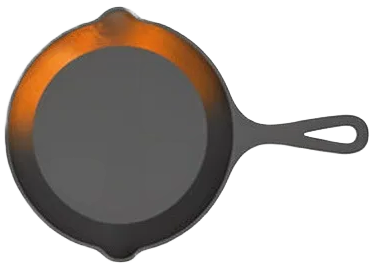
What Role Does Carbon Play in Preventing Cast Iron Rust?
If you’ve ever wiped down your cast iron and seen a hint of orange, you know that rust fear is real. The good news is that the carbon in your pan’s patina is working overtime to stop it.
In this article, I’ll explain how this natural shield works and give you practical steps to strengthen it. Here’s what we’ll cover:
- How carbon forms from oil during seasoning and cooking.
- Why this carbon layer is better at blocking moisture than plain iron.
- Simple ways to check and boost your pan’s carbon protection.
Key Takeaways: The Simple Truth About Carbon and Your Pan
Let’s clear up a major point of confusion. The dark, slick surface on your favorite skillet? That’s primarily seasoning. A true carbon patina is something different. It’s a layer of carbonized food residue that bonds to the iron itself.
This carbon layer is like a suit of armor for your pan. It creates a physical, gritty barrier that moisture and oxygen struggle to penetrate. This directly helps stop rust from forming on the bare metal underneath.
A durable carbon patina isn’t built in a day; it’s earned through consistent, proper cooking and cleaning. It develops naturally when you use your pan regularly, but it requires you to avoid scrubbing it down to bare metal after every use.
Think of it this way: your polymerized oil seasoning is the non-stick cooking surface. The carbon patina is the protective, matte-black undercoat. One is for cooking performance, the other is for long-term defense.
Is It Seasoning or Patina? How to Tell What’s on Your Pan
Seasoning is a chemical process. When you heat a thin layer of oil past its smoke point, it polymerizes, transforming into a hard, slick coating fused to the iron. This is what gives a well-loved pan its glassy cooking surface. This is the chemistry of cast iron seasoning—the polymerization that creates a non-stick surface. Understanding it helps explain why proper seasoning yields a durable, slick finish.
Patina, in the context we’re discussing, is a physical deposit. It’s carbon-tiny, stable particles from food that have burned onto the seasoning and iron. It bonds to the surface, adding bulk and texture.
Here’s a simple test. Run your finger over the pan’s cooking surface. A pan with mostly seasoning will feel very smooth, almost glossy. A pan with a developed carbon patina will often feel slightly textured, with a consistent, dry, matte black finish, like a chalkboard.
In reality, a well-used pan is a composite. The polymerized oil seasoning forms the base, and the carbon patina builds upon it in spots. Together, they create the pan’s overall protective ‘crust’.
When people search for ‘pan patina carbon,’ they’re often describing that classic, rugged, non-reflective black finish, which is a clear sign of carbon build-up complementing the seasoning.
Why the Confusion Between the Two Terms is Common
Most folks use the word ‘patina’ casually to describe the beautiful, dark, well-used appearance of an old skillet. They aren’t wrong. That look is almost always a combination of deep, dark seasoning and layers of bonded carbon.
The language gets blended because the result is similar: a protected pan. A good analogy is a brick wall. The polymerized oil seasoning is like a coat of durable paint. The carbon patina is like a layer of soot and dust that has settled onto the paint and stuck there over years, becoming part of the wall’s surface.
Do Cast Iron and Carbon Steel Develop the Same Kind of Patina?
The goal is the same for both materials: build protective layers to prevent rust. But the surfaces interact with carbon differently. Cast iron has a microscopically rough, porous surface that carbon particles can grab onto and fill in. That difference helps explain the cast iron vs carbon steel key differences and their best uses. In practice, cast iron excels in wear resistance and heat retention, while carbon steel is favored for toughness and easier fabrication.
Carbon steel starts much smoother. It can develop a patina, but it often presents differently. The carbon may create a more varied, splotchy appearance of blacks, blues, and bronzes as it builds on the smoother metal.
Carbon steel can show visual changes from carbon build-up and thin seasoning more quickly, which is why many ‘patina carbon steel pan’ searches focus on its evolving colors. The maintenance philosophy, however, is identical: encourage the build-up of protective layers through use and gentle cleaning.
How a Carbon Patina Forms and Stops Rust
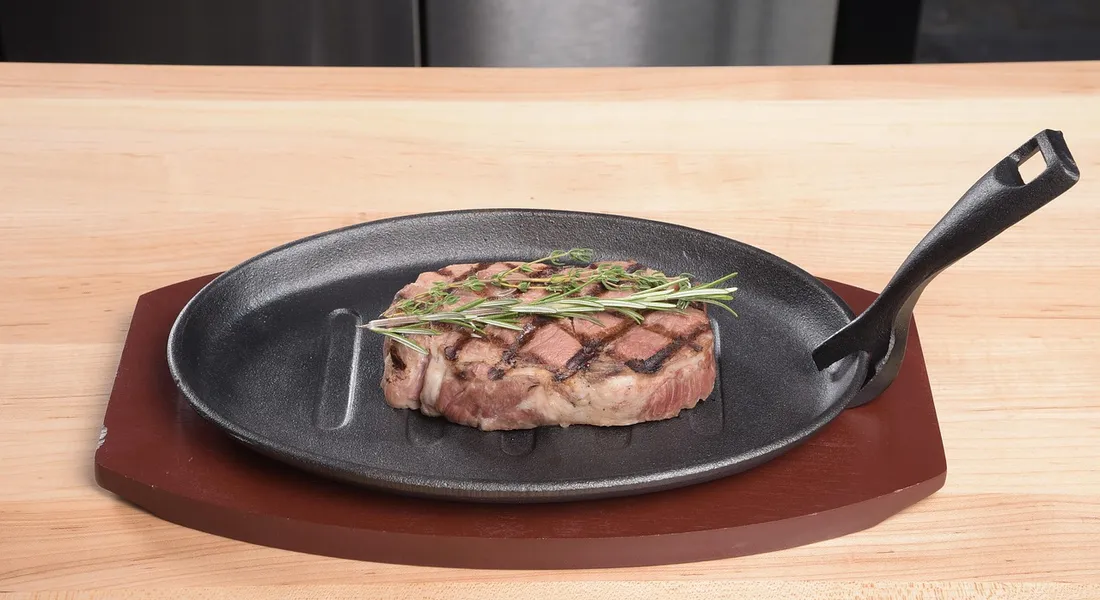
Think about the last time you seared a steak. Those tiny, dark bits of food that get left behind in the pan aren’t just burnt crumbs. When you cook with moderate to high heat, especially with fats and proteins, those microscopic particles undergo a change. They carbonize, essentially fusing to the metal surface and becoming a part of the pan itself. This is your carbon patina forming.
This layer of carbon buildup is chemically inert. It doesn’t react with water or air. That inert quality is what makes it a powerful shield, physically blocking moisture and oxygen from ever reaching the raw, rust-prone iron underneath.
It’s vital to see this carbon layer as a supplemental defense. Your primary rust barrier is always the polymerized oil seasoning you build through oven or stovetop methods. The carbon patina is a durable, secondary armor that develops naturally through use.
The Science of Carbon as a Protective Barrier
The easiest way to picture it is like a coat of tar on a wooden roof. It’s not always a smooth, glossy finish, but it creates an incredibly effective seal against rain and sun. A carbon patina works the same way for your pan.
Your oil-based seasoning can wear thin with abrasive cleaning or acidic foods. A well-bonded carbon patina, however, is tenacious and much less likely to flake off during everyday cooking, giving your pan a resilient base layer of protection.
Can You Burn Off a Carbon Patina?
Yes, absolutely. Extreme heat is the main culprit. Running a pan through a self-cleaning oven cycle or subjecting it to the direct, prolonged flames of a grill will vaporize this carbon layer. Aggressive scrubbing with steel wool or chainmail can also scrape it away.
This process strips the pan back to bare, gray metal, removing all seasoning and patina in one go, leaving it completely vulnerable to flash rust. You would need to start the seasoning process from scratch immediately after.
How to Build and Keep a Healthy Carbon Patina
Building a good carbon patina isn’t about being messy. It’s about smart, consistent use and care. Follow these steps.
- Cook in it often, focusing on techniques like searing, frying, and baking.
- Use fats (oils, butter, animal fats) and proteins, which carbonize well.
- Apply moderate to high heat to facilitate that carbonization process.
- Avoid over-cleaning. You don’t need to scrub the pan back to a mirrored shine after every use.
Your cleaning routine should support the patina. After cooking, scrub with a stiff brush and hot water. If your patina is still new and thin, you might skip soap to avoid stripping it. No matter what, always dry the pan thoroughly on the stove burner.
Sometimes, a carbon layer becomes too thick, gummy, or flaky, and it must be removed to apply fresh seasoning. This isn’t failure; it’s maintenance. A fresh start on a smooth surface is better than cooking on a layer of unstable carbon crumbs.
My Routine: What Helped Me Build a Durable Patina
My biggest shift was getting comfortable with a little darkness. I used to scrub every last speck from my favorite skillet. Now, after I sear a steak and deglaze the pan for a sauce, I do a light wash. I leave the dark, polymerized bits that are fused tight in the corners and along the sides. Over months, this built a resilient, jet-black base that my oil seasoning bonds to perfectly.
Heat management is the key to controlled carbon buildup: too low, and food just sticks without transforming; too high, and you risk burning and weakening the existing layers of seasoning and patina.
Maintaining the Patina on Different Cookware Surfaces
Not all surfaces are the same. A smooth vintage Griswold holds a patina differently than a pebbled-textured modern Lodge. The textured surface of a modern pan can trap carbon more easily in its pores, which is great for building non-stick character but requires vigilant brushing to prevent loose buildup. For readers weighing Lodge vs vintage cast iron, a quick buyer’s guide can help you compare durability, care requirements, and value.
Grill pans or skillets with ridges are patina magnets. Food carbonizes deeply in those grooves. You need to be more attentive with a brush designed for grooves to keep the carbon layer healthy and not chunky. Regular seasoning and careful maintenance help create and sustain a natural non-stick surface on cast iron cookware.
This applies to carbon steel, too, which behaves very similarly to cast iron. Readers often wonder what’s the difference between cast iron and carbon steel, and how that affects care and patina. For our readers everywhere, like those searching for ‘carbon steel patina pan australia’, remember that humid climates make thorough, heat-based drying non-negotiable to prevent rust, regardless of how strong your patina is.
Common Mistakes with Patina Care and How to Avoid Them
Taking care of your pan’s carbon layer is simple, but a few common habits can work against you. I’ve made these errors myself on old pans I’ve restored. Knowing what to avoid saves you from unnecessary work.
Mistake 1: Scrubbing Too Hard with Abrasive Pads
It’s tempting to grab a steel wool pad to get every last speck of food off. That aggressive scrubbing doesn’t just clean, it scrapes away the very carbonized seasoning you’re trying to protect. Think of your patina like a sealed, glossy coat of paint on a classic car. Using steel wool is like taking sandpaper to that finish.
The fix is to match your cleaning tool to the job: use a chainmail scrubber or a stiff nylon brush for stuck-on bits, and stick to a soft sponge or brush for everyday cleaning. My go-to is a chainmail scrubber for tough messes and a dedicated dish brush for everything else. It gets the pan clean without stripping it bare.
Mistake 2: Letting the Pan Sit Wet
Water is cast iron’s oldest enemy. Even after you towel-dry your pan, microscopic water droplets can cling to the surface. If you put the pan away like this, that moisture gets trapped. It can’t evaporate, so it starts to react with the iron, causing rust to form underneath your beautiful patina. You might not see it until the seasoning starts to bubble and flake. So, how does water moisture affect cast iron? Understanding how moisture interacts with the metal can guide your care and help protect the seasoning.
Always give your pan a final heat-dry on the stovetop for two to three minutes after washing, even if it feels dry to the touch. This gentle heat drives off every bit of moisture. I do this with every single one of my pans, from my daily driver skillet to my big griddle. It’s the single most effective rust-prevention habit you can build.
Mistake 3: Confusing Dirt for a Good Patina
A healthy patina is a layer of bonded, polymerized carbon. It should be relatively smooth and non-sticky. A common misunderstanding is that a pan layered with old, greasy food residue is “well-seasoned.” That gunk is not patina. It’s just dirt, and it can turn rancid, affecting the taste of your food and creating a rough, uneven surface.
A true patina should not feel tacky or smell off; if it does, you’re dealing with old oil, not seasoned carbon, and it’s time for a good wash. Your pan should look clean and feel smooth after proper washing and drying. If it’s shiny with oil, you likely just wiped it down instead of washing it.
When to Remove a Carbon Patina and Start Over
Sometimes, despite your best care, a patina fails. It’s not a reflection on you as a cook. Old pans, extreme heat, or lingering moisture from a previous owner can cause issues. Starting fresh is a normal part of cast iron stewardship.
You should consider a full reset when you see these signs:
- Flaking or Peeling: The seasoning is coming off in chips or sheets, often exposing bare, gray metal underneath.
- Rust Spots Breaking Through: You see specks or patches of orange rust that persist after washing and light scrubbing. This means the protective layer is compromised.
- A Thick, Gummy, or Uneven Layer: The surface feels rough, looks blotchy, or causes food to stick consistently. This is often a build-up of poorly polymerized oil, not good carbon.
The Safe Removal Process
If you need to strip the pan, do it safely. Never use power tools like sanders or grinders, as they can irreparably damage the iron’s surface.
- For Light Issues (Minor Rust, Sticky Spots): Start with a paste of coarse salt and a little water. Scrub vigorously. The salt acts as a gentle abrasive. For isolated rust, a 50/50 solution of white vinegar and water applied with a cloth for no more than 30 minutes can help dissolve it. Rinse and dry immediately.
- For Severe Cases (Thick, Flaking Buildup): A lye-based method is most effective. You can use a cold oven cleaner spray (check that lye is the active ingredient) in a garbage bag, or a pure lye bath. These methods remove only the organic seasoning and rust, leaving the bare iron intact, but they require serious safety precautions like gloves and eye protection.
Once the old patina is removed, you must re-season the bare iron immediately to prevent flash rust from forming. That clean, gray metal is highly vulnerable. Have your oil and oven ready to go before you start the stripping process. A fresh start is a chance to build a stronger, more even foundation.
Common Questions
Does a carbon patina help in humid climates?
Yes, but it’s not a magic shield. The inert carbon layer is a superb moisture barrier, but relentless humidity requires extra vigilance. Your non-negotiable habit must be a thorough, heat-based drying on the stovetop after every single wash to keep rust at bay.
Is patina care different for carbon steel versus cast iron?
The fundamental practice is identical: build protective layers through use and gentle cleaning. Carbon steel’s smoother surface may develop a more visual, splotchy patina faster, but the goal is the same. Use it, clean it with minimal abrasives, dry it with heat, and let the carbon build.
How do I know when to strip off the patina and re-season?
Remove it when the layer becomes a problem, not a protector. Look for active rust spots breaking through, a flaky or gummy texture, or an uneven surface that consistently causes food to stick. A fresh start on bare iron is better than maintaining a compromised foundation.
Your Patina, Your Pan’s Best Defense
The most reliable way to shield your cast iron from rust is to nurture that dark, carbon-rich patina through regular, thoughtful use. After every cook, simply clean it gently, dry it completely, and apply a whisper-thin layer of oil before putting it away. For deeper insights, our articles on choosing the right oil for seasoning and fixing minor rust spots offer practical next steps.
References & External Links
- r/carbonsteel on Reddit: Does carbon steel rust easier than cast iron?
- Rust in your pan: here’s how to prevent it and get rid of it – Skottsberg
- Carbon Coating
- Cast Iron – an overview | ScienceDirect Topics
- How to Clean Rust Off Your Carbon Steel Pan – Made In
- How to Restore Carbon Steel & Cast Iron Pans
Joseph Gerald
A material science expert by profession, Joseph is also an avid cook. He combines his 10+ years expertise in material science and metallurgy with his passion for cast iron cookware to bring you best hands on advice. His expertise ranges from types of cast iron cookware to best seasoning tips as well as restoration of vintage cast iron utensils. Joe is here to help you solve all your cast iron cookware queries and questions.