Why Is My Bare Cast Iron Pan Rusting Immediately After Washing?
If you’ve ever stripped a pan down to bare metal only to see a fine, reddish-brown haze appear within minutes, you know that sudden panic. This ‘flash rust’ is a natural chemical reaction, not a sign you’ve ruined your pan.
You can handle this. Here is exactly what we’ll cover to get you from a rusty panic back to a clean slate ready for seasoning:
- What flash rust is and why it happens so fast on bare iron.
- The simple trick to stop it before it even starts.
- How to safely remove it if you do see that orange haze.
Key Takeaways: Your Flash Rust Cheat Sheet
Flash rust is the immediate, orange-brown discoloration that appears on freshly stripped cast iron. It is a thin, superficial layer of oxidation, not the deep, damaging rust that eats into the metal over months or years.
The process requires three things to happen at once: moisture, oxygen, and a chemically active surface. When you strip a pan, you remove all protection, making the bare iron incredibly eager to react.
Your most important rule is this: the moment you finish rinsing a stripped pan, the clock is ticking. You have a very short window to act before rust spots begin to form.
Beating flash rust is a straightforward two-step process: achieve perfect, bone-dry metal, then immediately apply a microscopically thin coat of oil to seal it from the air.
What Exactly Is Flash Rust (And Why Does It Happen So Fast)?
Think of the science like this: bare iron + water + air = instant rust. When you strip a pan down to gray metal, you expose pure, porous iron. This surface is chemically unstable and wants to bond with oxygen. Water, even from a final rinse or humidity in the air, acts as the catalyst that speeds this reaction up dramatically.
I like to compare a stripped pan to a dry sponge. A seasoned pan has a slick, polymerized coating that repels water, like a sponge sealed in plastic wrap. A stripped pan is like that sponge without any wrap; it will eagerly wick up and hold onto any moisture it touches, from the air or your hands.
This “flash” variety is fundamentally different from the rust that forms from long-term neglect. Deep rust is a sign of damage that may require grinding or sanding to remove. Flash rust is a surface-level fact of life during restoration. I see it on pans in my workshop all the time, and it wipes away easily with a little oil and a towel during the next step.
Seeing those orange specks bloom before your eyes can feel like a failure, but it is not. It is a completely normal, expected part of working with bare metal. Your goal is not to prevent every single atom from oxidizing (that’s nearly impossible), but to control the process and stop it in its tracks before it can become a problem.
How to Spot Flash Rust: Signs and Symptoms
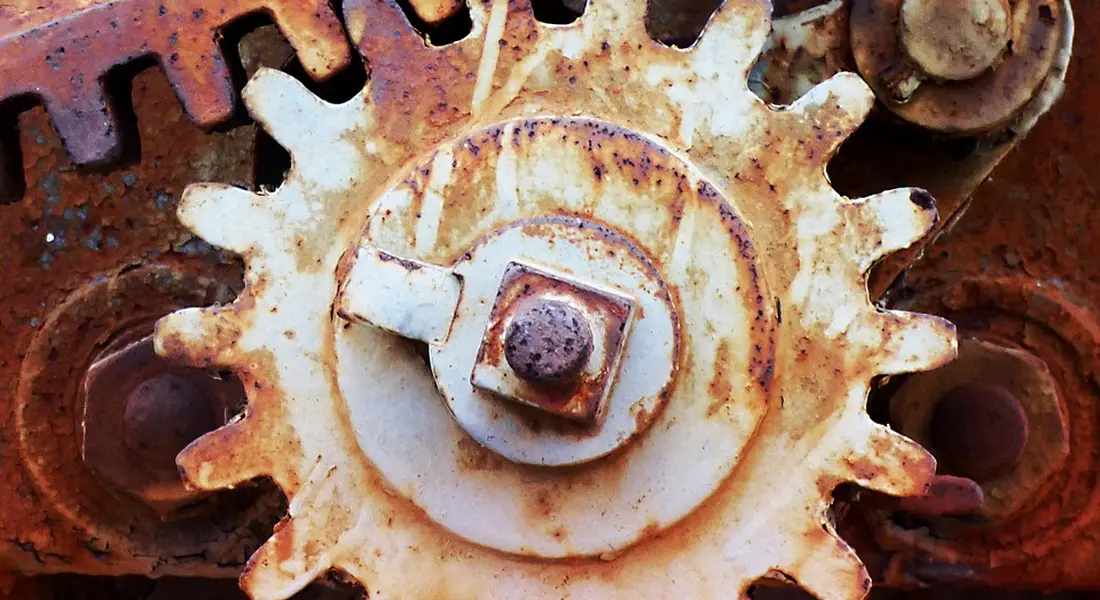
Flash rust is exactly what it sounds like: rust that flashes across your pan’s surface in a hurry. After you’ve stripped a pan back to bare gray iron, you’ll see it as a fine, even sprinkling of tiny orange or red specks.
It can appear within minutes, sometimes before you’ve even finished drying the pan. I’ve watched it bloom on a warm skillet in real time.
The key is that flash rust is a surface-level blush, not a deep wound. Run your finger over it. It should feel perfectly smooth to the touch, not pitted, rough, or flaky.
Compare this to regular rust from neglect. That rust is blotchy, textured, and often raised. It looks like damage because it is. Flash rust is more like the first dusting of orange freckles, while old rust is a scab.
The Immediate “Rinse-to-Rust” Window
Once you do your final rinse, the clock starts ticking. You have a critical 1 to 2 minute window to get the pan completely dry.
Humidity is your enemy here. On a muggy summer day, that window can shrink to mere seconds. The moisture in the air lands on the reactive bare iron and starts the oxidation process immediately.
Your workspace atmosphere is not a passive factor; it actively determines how fast you need to move.
Your Step-by-Step Shield: How to Prevent Flash Rust
Think of this as your non-negotiable closing routine. It doesn’t matter if you stripped with a lye bath, electrolysis, or vinegar soak (assuming you didn’t damage it). The moment you have bare, clean iron, this is your new protocol.
Step 1: The Perfect Dry (This is Everything)
Shake the pan vigorously over the sink to fling off the big water droplets. Then, grab a clean, dry, absorbent towel-I use flour sack towels-and dry it aggressively. Wipe every inch, including the handle and the outside walls.
But towel-drying is never enough. You must apply heat immediately.
- Stovetop method: Place the pan over a medium-low burner. Let it warm for 3-5 minutes until the entire surface is hot to the touch and all traces of moisture have steamed away.
- Oven method: Place the pan in a cold oven, then set it to 200°F (95°C). Let it bake for 15-20 minutes.
The goal is a pan that is too hot to handle comfortably, proving all microscopic water has been driven off. This heat is what stops the chemical reaction cold.
Step 2: The Swift Oil Seal
The moment the pan is dry but still very warm-not scorching hot-it’s time for oil. Using a paper towel, apply the thinnest possible layer of your chosen seasoning oil (like grapeseed, crisco, or flaxseed).
Wipe it on, then use a fresh, dry paper towel to buff off as if you made a mistake and are trying to remove it all. What remains is the perfect micro-layer.
This oil layer displaces the air and creates a temporary barrier against humidity, giving you control over the next step.
Please note: this is not an “extra” step. This is the foundational first coat of your new seasoning. You are simply applying it at the most strategically critical time, right after drying.
Environmental Controls
If you can, plan your restoration project for a dry day. Low humidity in the air gives you a much bigger safety net.
Run an air conditioner or a dehumidifier in your workroom. It makes a tangible difference. I avoid working on my pans in the garage for this reason-it’s often both humid and dusty.
Never let a stripped pan air-dry. That’s an open invitation for flash rust to cover every surface. Control the environment, dry with heat, and seal with oil. It’s a simple, unbeatable defense against rust on cast iron.
What to Do When You See Flash Rust: Treatment Methods
First, take a deep breath. Seeing that first faint orange haze on your freshly stripped pan is startling, but it’s not a catastrophe. Light flash rust is a surface issue you can fix completely, and it will not ruin your pan or your seasoning project. The key is to act quickly and methodically.
For Light, Speckled Rust
This is the most common type of flash rust. It looks like a light dusting of orange powder or fine specks. You don’t need heavy artillery for this.
Your goal is to gently abrade the rust off without scratching the bare iron. Here are a few reliable tools I keep in my workshop. This same approach also applies to cast iron stoves and other surfaces prone to rust. You can use the same tools and careful technique there to remove rust without damaging the finish.
- A Salt Paste: Mix a few tablespoons of coarse salt with just enough water or oil to make a gritty paste. This is a fantastic, controlled abrasive.
- Fine (#0000) Steel Wool: This is my go-to. It’s abrasive enough to remove rust but gentle on the metal.
- A Dedicated Rust Eraser: These are like pencil erasers infused with a mild abrasive. They are very effective for spot treatment.
Here is the simple process:
- Put on a small amount of your chosen abrasive and scrub the rusty areas with moderate pressure. You should see the rust transfer to your scrubber.
- Rinse the pan thoroughly with warm water to remove all abrasive particles and rust dust.
- This is the critical part. Do not pause. Immediately dry the pan with a towel and then apply heat to achieve a “perfect dry,” followed by a thin “oil seal” just as you did after stripping. This stops the rust cycle before it can restart.
If the Rust is More Stubborn
Sometimes, if the pan sat damp for too long, the rust can be a bit more textured or persistent. For this, we use a brief vinegar bath. Vinegar is a mild acid that dissolves rust, but it will also attack the good iron if you leave it too long. I cannot overstate this warning—the key is to know how to remove rust properly and when to dispose of the pan.
Here is the safe way to do it:
- Mix a solution of one part white vinegar to one part water in a container large enough to submerge the pan or the rusty area.
- Place the pan in the solution and set a timer. Five to ten minutes is almost always enough. Do not walk away.
- When the timer goes off, remove the pan and rinse it under running water. You should see the rust wiping away easily.
- Scrub the surface lightly with a sponge or scrub brush under the water to clear any residue.
- Now, move with purpose. Rinse, towel-dry, heat-dry, and apply your oil seal without any delay. The vinegar has made the metal very active, so you must protect it instantly.
Common Mistakes and How to Avoid Them
After fixing hundreds of pans, I see the same few missteps cause most post-strip rust problems. Avoiding these will make your life much easier.
- Mistake: Letting a pan air-dry.
Solution: Always use heat from your stovetop or oven to drive off the last traces of moisture. Evaporation from air-drying leaves behind just enough water to start oxidation. - Mistake: Applying oil to a cool or damp pan.
Solution: Oil must go on metal that is hot and completely dry to the touch. The heat opens the pores of the iron and ensures the oil bonds to the metal, not to a layer of water. - Mistake: Using too much oil, creating a sticky layer.
Solution: Wipe the oil on generously, then use a fresh, clean cloth to try and wipe it all off. What remains is the perfect, thin layer that will polymerize into seasoning. A sticky pan means you left too much. - Mistake: Delaying the first oil coat.
Solution: Have your oil and wiping cloths ready on your counter before you even start the final drying step. This “mise en place” approach ensures there’s no fumbling, which gives rust a chance to form.
Beyond the Basics: Other Options and Tools
If you are restoring a pan with particularly stubborn mineral deposits or you just want to give your bare iron an extra layer of defense, a few specialized tools can help. These are not always necessary, but knowing about them gives you more control.
Using a Food-Safe Chelator (Like Citric Acid)
After you have scrubbed and rinsed the stripped pan, you might notice the water forms little beads on the surface. This is a sign of surface tension, and where water beads, it can eventually leave behind minerals and, of course, rust. A final rinse with a mild acid like citric acid can change this. Make sure to clean and maintain your cast iron skillet properly after this step to protect it.
Think of citric acid as a surface conditioner for the metal. It reacts with the iron at a microscopic level in a process called passivation. This creates a very thin, inert layer that makes the surface less chemically reactive. In simpler terms, it makes the iron less “thirsty” for oxygen and moisture right after you dry it.
A quick passivating rinse can buy you precious extra minutes to get your pan dry and oiled before flash rust even thinks about starting. To use it, mix about a tablespoon of food-grade citric acid powder into a gallon of cool water. After your final scrub and rinse from cleaning your cast iron pan after cooking, give the pan a quick swish in this solution, then proceed to dry it immediately and thoroughly.
The Debate on “Water Displacing” Oils
In some restoration circles, you will hear about using a product like WD-40 Specialist Corrosion Inhibitor or a similar water-displacing spray as an intermediate step. The theory is sound: these products are designed to creep under moisture and coat the metal, preventing rust. However, when used on cast iron cookware, caution is advised as they are not meant for food-contact surfaces.
Here is my practical take. These sprays work, but they add a step. You must apply them, let them sit, and then you absolutely must clean the pan again with soap and hot water to remove the spray’s film before applying your seasoning oil. If you do not wash it off, you will be trying to polymerize a non-food-grade product in your oven.
I find that a meticulous, heat-assisted dry followed immediately by a thin coat of your regular seasoning oil is a simpler, more direct path that avoids any risk of contaminating your new seasoning layer. Save the heavy-duty sprays for tools you are storing in the garage, not for your cookware.
Paper Towel vs. Dedicated Rag: The Wipe Down
Once your pan is bone-dry and you are ready to apply your first protective oil, the tool you use matters. You have two main choices, each with trade-offs.
Using a paper towel is convenient. You use it and throw it away, so there is no linty rag to wash later. The downside is that paper towels can shed tiny fibers. These get stuck in your thin oil layer and burn into little dark specks during the seasoning process. They are harmless but can make your initial seasoning look spotty.
A dedicated, lint-free rag (like an old, clean t-shirt or shop towels) gives you a smoother application. You can control the oil better and polish the pan to that perfect, barely-there sheen. The con is you now have an oily rag to deal with. You must store it safely or wash it immediately to avoid a fire hazard.
For the absolute smoothest finish, a lint-free cloth is the professional’s choice, but a quality paper towel is a perfectly fine, safe option if you are mindful of a few stray fibers. My own workshop box contains both. I use the rag for the final, critical polishing wipe and a paper towel for the initial messy oil application. A bonus tip? A unused coffee filter leaves virtually no lint at all.
Common Questions
What causes flash rust the moment I strip a pan?
Stripping removes the protective seasoning, exposing pure, porous iron. This bare metal is chemically unstable and reacts instantly with oxygen and any moisture-even humidity in the air. It’s a natural oxidation process, not a sign of error.
Is there a recommended product to stop flash rust as I work?
Your best tool is heat, not a special product. Immediately after rinsing, use your stovetop or oven to achieve a perfect, bone-dry surface. A food-grade citric acid rinse can briefly passivate the metal for extra time, but heat drying is non-negotiable.
How much does my room’s humidity affect the process?
Humidity is your primary adversary. On a muggy day, flash rust can form in seconds instead of minutes. If possible, run a dehumidifier or air conditioner in your workspace to control the environment and give yourself a critical edge.
Building a Rust-Free Base for Seasoning
To prevent flash rust, dry your stripped cast iron completely and apply a thin layer of oil right away. This quick action shields the bare metal, ensuring your seasoning adheres smoothly and lasts. If you notice any rust, identify it early to prevent spreading. When rust appears, learn how to remove rust from cast iron. From here, you can confidently move on to other aspects of care, like managing daily cleaning or repairing minor scratches.
Expert Resources and Citations
- r/Cooking on Reddit: I have a rust-spotted, unused cast iron skillet. I’ve read online about how to season and it was a little complicated. Like, I just decided not to deal for worry of doing it wrong. Then I saw my friend season hers. It seemed easy. Can somebody give me the easy version? Also, what about this rust?
- How to Restore and Season a Rusty Cast Iron Skillet – Lodge Cast Iron
- If Your Cast-Iron Pan Could Talk, It’d Beg for This Advice
Joseph Gerald
A material science expert by profession, Joseph is also an avid cook. He combines his 10+ years expertise in material science and metallurgy with his passion for cast iron cookware to bring you best hands on advice. His expertise ranges from types of cast iron cookware to best seasoning tips as well as restoration of vintage cast iron utensils. Joe is here to help you solve all your cast iron cookware queries and questions.