Can Too Much Seasoning Trap Moisture and Rust Your Cast Iron?
If you’ve layered on oil in the oven again and again, only to find a spot of rust later, that frustrating fear is real. Yes, you can “over-season” cast iron in a way that traps moisture and causes rust, but it’s a fixable problem with a clear cause.
I’ve restored dozens of pans with this issue in my own kitchen, and here’s exactly what we’ll cover to get yours back on track:
- How thick, gummy seasoning acts like a plastic wrap, sealing in water instead of protecting the iron.
- The simple visual and texture tests to know if your pan is over-seasoned.
- The step-by-step strip and re-season process I use for a fresh, durable start.
- How to add thin, polymerized layers that bond properly and keep rust out for good.
Can Cast Iron Actually Be “Over-Seasoned”?
Let’s tackle this head-on. You can’t technically “over-season” a pan by applying too many proper layers. The real problem is applying improper layers. This leads to a buildup that looks and acts nothing like true seasoning.
Real seasoning is a thin, hard polymer. It’s the result of oil heated past its smoke point, bonding to the iron in a microscopic, cross-linked layer. From a chemistry standpoint, this is polymerization forming a cross-linked polymer film. So the question becomes: does seasoning actually bond to cast iron, or is it mainly a surface coating? Think of it like a single, perfect coat of automotive paint that’s been baked on. You can add more perfect coats over time. The issue comes when you add a coat that doesn’t fully cure.
What really happens is frequent, low-heat “maintenance” seasoning. Maybe you wipe on a little oil after every wash and pop it in a warm oven for 20 minutes. The oil gets tacky, but it never fully polymerizes. You’re not building a protective shield. You’re just layering on semi-cooked oil.
A proper seasoning layer is a smooth, glassy finish that’s part of the metal itself, while a buildup is a thick, gummy coating sitting on top of it. One is bonded armor. The other is a sticky blanket that can trap moisture and food particles underneath it.
How to Spot a Gummy, Flaky Seasoning Buildup
Your eyes and fingers are the best tools for this job. A healthy pan has a consistent, semi-glossy sheen, from deep black to bronze. A pan with buildup sends different signals.
- It feels sticky or tacky to the touch, even when cool.
- The surface looks dull, splotchy, or has a matte, dusty appearance.
- You can scrape it with your fingernail and it flakes or rolls up like old paint.
This buildup also causes problems when you cook. You might notice excessive smoking at normal temperatures, more food sticking than usual, or an uneven cooking surface that looks patchy when you wipe it with oil. The pan just doesn’t perform right.
I found a skillet at a flea market once that was a perfect example. It looked black, but it felt strangely soft. Rubbing it with a paper towel left behind a dark, oily residue, and the “seasoning” peeled off in a sheet near the rim. That wasn’t a well-loved patina. It was decades of grease that never truly cured.
Is That Rust or Just Discoloration?
Seeing a reddish spot can be alarming, but not all discoloration is active rust. A well-used pan develops a beautiful patina—colors ranging from golden brown to deep bronze. These are variations in the polymerized oil layers and are completely harmless. Distinguishing this from actual rust is important.
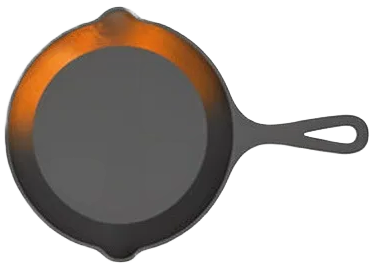
Active rust is a different beast. It’s a brighter, red-orange color and it has a distinct texture. The simplest test is the touch test: run your finger over the spot. A patina or seasoning will feel smooth. Active rust will feel rough, gritty, or crumbly. If it flakes off as a red powder, that’s rust. If it’s just a darker or lighter smooth stain, it’s almost certainly just the character of your seasoning.
How Thick Buildup Traps Moisture and Causes Rust
Think of a perfect layer of seasoning like a thin, tough coat of paint. It bonds directly to the iron. When you apply too much oil too often, the layers don’t bond properly to the iron or to each other.
This creates a soft, flaky, or gummy top layer that’s not fully attached. It’s like a sticker that’s starting to peel up at the corners.
Water or humidity in the air can easily seep underneath that poorly-bonded top layer, but then it has nowhere to go. It gets trapped against the bare iron surface. The seasoning itself doesn’t rust, but the iron underneath it absolutely will when it’s exposed to that trapped moisture.
This is why you might pull a pan from storage and find a surprise patch of rust, or see bubbling under a dark surface. The thick, uneven layer was hiding the problem, creating a perfect pocket for corrosion to start.
It happens most often after storage because the pan isn’t being heated and dried regularly. That trapped moisture just sits there, working on the iron, with no way to evaporate out.
How to Fix a Pan with Too Much Buildup
Don’t worry. This is a common and very fixable situation. You don’t need to strip the pan bare. We’ll use a tiered approach, starting with the simplest fix.
Step 1: The Thorough Scrub-Down
This is for pans with a slightly sticky feel or minor flaking. The goal is to remove the loose, high spots and gummy excess, not your good base seasoning.
Start by heating the pan gently on the stovetop. This can help soften any oily residue. Let it cool slightly so it’s warm, not scorching hot.
Pour a generous handful of coarse salt (like kosher salt) into the pan. Using a stiff-bristled brush or a chainmail scrubber, scrub the entire cooking surface firmly with the salt as your abrasive. The salt will break up the gunk without damaging the well-bonded seasoning underneath.
Scrub until the surface feels smooth and dry to the touch, not slick or tacky. Dump out the salt, wash the pan with a little warm soapy water to remove salt and debris, dry it immediately and thoroughly, then give it a very light coating of oil for storage.
Step 2: For Stubborn, Gummy Layers
If the scrub-down didn’t work, you’re likely dealing with thick, carbonized gunk that’s fully hardened. A vinegar bath can break this down.
Create a solution of 50% white vinegar and 50% water in a container large enough to submerge the pan. This dilution is important, as full-strength vinegar can be too aggressive.
Submerge the pan. You will see bubbles start to form on the surface as the acetic acid reacts with the rust and buildup. Do not leave the pan in the solution for more than 30 minutes at a time.
After soaking, use your chainmail scrubber or a stainless steel scouring pad. You should see the thick, black gunk turn into a sludge that wipes away easily, revealing the harder, gray base metal or good seasoning underneath.
You may need to repeat the 30-minute soak and scrub cycle two or three times for severe buildup, always checking the pan’s progress in between. Once the flaky, uneven layers are gone, wash, dry, and you’ll be ready to re-season the clean, bare iron.
When to Consider More Drastic Measures
Methods like a lye bath or electrolysis tank are for full strip-downs. You’d use these if the entire pan is coated in decades of crusty carbon, or if the vinegar bath isn’t touching the problem.
These are fantastic restoration tools, but they’re overkill for a pan that’s simply had too many coats of oil applied in a short time. I’ve only needed lye for my most neglected flea-market finds.
For the “over-seasoned” pan we’re talking about here, the scrub or the vinegar bath will almost always get you back to a solid foundation. The key is removing what’s loose and poorly bonded, not starting completely from zero.
How to Remove Rust After Stripping the Buildup
Once you’ve stripped away that thick, gummy layer of excess seasoning, you’ll likely find rust. This is normal. The old, weak layer was trapping moisture against the bare iron. Now, you need to eliminate every speck of rust to give your fresh seasoning a clean, strong foundation.
For Light Surface Rust
A faint, dusty orange coating is common on old cookware. Rust can build up on cast iron, but a white vinegar solution is your best friend. The acid dissolves the rust without harming the iron.
Mix one part white vinegar with one part water in a container large enough to submerge the pan. Soak the rusty area for no more than 30 minutes. Any longer risks etching the metal. If you’re disposing of the pan, this rust-removal step helps prepare the metal for recycling. A clean, rust-free surface makes disposal handling safer and simpler.
Set a timer for 30 minutes; over-soaking in vinegar can damage the iron’s surface.
After the soak, scrub the pan vigorously under running water with a stiff brush or scrubby sponge. You must dry it immediately and completely.
I dry mine on a stovetop burner over low heat for a few minutes to ensure all moisture evaporates. For small, stubborn spots, a dedicated rust eraser is a fantastic tool. It’s like a pencil eraser for rust, letting you target specific areas without another full soak.
For Heavier or Pitted Rust
If the rust is thicker or has created small pits in the metal, you need a more abrasive approach. Start with a coarse salt scrub. Kosher or coarse sea salt acts as a gentle, natural abrasive. That said, you might wonder whether salt itself can cause rust on cast iron. The truth about salt scrubs and storage will be covered next.
- Pour a generous mound of salt onto the rusty surface.
- Add a small splash of water or oil to make a paste.
- Scrub forcefully with a folded paper towel or a cut potato for grip. The salt will grind the rust away.
For deeply set rust, use the vinegar soak method first, then attack the remaining spots with fine 0000-grade steel wool. This wool is abrasive enough to remove rust but gentle enough to avoid deep scratches. Be cautious when using steel wool on cookware to preserve its surface.
The job isn’t done until the entire cooking surface is a uniform, dull gray color with no orange or red residue.
Run your fingers over it. It should feel smooth and consistent. If you season over rust, it will simply bubble and flake off again.
How to Season Correctly and Avoid Future Problems
This is the “right way.” The method that builds durable, non-stick seasoning and makes the idea of “over-seasoning” irrelevant.
The Golden Rule: Wipe It Like You Made a Mistake
The single most important step in seasoning is applying an impossibly thin layer of oil. I tell people to pretend they spilled oil on the pan and are desperately trying to wipe it all off before anyone notices.
- Apply a few drops of your chosen oil (like grapeseed or flaxseed) to the warm, dry pan.
- Use a clean paper towel or cloth to spread it over every surface, inside and out.
- Take a second, clean, dry towel and buff the pan. Buff until it looks dry and matte, with no visible oil sheen.
The oil layer should be so thin it feels like a ghost left it behind; you’re polishing the metal, not coating it.
Any oil left pooling will bake into a sticky, weak spot that can trap moisture and food particles.
Heat Management for a Strong Bond
Seasoning is science, not magic. The oil must polymerize, meaning it transforms from a liquid into a hard, plastic-like coating bonded to the iron. This only happens with sufficient heat. The chemistry behind it is what allows for a durable, non-stick surface.
You must heat the pan above your oil’s smoke point. For most oils, this means baking it in an oven upside-down at 450°F to 500°F for one hour. The heat triggers the chemical change that creates the bond.
Contrast this with the mistake of using low, slow heat. Baking a thick layer of oil at 250°F might dry it, but it won’t polymerize. It creates that gummy, tacky layer that started this whole problem. Proper heat creates armor. Low heat creates a trap.
Your Maintenance Routine to Stop Rust
Correct seasoning is your primary defense, but daily care keeps it strong. After cooking, let the pan cool slightly, then clean it with warm water and a gentle brush. A little soap is fine.
Dry it thoroughly-always. Place it on a warm stove burner for a minute to banish all water. For long-term storage, especially in humid climates, I give my pan a “maintenance coat.”
This means applying a single drop of oil, spreading it, and then buffing it to that same dry, matte finish with a towel. You are not adding a new seasoning layer for storage. You are leaving a microscopic film of oil to block ambient moisture.
A proper, thin, polymerized seasoning layer is impervious to water and is the best rust prevention you can build; adding thick layers does the opposite.
Stick to this routine, and your pan will develop a beautiful, functional patina that lasts a lifetime without flaking or trapping moisture.
Common Questions
Can a rust eraser damage my cast iron’s seasoning?
A true rust eraser is designed for metal and won’t harm well-bonded seasoning. Use it dry and apply firm, focused pressure only on the rusty spots. Afterward, wipe clean, dry thoroughly, and apply a thin coat of oil to the exposed area.
Is the rust removal advice on forums like Reddit trustworthy?
While many share sincere experiences, methods can vary wildly in safety and effectiveness. Always cross-reference any advice with established care principles from reputable sources. When in doubt, stick to the proven basics: vinegar for light rust, abrasion for stubborn spots, and always re-season bare iron.
Once I’ve removed rust, how do I stop it from returning?
Rust returns when bare iron is exposed to moisture. After rust removal, you must immediately and thoroughly dry the pan, then apply a fresh, thin polymerized seasoning layer. This new layer bonds to the iron, sealing it from air and moisture permanently.
Your Path to a Perfectly Seasoned Skillet
Remember, a good seasoning is built from many thin, baked-on layers, not one thick, sticky coat that can lock in water. Your best defense against rust will always be a thorough, heat-assisted drying after every single use, before that pan sees any oil or a cabinet. From my bench, knowing when to strip and re-season or how to choose a scrub brush often comes next for dedicated cooks. Think of it as a simple rhythm: clean, season, and maintain your cast iron skillet. That steady habit is what keeps rust away and flavor-building on track.
Sources and Additional Information
- How to Restore and Season a Rusty Cast Iron Skillet – Lodge Cast Iron
- New cast iron skillet came out rusty after seasoning – Seasoned Advice
- cleaning – How did rust appear on my cast iron in a matter of minutes? – Seasoned Advice
- How to Remove Rust from a Cast Iron Skillet – Field Company
Joseph Gerald
A material science expert by profession, Joseph is also an avid cook. He combines his 10+ years expertise in material science and metallurgy with his passion for cast iron cookware to bring you best hands on advice. His expertise ranges from types of cast iron cookware to best seasoning tips as well as restoration of vintage cast iron utensils. Joe is here to help you solve all your cast iron cookware queries and questions.