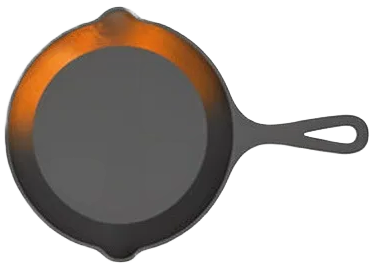
How Has Cast Iron Seasoning Evolved from Lard to Flaxseed?
If you’ve ever felt overwhelmed by the endless debates over the “best” oil for seasoning, you’re not alone. Knowing the history behind these methods takes the guesswork out of caring for your pan.
Let’s trace the practical journey of seasoning, from farmhouse kitchens to online forums. Here are the key turns we’ll cover.
- Why lard and tallow were the trusted defaults for over a century.
- How the rise of Crisco and vegetable oils changed home cooking.
- The real story behind the flaxseed oil trend and its drawbacks.
- What my own restoration work has taught me about today’s best practices.
Key Takeaways: A History of Seasoning in a Skillet
Looking back shows us why we do what we do today. The core ideas have stayed the same, but the tools have gotten better.
- Traditional fats like lard worked because they were available, not because they were perfect for the chemistry of seasoning.
- The goal has always been the same: create a durable, non-stick polymerized oil layer to protect the iron from rust and food from sticking.
- Early “seasoning” was often a mix of cooked-on fat, soot, and food carbon, maintained simply by cooking.
- Modern methods focus on predictable science over kitchen tradition, using oils with high smoke points for a more stable finish.
What Did Early Cast Iron Seasoning Look Like?
For most of history, seasoning wasn’t a project. It was a result. Cooks needed to seal the porous surface of a new pan to keep food from tasting metallic and to slow rust. They used what they had: fat from tonight’s dinner. They would rub it on a warm pan, often right over the hearth fire or on a wood stove. This everyday care is what we now call cast iron seasoning. It’s important because it builds a protective patina that prevents rust and helps food release more easily.
This process naturally built up layers, but they were different from what we aim for now. Early seasoning layers were less pure polymer and more of a composite with soot and tiny carbon bits from cooking over open flames. The pan was considered “broken in” through steady use, not a dedicated oven session.
You maintained it by cooking fatty foods and wiping it out. I’ve restored skillets from the early 1900s where the original “seasoning” is nearly black and fused with what I can only describe as a century of gentle kitchen carbon. It’s a testament to the “maintenance by use” approach. A common question is about the general history of food seasoning in the world. This practice of treating cookware is unique to materials like cast iron and carbon steel, separate from the use of spices and herbs to flavor food itself.
The Era of Animal Fats: Lard, Tallow, and Bacon Grease
For generations, animal fats were the only logical choice. If you cooked a pork roast, you had lard. If you cooked beef, you had tallow. Bacon grease was a prized byproduct saved in a tin by the stove. Using them to coat your pan was a no-waste kitchen habit.
These fats do work. They polymerize and they impart a wonderful flavor base for cooking. A pan seasoned with bacon grease has a certain soul. But they have downsides. Animal fats have a lower smoke point than many modern oils and can form a slightly less durable polymer layer. They can also go rancid if a pan is stored for a long time without being used.
The biggest reason lard was used is because it was there, making it a practical, not necessarily an optimal, seasoning agent. I remember the distinct, almost sweet, smoky smell when I stripped a family heirloom skillet that had clearly been cared for with lard for decades. It was a direct link to a past kitchen.
The Shift to Industrial and Vegetable Oils
The 20th century changed the home kitchen. With the rise of industrial food processing, new products appeared. Crisco, introduced in 1911, offered a shelf-stable, plant-based shortening. It was marketed as modern and clean. For seasoning, it promised consistency that could vary with animal fat quality.
Later, bottled vegetable oils like corn, canola, and generic “vegetable oil” blends became pantry staples. They were cheap, accessible, and had higher smoke points than lard. This shift mirrored a broader change in home cooking and the history of food seasoning in America, where processed, consistent goods replaced variable farm-produced ones. People began using these oils for seasoning because they were right there next to the stove, not because they understood the science of polymerization. Some worked okay, but many generic vegetable oils contain high levels of polyunsaturated fats, which can lead to a softer, sometimes sticky, seasoning layer.
The Curious Case of Seasoning Cubes and Sprays
The mid-century love affair with convenience gave us specialized products. From the 1950s through the 1970s, you could buy cast iron “seasoning cubes” or sprays. These were often a blend of oils and waxes, sometimes with preservatives.
They promised a one-step, no-fuss solution. The reality was often a gummy, uneven coating that smelled odd when heated. These products failed because seasoning is a chemical process requiring thin, even layers of pure oil heated past its smoke point, something a wax-based cube couldn’t reliably provide. The history of these seasoning cubes is a footnote in cast iron care, a well-intentioned shortcut that rarely delivered a good long-term finish. They remind us that for cast iron, the simplest methods—a tiny amount of a good oil and consistent heat—are usually the best, especially when considering how seasoning actually bonds to cast iron.
How Science Changed the Way We Think About Seasoning

For generations, seasoning was folk wisdom. People knew that rubbing fat on a hot pan made it better, but not exactly why. Modern kitchen science gave us the answer: polymerization. This is the process where oil transforms into a hard, plastic-like coating when heated in the presence of metal.
Think of it like this. Drying paint just lets a solvent evaporate, leaving pigment behind. Polymerization is different. The heat actually changes the oil’s molecular structure, linking the fat molecules into long, tough chains that bond to the iron. It’s more like melting plastic beads to form a solid sheet.
This understanding shifted our focus to three key factors: smoke point, fatty acid composition, and layer stability.
- Smoke Point: The oil needs to get hot enough to polymerize, but not so hot it just burns off. You’re aiming for a temperature just above its smoke point.
- Fatty Acid Composition: Oils are made of different types of fat molecules. Some polymerize harder, others more flexibly. We look for a good balance.
- The Goal: The pursuit is no longer just “a coating.” It’s a hard, stable, and slick layer that can withstand cooking and cleaning.
Knowing the chemistry means you can troubleshoot. If your seasoning is sticky, the heat was too low. If it’s ashy or flaky, the heat was too high or the layer was too thick.
The Flaxseed Oil Experiment
In the early 2000s, a single, very influential blog post declared flaxseed oil the perfect seasoning oil. It sparked a huge trend. The theory was sound: flaxseed oil is very high in omega-3 fatty acids, which are highly unsaturated and prone to polymerization. This, the idea went, would create an incredibly hard, durable finish like a ceramic coating. But the truth about flaxseed oil seasoning and whether it’s worth the hype is more nuanced, and it will be explored in the next section.
Many people, including myself, tried it. The initial results could be stunning-a glassy, dark finish right out of the oven. But the backlash came within a year or two. The very hardness that made it attractive also made it brittle. Under the thermal stress of daily cooking, that rigid polymer layer would often crack and flake off in sheets, taking other layers with it.
It was also expensive and had a short shelf life. We learned that an ultra-hard finish isn’t the best for a tool that constantly expands and contracts with heat. A little flexibility is a good thing.
Where We Are Today: The Modern Oil Consensus
The current common recommendation is for neutral, high-smoke point oils with a balanced fatty acid profile. We want oils that polymerize well but also have some give.
My daily drivers are grapeseed and refined avocado oil. They have high smoke points, are mostly neutral in flavor, and create a very resilient layer. Common, affordable oils like soybean (often sold as “vegetable”) or canola oil are also excellent, reliable choices.
This table compares some modern favorites:
| Oil | Key Benefit | Note |
| Grapeseed | High smoke point, neutral, durable finish | A great all-around choice for seasoning and cooking. |
| Refined Avocado | Very high smoke point | Excellent for high-heat seasoning cycles. |
| Soybean/Canola | Accessible, affordable, reliable | The workhorses. They get the job done without fuss. |
The biggest lesson from the last few decades is that method matters more than a “magic” oil. A whisper-thin layer, proper heat, and patience will build great seasoning with almost any modern cooking oil.
Common Seasoning History Mistakes and How to Avoid Them
Looking to the past for guidance is smart, but copying it without context leads to problems. Here are pitfalls that arise from misunderstanding historical practices.
Using What Your Grandma Used (Without Context)
Your grandma’s lard-seasoned skillet was a masterpiece because she used it every single day. That daily application of fat and heat maintained and repaired the seasoning layer. Lard is a saturated animal fat that can turn rancid if a pan sits unused in a cupboard for weeks.
You can absolutely use lard today with fantastic results, but you must adapt the tradition. If you cook with it regularly, it’s wonderful. If the pan will sit, a final seasoning layer with a stable modern oil can protect that lovely lard base from spoiling.
Chasing a “Historical” Finish
I see this often. Someone wants the jet-black, glossy patina of a 100-year-old Griswold right after they restore a pan. That deep black gloss isn’t from one oven session; it’s from decades of fats polymerizing, building up, and carbonizing slowly from daily use.
Focus on function first, not antiquity. A smooth, non-stick cooking surface is the goal. The legendary black mirror finish will come with time and countless meals. Forcing it with extreme heat or too many layers often creates a thick, fragile coating that chips.
Believing Older Methods Are Inherently Better or Worse
This is a myth-versus-reality moment. History isn’t a list of good or bad ideas, but a series of smart solutions for their time.
- Myth: Old methods like lard are superior because they’re “natural.”
- Reality: Lard was superior because it was the available, effective fat. It worked brilliantly in a kitchen that never stopped cooking.
- Myth: The flaxseed oil fad was a silly mistake.
- Reality: It was a valid, community-driven experiment based on the best science we had at the time. We learned from its failure.
Today’s oils are chosen for consistency, stability, and shelf life in modern kitchens. The principle-applying a thin layer of fat and polymerizing it with heat-hasn’t changed. Learn that principle, and you can successfully use methods from any era.
Recommended Products for Modern Seasoning
Today’s choices are the direct result of all that trial and error. We’ve moved from whatever fat was on hand to selecting specific oils for specific jobs. This isn’t about buying the most expensive brand, it’s about choosing the right tool for the task, just like a blacksmith selects a hammer.
The goal of modern seasoning is to build a durable, slick polymerized layer, and your oil choice is the most important variable.
High-Temperature Oils for Building Layers
When you’re doing a full oven seasoning to restore a pan or build a new base layer, you need an oil that can handle the heat. Think of this as the foundation coat of paint on a piece of furniture. You can learn more about the process in our complete guide to seasoning cast iron pans and Dutch ovens.
You want to look for refined oils with a smoke point above 400°F (204°C). The refinement process removes impurities that can leave a sticky residue or an off taste. When this clean oil polymerizes at high heat, it creates a very hard, stable layer.
My top-tier choices for this foundational work are:
- Grapeseed Oil: A fantastic all-rounder with a high smoke point and a neutral flavor. It’s my personal go-to for restoration projects.
- Refined Avocado Oil: Has one of the highest smoke points of any cooking oil, making it extremely reliable for creating tough layers.
- High-Oleic Sunflower or Safflower Oil: These are specially bred varieties. “High-oleic” means they are more stable and resistant to breaking down under heat, much like the stable lard of the past.
Basic Oils for Maintenance and Cooking
Not every oil application needs to be a project. For the daily care that keeps your seasoning in fighting shape, you want an affordable, neutral workhorse.
This is where the historical tradition of “maintenance by use” lives on most effectively. After you wash and dry your warm pan, a tiny amount of a basic oil (see how to season and maintain your cast iron cookware) wiped on the cooking surface is all you need. It protects from rust and reinforces the seasoning with each use.
Keep a bottle of one of these by your stove:
- Standard Vegetable Oil
- Canola Oil
- Rice Bran Oil
They have moderately high smoke points, are inexpensive, and won’t impart any flavor. The daily wipe with these oils is the modern equivalent of Grandma giving her skillet a quick rubdown with the bacon fat jar.
The Right Tools for the Job
The right tools turn a messy chore into a simple, effective ritual. The core principle for applying seasoning oil is “thin, even, and wipe it like you made a mistake.” These tools help you do just that when you season cast iron.
- Lint-Free Cloths: Blue shop towels (the kind from the hardware store) are perfect. Old t-shirts can leave fuzz, and paper towels can shred. You want a cloth that applies oil without adding debris.
- Natural Bristle Brush: A small, clean brush dedicated to oil application helps spread an ultra-thin layer into every pore and corner, especially on intricate pieces like waffle irons or gem pans.
- Dedicated Stiff Brush for Cleaning: A good chainmail scrubber or stiff nylon brush makes cleaning easy without damaging your hard-won layers. This separates the maintenance phase from the building phase.
Good tools enforce good technique, and good technique is the real secret to a flawless finish.
Your Pan’s Story: Blending History with Practice
Every time you heat oil on that iron surface, you’re participating in a long, unbroken chain of care. You’re not just following internet instructions, you’re continuing a practice.
There is no single, perfect, lost “right” way. There is only the method that works reliably for you and your pan. The lard of a farmhouse kitchen, the Crisco of the mid-century, the flaxseed experiment of the 2000s, and today’s grapeseed oil all share the same goal: to create a trusted cooking partner.
Knowing this history makes me appreciate my own daily driver skillet more. It’s just a humble #8, but when I give it its weekly warm wash and stovetop oiling, I’m not just maintaining a tool. I’m adding another layer to its story, one that started long before it was mine. Your pan has a past, and you are writing its present.
Common Questions
Is the history of cast iron seasoning the same as the history of seasoning food?
No, they are completely different practices. Seasoning food refers to using spices and herbs for flavor. Seasoning cast iron is the technical process of building a polymerized oil layer to protect the cookware and create a non-stick surface, which involves a chemical reaction known as polymerization.
What was the deal with those old seasoning cubes and sprays?
They were a mid-century convenience product that often failed. These cubes or sprays frequently contained waxes and additives that couldn’t properly polymerize, leading to a gummy, uneven coating instead of a hard, slick finish.
Why did the dominant seasoning methods change over time?
The shift was from using whatever fat was available (lard, bacon grease) to choosing oils based on predictable kitchen science. We now prioritize oils with high smoke points and stable fat profiles to build a more durable and consistent protective layer through controlled polymerization.
Your Seasoning Strategy, Informed by the Past
For a reliable, non-stick surface, pick one common oil like crisco or canola and commit to it for both initial seasoning and after-care. The best method is the simple one you’ll actually use consistently to bake on protective layers with heat. When your base coat is set, learning to clean and dry your pan properly will make that seasoning last for decades.
References & External Links
- Cast Iron Seasoning – The Cast Iron Collector: Information for The Vintage Cookware Enthusiast
- What is cast iron seasoning? – Lodge Cast Iron
- The Seasoning Guide Part 1 – Smithey Ironware
- r/castiron on Reddit: The Science of Seasoning Cast Iron
A material science expert by profession, Joseph is also an avid cook. He combines his 10+ years expertise in material science and metallurgy with his passion for cast iron cookware to bring you best hands on advice. His expertise ranges from types of cast iron cookware to best seasoning tips as well as restoration of vintage cast iron utensils. Joe is here to help you solve all your cast iron cookware queries and questions.