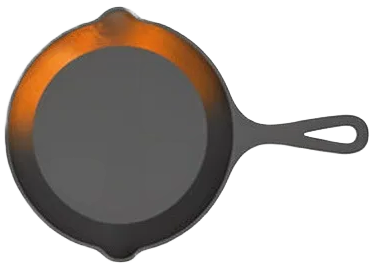
Why Does Cast Iron Metallurgy Create the Perfect Seasoning Surface?
If you’ve ever wondered why seasoning bonds so tenaciously to your skillet but flakes off other pans, the answer is in the metal itself. Cast iron’s unique structure isn’t an accident; it’s the reason a durable, non-stick patina is not just possible, but almost inevitable with proper care.
- How the porous, slightly rough surface of cast iron acts like a microscopic canvas for oil to bond to.
- The role of heat in transforming oil into a hard, slick polymer that’s fused to the iron.
- Why cast iron’s heat retention provides the consistent, high temperature needed for seasoning to cure properly.
- A simple comparison to smooth metals like stainless steel to highlight cast iron’s natural advantage.
What Is Cast Iron, Really? A Look at Its Micro-Surface
At first glance, a cast iron skillet looks like a solid, heavy piece of dark metal. But what you’re seeing is just the surface. Under a microscope, the truth is much more interesting.
Cast iron is a high carbon iron alloy. That extra carbon is what gives it legendary heat retention and its unique, slightly gritty texture. I think of this texture not as a flaw, but as the secret to its success.
Imagine the surface not as a smooth sheet of glass, but as a dry riverbed or a very fine kitchen sponge. It’s covered in microscopic peaks, valleys, and pores. This is its natural, unpolished state right from the foundry.
Now, compare that to a pan made from stainless steel or aluminum. Those metals are processed to be non porous. Their surfaces are smooth and sealed. This is why food often sticks to them, and why oil just slides around on top instead of bonding. A slick, non porous surface has nothing for seasoning to anchor to, which is exactly why those pans can’t build up a natural non stick layer like cast iron can.
The carbon content is the key player here. It changes how the iron solidifies, creating that grainy, porous microstructure we can’t see but absolutely rely on for everything that comes next.
The Chemistry of Seasoning: How Oil Bonds to Iron
Seasoning isn’t magic. It’s simple kitchen chemistry. When you apply a thin layer of oil and heat it past its smoke point, a process called polymerization happens.
You can forget that technical word. Just picture the oil transforming. Its liquid molecules link together into long, tough chains, forming a solid coating. It’s like the oil turns into a thin, durable layer of plastic right on the pan.
This is where cast iron’s porous surface becomes absolutely crucial. Think of trying to paint a perfectly smooth glass window. The paint would just bead up and slide off. But if you try to paint a rough, unpainted concrete wall, it soaks in and grips tightly. This is also where the chemistry of polymerization comes into play: does seasoning actually bond to cast iron, or is adhesion mostly physical? Cast iron’s microscopic texture acts like that concrete wall, giving the polymerizing oil a complex landscape to seep into and lock onto for good. That distinction helps explain how durable the seasoning can be.
A smooth metal pan is that glass window. The oil might polymerize a little on the very top, but without pores to fill, it forms a weak film that flakes off with the first spatula scrape.
This process creates what we call seasoning layers. The first layer physically plugs the pores, creating a smoother base. Each subsequent layer chemically bonds on top of the last, building up that classic black, semi glossy patina. A well built seasoning is therefore both a physical barrier sealed in the pores and a chemically bonded, slick coating on the surface. That’s why it’s so durable and naturally non stick. The bond is mechanical and molecular, not just cosmetic.
How to Work With Your Pan’s Metallurgy for a Perfect Season
Think of your skillet’s surface like a well-made brick wall. The iron itself is the brick, and the microscopic pores and texture are the mortar lines and tiny gaps. Your job is to fill those gaps, not paint over the whole wall. Here is how to do that.
Step 1: Prepare the Surface
You must start with a perfectly clean and dry pan. Any grease, old food, or moisture creates a barrier. The oil cannot bond to the iron if it can’t touch it. Wash the pan with warm, soapy water, dry it completely with a towel, and then place it in a 200°F oven for 10-15 minutes to drive off any hidden moisture and ensure it’s ready for seasoning. The slight warmth from this step helps the oil thin out and seep into those pores more easily.
Step 2: Apply Oil-Then Remove It All
This is the step everyone gets wrong. Pour a small amount of your chosen oil (like flaxseed, grapeseed, or crisco) onto the warm pan. Use a paper towel to rub it over every surface, inside and out. Now, take a fresh, clean paper towel and wipe the pan as if you made a mistake and are trying to remove all the oil. You want the pan to look dry to the touch, with only a microscopic, almost invisible film of oil remaining in the pores and texture. Any oil sitting on top of the pores will polymerize into a separate, weak layer that feels sticky or can chip.
Step 3: Bake It On Correctly
Polymerization is the oil turning into a hard plastic-like coating. This only happens with enough heat and time. Place your oiled pan upside-down in a preheated oven. The temperature must be above your oil’s smoke point, typically between 450°F and 500°F. Bake it for one hour, then turn the oven off and let the pan cool inside completely. The sustained, high heat is what triggers the chemical change, locking the oil into the iron’s texture for good.
The Result: Thin vs. Thick
The difference in outcome is dramatic. A properly thin layer bakes into a hard, slick surface that integrates with the metal. A layer that was too thick bakes into a coating that sits on top of the metal. This topcoat is weak. It can feel gummy, chip off during cooking, or carbonize into black flakes in your food. One bonds with the pan, the other just sits on it.
Maintaining Your Seasoning With the Metal in Mind
Once you have a good season built into the pores, your care routine shifts from construction to preservation. Your goal is to protect the polymerized layer that’s now part of the pan’s surface.
Gentle Cleaning Preserves the Bond
After cooking, let the pan cool slightly, then clean it with warm water and a soft sponge or brush. A little mild dish soap is perfectly fine. Modern dish soap is designed to cut through grease (your dinner’s oil), but it cannot break the chemical bonds of a polymerized seasoning layer that’s baked into the iron. The real threat to your seasoning is physical abrasion. Scrubbing with steel wool or abrasive pads doesn’t chemically strip the seasoning; it mechanically sands it out of the pores, which is much harder to repair. To keep the seasoning intact, pair gentle cleaning with occasional reseasoning. Look to the next steps for a simple guide on clean, season, maintain your cast iron skillet.
The Post-Wash Ritual: Topping Up the Surface
After washing and rinsing, dry the pan immediately and thoroughly with a towel. Then, place it on a low stovetop burner for a minute or two to ensure all moisture is gone. Finally, take a tiny drop of oil on a paper towel and give the cooking surface the lightest possible wipe. This maintenance wipe isn’t adding a new seasoning layer; it’s simply coating the microscopic peaks of the existing polymerized surface to prevent rust. The next time you heat the pan to cook, that minuscule amount of oil will bake on, “topping up” the existing layer. This is care, not a full re-seasoning. Between full seasonings, a quick maintenance oil helps keep your cast iron in top shape. This easy step supports regular seasoning and ongoing care of your cookware.
Fixing Common Problems Caused by Metallurgy and Chemistry
Knowing the science is one thing, but putting it to work fixes your pan. Let’s apply what we know about pores and polymerization to the most frequent issues.
Why Is My Seasoning Flaking Off?
This is the classic sign of a thick, improperly bonded layer. Think back to the rough, porous surface. Seasoning should form within those microscopic valleys, creating a mechanical lock. When you apply oil too thickly, it can’t all seep into the pores. The excess forms a brittle shell on top of the surface, like a thick coat of varnish on rough wood. That shell has no strong foundation, so heat and cooking stress make it crack and flake.
The fix isn’t a mystery: you need to remove that unstable top layer and start fresh with a properly thin coat.
I see this often on pans I restore. Don’t reach for power tools. A gentle stripping with coarse salt and a little oil, or a brief soak in a lye solution for tougher cases, will take off the flaky shell without damaging the good base metal underneath. Once it’s clean and dry, you can build new, thin, durable layers.
My Pan Is Sticky or Gummy. What Happened?
Stickiness is a textbook case of incomplete polymerization. The oil molecules didn’t get hot enough, or for long enough, to fully link together into a hard, slick finish. They’re stuck in a sticky, in-between state. This usually happens for two reasons: too much oil on the pan, or not enough heat/time in the oven.
- Too much oil: The oil pools and can’t fully polymerize before it starts to bake into a tacky residue.
- Too little heat: Your oven’s temperature was off, or you pulled the pan out before the hour was complete.
A sticky pan isn’t a failure; it’s just a seasoning layer that didn’t get a chance to finish curing.
You can fix it right on the stovetop. Heat the pan slowly over medium-low heat for 10-15 minutes. You’ll often see the sticky sheen turn into a drier, matte finish as the heat completes the polymerization process. If it’s really bad, a quick scrub and a do-over in the oven works every time.
How Do I Deal With Rust?
Rust is iron’s reaction with oxygen and water. It forms in the tiny pores that aren’t protected by seasoning. Seeing a spot of rust can be alarming, but please don’t panic. Your pan is not ruined. Cast iron is incredibly resilient. The rust simply means that spot of bare metal was exposed to moisture. You can easily fix it and prevent it from happening again.
The fix directly uses our knowledge of the metal’s structure. Removing the rust (with vinegar, a scrubber, or electrolysis) essentially cleans and re-opens those pores. This gets the rust off cast iron and gives you a perfect, fresh surface to bond a new layer of seasoning into, sealing the iron away from air and moisture once again.
Rust is just a temporary visitor, not a permanent stain, and dealing with it is a core part of cast iron care.
FAQ: Sticky or Flaking “Cast Iron Seasoning Layers”
These two issues are the most common seasoning frustrations, and they’re both rooted in chemistry.
If your layers are sticky, you’re looking at an incomplete chemical reaction. The solution is almost always more heat for a longer period. Make sure you’re wiping the oil down to a barely-there sheen and letting the pan bake for a full hour.
If your layers are flaking, you’re dealing with a physical bonding failure. The seasoning isn’t anchored in the metal’s pores. The only reliable path forward is to remove the unstable layers and apply new ones correctly, ensuring each coat is whisper-thin. One of my own skillets taught me this after I got impatient and glopped on the flaxseed oil. A reset was the best thing for it.
Common Questions
How often do I actually need to season my pan?
You almost never need a full oven re-seasoning if you care for it correctly. The initial 2-3 layers establish the bond; after that, maintenance is key. A quick stovetop dry and the lightest oil wipe after each wash is what builds a legendary patina over years of use.
Why is the pan’s heat retention so important for seasoning?
Cast iron holds heat evenly and releases it slowly, which is crucial for the seasoning process. This thermal mass provides the consistent, high temperature needed across the entire surface for oil to fully polymerize into a hard, durable coating, not just a superficial film.
Should I strip my pan and start over if the seasoning looks uneven?
Almost never. A perfect-looking finish is cosmetic. Focus on function: if food isn’t sticking and no seasoning is flaking into your meal, keep cooking. New layers will naturally fill thin spots. Stripping should be a last resort for severe flaking or rust, not for aesthetics.
How Metallurgy Makes Maintenance Manageable
Once you know that your pan’s rough surface is a feature, not a flaw, the entire process of seasoning becomes straightforward. Your job is simply to fill those microscopic valleys with polymerized oil to create a smooth, non-stick cooking surface. Think of it as polymerization science at work: heated oil forms a durable, non-stick film. As the polymer chains harden, they fill the microscopic valleys to leave a smooth, slick surface. This knowledge transforms care from a mysterious chore into a simple, predictable maintenance routine. From here, you might be interested in the best oils for building that layer or how to restore a pan that has lost its seasoning.
Research and Related Sources
- What is cast iron seasoning? – Lodge Cast Iron
- How to Season – Lodge Cast Iron
- How to Season a Cast Iron Pan (It’s Easier Than You Think!)
- Cast Iron Seasoning
- How to Season a Cast Iron Skillet – Field Company
- Seasoning (cookware) – Wikipedia
Joseph Gerald
A material science expert by profession, Joseph is also an avid cook. He combines his 10+ years expertise in material science and metallurgy with his passion for cast iron cookware to bring you best hands on advice. His expertise ranges from types of cast iron cookware to best seasoning tips as well as restoration of vintage cast iron utensils. Joe is here to help you solve all your cast iron cookware queries and questions.