Cast Iron vs. Non-Stick: Which Pan Belongs on Your Stove?
If you’re staring at your cookware drawer, wondering if you should invest time in cast iron or stick with the simplicity of non-stick, that’s a smart question to ask. The best pan for you isn’t about a single winner; it’s about matching the tool to your cooking habits and maintenance tolerance.
- How the built-up seasoning on cast iron creates a natural non-stick surface, unlike the manufactured coating on non-stick pans.
- The real, hands-on maintenance each type demands, from occasional reseasoning to gentle hand-washing.
- Where each pan truly shines, like cast iron for a perfect sear and non-stick for delicate eggs.
- Why a cast iron skillet can last generations, while most non-stick pans have a shorter lifespan.
- My personal rule for when I use my well-seasoned Wagner versus my lightweight non-stick pan.
A Quick Look at Your Two Main Options
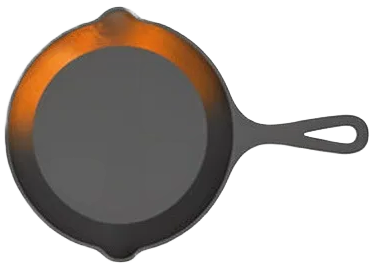
Let’s break down what these pans actually are. Cast iron cookware is one solid piece of heavy iron. Its superpower is heat retention-it gets hot and stays hot, perfect for a steady cook. The non-stick surface isn’t sprayed on at the factory. You create it yourself through a process called seasoning, building up thin layers of polymerized oil over time.
Non-stick cookware is built differently. It typically has a lightweight core of aluminum or steel, which is then coated with a slick synthetic layer. This is usually PTFE (what many call Teflon) or a ceramic coating. This factory-applied layer is what gives you that instant, no-fuss release from day one.
A good way to picture the difference is to compare them to cutting boards. A cast iron skillet is like a seasoned wooden board; it requires some initial care and gets better, more characterful, and more reliable the more you use it. A non-stick pan is like a pristine plastic board; it works flawlessly right out of the package but will eventually show wear and need replacing.
Cast Iron vs. Non-Stick: A Side-by-Side Snapshot
| Feature | Cast Iron | Non-Stick |
|---|---|---|
| Stick Resistance | Develops over time with seasoning | Instant and consistent from day one |
| Durability | Virtually indestructible; can be restored | Coating degrades; 3-5 year typical lifespan |
| Heat Performance | Superior retention, great for searing | Heats and cools quickly |
| Maintenance | Requires regular seasoning and specific cleaning | Easy wipe-clean, but coating is fragile |
| Versatility | Stovetop, oven, broiler, campfire | Usually limited to stovetop and low-heat oven use |
Keep this table in mind as we go. It shows why a simple “which is better” question doesn’t have a simple answer. Each point here deserves a closer look to see how it plays out in your daily kitchen routine.
Built to Last vs. Built to Replace: Durability and Materials
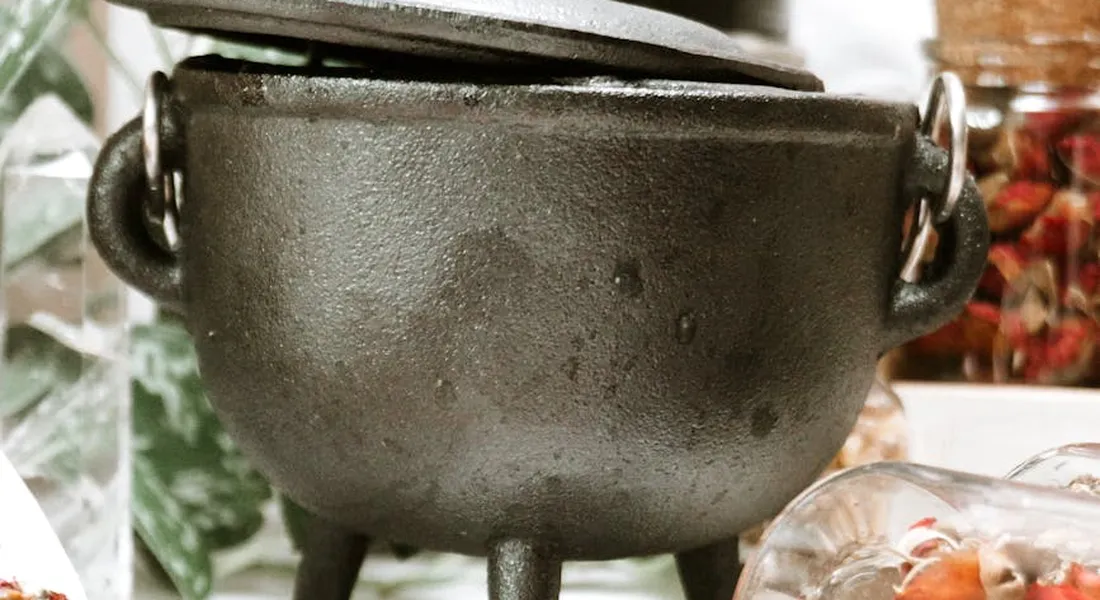
A cast iron pan is a simple thing. It is a single, solid piece of iron. With care, it is virtually indestructible.
Think of rust as a sickness it can catch, not a terminal disease. You can always scrub it off and restore the metal underneath. I have a skillet from the 1950s that I found under a layer of rust and old gunk. After a good clean and a few rounds of seasoning, it cooks as well as the day it was made. This inherent durability means a cast iron pan isn’t just a tool you buy, it’s one you steward for the next generation.
Non-stick pans are built differently. The aluminum or steel body is strong, but its performance depends entirely on a thin, applied polymer coating. This coating is a wear layer. Metal utensils, abrasive scrubs, and high heat wear it down over time. Once scratched or worn thin, food sticks and the pan’s main function is gone.
This difference defines their lifecycles. Cast iron is an heirloom, meant to be passed down. A non-stick pan is a consumable, with a typical lifespan of a few years before it needs replacing.
People sometimes ask how stainless steel fits into this. It’s a third category entirely. Like cast iron, the metal itself is durable and not coated. Its main advantages are complete resistance to rust and reactivity, meaning you can cook acidic foods without worry. It’s less about a non-stick surface and more about versatility with any utensil.
Managing the Heat: Which Pan Cooks How?
How a pan handles heat changes everything about how you cook with it.
Cast iron is heavy. All that mass takes time to get hot. If you crank the burner to high, the area directly over the flame gets very hot while the rest of the pan lags behind. The key is to preheat cast iron on low to medium-low for several minutes, allowing the heat to spread evenly throughout the entire piece of iron. Once it’s hot, it holds onto that heat tenaciously. This makes it perfect for tasks where you want a steady, reliable temperature, like searing a steak or baking cornbread.
Non-stick pans are lightweights. They heat up fast and cool down just as quickly when you adjust the burner. This makes them responsive, but that thin metal also leads to hot spots. They don’t store heat energy well, so they struggle to maintain the high, consistent temperature needed for a good sear. Food tends to steam or simmer rather than brown.
Your technique must adapt to the pan. With cast iron, patience during preheating is your greatest tool. With non-stick, you must protect the coating by never using heat above medium and avoiding preheating an empty pan.
Versatility is another major divide. A cast iron skillet can move seamlessly from your stovetop into any oven temperature. You can start a frittata on the burner and finish it under the broiler. Most non-stick pans have plastic handles or coatings that cannot withstand oven temperatures, severely limiting this kind of flexible cooking.
The Care and Keeping of Your Pans
How Do I Maintain My Cast Iron?
Think of caring for your cast iron like brushing your teeth. It is a simple, quick ritual that keeps everything healthy for the long run. The goal is always to clean it, dry it completely, and protect it with a thin layer of oil.
After cooking, let the pan cool slightly. Scrape out any food bits. For daily cleaning, use hot water and a brush or scrubber. A small drop of modern dish soap is perfectly fine. The old rule about never using soap applied to lye-based soaps, which can strip seasoning, but today’s mild detergents won’t harm your hard-earned patina.
Rinse and dry the pan immediately with a towel. Then, place it on a warm stove burner for a minute to evaporate every last bit of moisture. This step stops rust before it can start. Finally, take a paper towel with a tiny bit of cooking oil and wipe the entire cooking surface. You are not oiling it for storage. You are just replacing the natural oils you washed away. This step is crucial to prevent rust on cast iron cookware.
This brings us to seasoning. Seasoning is not a one-time factory treatment you forget about. It is a relationship. Every time you cook with fat and perform this care ritual, you are subtly maintaining and improving that layer of polymerized oil. Proper, consistent care is what actively builds the famous “non-stick” surface on cast iron, making it better with each use. That’s why cast iron seasoning is important: it protects the pan from rust and wear while forming that enduring nonstick layer. A little upkeep goes a long way toward performance and longevity. My oldest skillet is slick not from a single afternoon of work, but from years of this simple routine.
How Do I Protect My Non-Stick Coating?
Caring for a non-stick pan is different. You are not building a surface. You are preserving a factory-applied coating, which means the rules are all about protection and gentleness.
- Use only soft utensils like silicone, wood, or nylon. Metal will scratch and chip the coating.
- Avoid high heat. Medium or medium-low is usually sufficient. High heat can degrade the coating over time and may release fumes.
- Never use abrasive scrubbers (like steel wool) or harsh cleansers (like oven cleaner or magic erasers).
- Always hand-wash. Dishwasher detergents are too harsh and the high heat cycle can damage the coating.
Even gentle dish soaps can break down the coating if used aggressively over years. Think of it as washing a delicate car finish, not scrubbing a floor. The key difference in the “cast iron non stick how” question is this: cast iron requires active, participatory maintenance to create its surface, while non-stick requires passive, gentle protection to preserve its surface. One you build up, the other you try not to wear down.
Choosing Your Champion: Which Pan Is Right for Your Kitchen?
The best pan for you depends on what you cook most often. Think about your cooking style, not just the material.
Reach for your cast iron skillet when you want:
- A powerful, sustained sear on steaks, chops, or burgers.
- A beautifully crusted piece of cornbread or a fruit crisp (it goes from stovetop to oven effortlessly).
- To build a fond for a rich pan sauce or gravy.
Your non-stick pan is the better tool for:
- Sliding out perfect sunny-side-up eggs or delicate omelets with zero fuss.
- Cooking flaky fish fillets that might stick to other surfaces.
- Quick, low-fat sautés where you don’t want to use much oil.
Let’s clear up some common name confusion. A “cast iron non stick skillet” is not a special hybrid. It is simply a well-seasoned cast iron skillet performing at its best. A “cast iron non stick frying pan” is the same thing, your everyday workhorse for searing and frying. A cast iron wok serves a different purpose, designed for the high-heat tossing of stir-fries, but it still relies on that same principle of seasoning for its performance.
For most home kitchens, the winning strategy is to own both. I have a single good non-stick pan I use almost exclusively for eggs and delicate fish. For nearly every other task, from searing chicken to roasting vegetables, I use my seasoned cast iron. For true, lifetime versatility and value, a well-maintained cast iron skillet is unmatched, transforming from a stovetop searer to an oven baker to a campfire companion without hesitation. They trump non-stick pans in terms of durability, health and performance.
Your Top Questions, Answered
Can You Use Metal Utensils?
This is one of the clearest wins for cast iron. You can and should use metal utensils on it. My favorite spatula is a thin, sharp-edged piece of stainless steel that gets under even the most stubborn grilled cheese. The seasoning layer is surprisingly tough, and even if you do scratch it, you can just re-season that spot. The pan itself is nearly indestructible.
Using metal on a traditional non-stick pan is the fastest way to destroy its coating. Those scratches aren’t just cosmetic. They create pathways for food to stick and can cause the non-stick layer to flake off into your food. Stick with wood, silicone, or plastic on those pans. This difference alone changes how you cook, giving you more freedom and confidence with cast iron.
Is the Non-Stick Coating on Cast Iron Safe?
It’s critical to understand that cast iron’s non-stick surface is not a coating applied at the factory. It’s seasoning you build and maintain. Think of it like this: when you heat oil on the iron’s porous surface past its smoke point, it transforms. It polymerizes, bonding to the metal and creating a slick, hard carbon layer. This process is essential to cast iron seasoning.
This polymerized oil layer is inert, stable, and completely food-safe. I’m not a chemist, but I’ve restored hundreds of pans, and this process is just chemistry you can see and touch. The safety concern some people have is with synthetic non-stick coatings, like older Teflon, which can break down and release fumes if severely overheated. Your cast iron seasoning only gets better and more stable with proper use and heat, making it safer than many synthetic alternatives. Cast iron cookware is generally considered safe, especially when compared to some non-stick coatings.
Can a Non-Stick Pan Be Seasoned Like Cast Iron?
No, you cannot season a factory-coated non-stick pan. The surfaces are fundamentally different. Cast iron is porous, like unsealed wood. The oil soaks in a little and bonds directly to the raw metal. A non-stick pan has a sealed, non-porous coating designed to repel everything, including oil.
If you try to put a non-stick pan through a cast iron seasoning cycle in your oven, you will not create a new layer. You will likely damage the existing coating by exposing it to prolonged high heat it wasn’t designed for. The best care for a non-stick pan is gentle cleaning and avoiding high heat. When its coating wears out, that’s it. With cast iron, you can always start fresh and re-season, which is why my oldest skillet is from my grandmother.
Quick Answers
How do I keep my cast iron skillet truly non-stick?
A truly non-stick cast iron surface is built through consistent care, not a single seasoning session. Always preheat your pan gently, use adequate fat when cooking, and clean it with hot water and a brush after each use. Finally, dry it thoroughly on the stove and apply a whisper-thin layer of oil to maintain the polymerized seasoning.
My well-seasoned pan is suddenly sticking. What happened?
Sticking usually means your seasoning layer is temporarily compromised, often by cooking something acidic or by not using enough fat. Don’t strip the pan. Simply scrub it clean, dry it, and bake on a thin layer of oil to reinforce the surface. Then get back to cooking with it regularly.
How does cast iron’s “non-stick” compare to stainless steel?
Stainless steel has no inherent non-stick properties; it relies on precise heat and fat management to prevent sticking. Cast iron, once seasoned, provides a more forgiving, naturally slick surface due to its baked-on oil patina. The trade-off is that stainless steel is impervious to acids and rust, while cast iron requires vigilance to maintain its seasoned finish.
Your Cast Iron, Your Kitchen Partner
The best choice for your kitchen is the one you will use and care for consistently. If that is cast iron, your primary job is to maintain its seasoned surface, which builds non-stick performance and rust protection with every use. When weighing cast iron vs stainless steel, consider which option will better fit your cooking habits and upkeep in your kitchen. For more on that daily care, our guides on cleaning and restoring cast iron are a great next read.
References & External Links
- Cast Iron Vs Non-Stick : r/Cooking
- Cast Iron vs. Non-Stick: Which is better for cooking? – Stahl Kitchens
- When You Should Use Stainless Steel, Nonstick, and Cast-Iron Cookware
- The Truth About Cast Iron Pans: 7 Myths That Need To Go Away
- I’m planning to replace my old non-stick frying pan and can’t decide between stainless steel and cast iron pan. As a home cook, what are the pros and cons of either of ones? – Quora
Joseph Gerald
A material science expert by profession, Joseph is also an avid cook. He combines his 10+ years expertise in material science and metallurgy with his passion for cast iron cookware to bring you best hands on advice. His expertise ranges from types of cast iron cookware to best seasoning tips as well as restoration of vintage cast iron utensils. Joe is here to help you solve all your cast iron cookware queries and questions.