What Makes Cast Iron So Strong and So Brittle?
If you’ve ever cringed at the thought of your skillet cracking or questioned how something so heavy can be so fragile, you’re asking the right questions. Grasping the basic metallurgy behind your pan removes the mystery and gives you the confidence to use and maintain it properly for decades.
I’ll walk you through the key metal science in everyday language and connect it directly to your cookware care:
- What’s really inside cast iron that makes it incredibly durable and great at holding heat.
- Why that exact composition also makes it prone to cracking if mishandled or heated too quickly.
- How this knowledge helps you spot real repair opportunities versus when a piece is truly beyond saving.
What Exactly Is the Cast Iron in My Skillet?
Think of the material in your skillet as a close cousin to steel. Both are iron-based, but the family recipe is different. Cast iron is a high-carbon iron alloy. While steel might have a carbon content below 2%, cast iron typically contains 2% to 4% carbon. This difference changes everything about how the metal behaves and, more importantly, how you care for it.
The “cast” part of its name tells you exactly how your pan was born. Foundries melt down iron along with scrap metal and other elements, then pour the molten liquid into sand molds shaped like skillets, Dutch ovens, or griddles. Once it cools and solidifies, the rough casting is cleaned up, machined smooth on the cooking surface, and often pre-seasoned. This sand-casting process is what gives vintage and modern pans their characteristic thick walls and hefty weight. For a full, step-by-step look at the journey—from raw iron to finished skillet—see the complete manufacturing process explained. It ties every stage of making cast iron cookware together.
To make the molten iron behave better during casting, other elements are added. Silicon is a common one. It helps the carbon in the mix form into graphite (which we’ll talk about next) instead of staying combined with the iron. This is crucial for creating the most common type of cookware iron, called gray iron. These microstructures also influence how heat is stored in the metal. They help explain why cast iron retains heat and distributes it differently from other metals.
Here’s the critical maintenance takeaway: this high-carbon, sand-cast structure is inherently porous at a microscopic level. It’s not a solid, seamless barrier. If you looked at it under high magnification, the surface would look more like a rocky landscape than a smooth mirror. This porous surface is the fundamental reason you need to build up a seasoning layer. The polymerized oil fills in those microscopic nooks and crannies, creating the non-stick, rust-proof surface you cook on. Without it, you’re cooking on raw, rust-prone metal.
Why Is Cast Iron Both Strong and Brittle?
This seems like a contradiction, but it’s the essence of cast iron’s character. When we say it’s “strong,” we mean it has high compressive strength. It can withstand a lot of weight and pressure without deforming. You can press down on it, stack heavy pans, and it won’t bend. Its “brittleness” means it has very low tolerance for bending or sudden impact. It doesn’t flex; it breaks.
Imagine a piece of hard candy. You can press down on it with your thumb quite hard, and it holds its shape (that’s compressive strength). But if you tap it with a hammer or try to bend it, it shatters into pieces (that’s brittleness). Your cast iron skillet behaves in a very similar way.
The Microscopic Weak Points: Graphite Flakes
To understand why, you need to picture what’s inside. In gray cast iron, that extra carbon exists as tiny flakes of graphite, suspended throughout the iron like glitter in resin. Under a microscope, a metallurgist sees these graphite flakes as internal fault lines or tiny cracks within the metal’s structure. This is what a basic metallurgical report would highlight.
These flakes are great for some things-they dampen vibrations (making the pan less “ringy”) and aid in heat distribution. But they act as natural stress concentrators. When a bending force or a sharp impact hits the pan, the crack doesn’t have to travel through solid metal; it can easily propagate along these pre-existing graphite pathways. This is why a dropped skillet often cracks cleanly in half instead of just denting.
The #1 Rule of Care
This metallurgical reality dictates the most important rule for maintaining your cookware: you must avoid thermal shock and physical shocks.
- Avoid Thermal Shock: Never plunge a hot pan into cold water or run cold water over its hot surface. The different sections of the metal will contract at violently different rates, creating internal stresses that can easily cause a crack to form along those graphite lines. Always let your pan cool down to a warm or room temperature before washing.
- Avoid Physical Drops: This one is straightforward. A fall from the stovetop or counter onto a hard floor can be the end of the line. Handle it with the respect its brittle nature demands.
When I find a cracked pan at a flea market, its fate was almost always sealed by one of these two moments of shock. Understanding the “why” behind the care rule makes it much easier to remember and follow for a lifetime of use.
How Do Different Cast Iron Types Affect My Cookware?
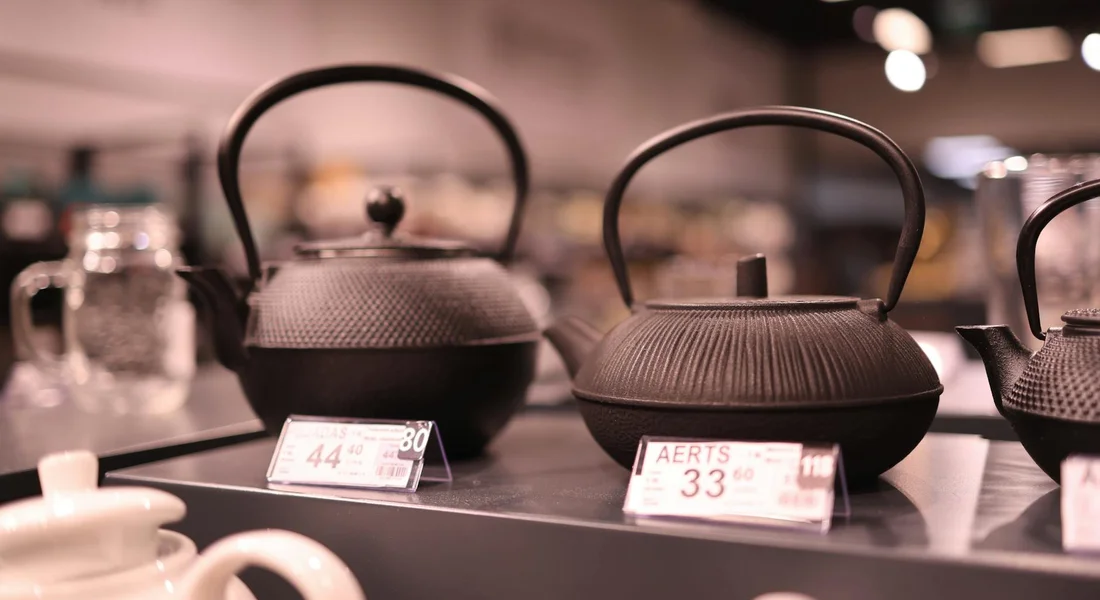
When we talk about cast iron skillets and Dutch ovens, we’re almost always talking about one of two specific materials. Their internal structure, called microstructure, is what makes them behave differently.
For almost all home cooks, knowing your exact iron type matters less than respecting that all cast iron is more brittle than other metals, which guides how you heat and handle it. When compared to other cookware materials, cast iron requires special care.
| Type | Microstructure | Brittleness | Typical Cookware Use |
| Gray Iron | Graphite Flakes | Higher | Vintage & modern bare skillets, griddles |
| Ductile (Nodular) Iron | Graphite Spheres (Nodules) | Lower (More Impact Resistant) | Bodies of high-end enameled Dutch ovens |
Gray Iron: The Classic Skillet Material
This is the material of your grandmother’s skillet and most of the pieces on your rack. When it’s made, the carbon in the mix forms into tiny flakes of graphite, spread throughout like layers in a sedimentary rock.
Those flakes are great for a few reasons. They make the iron easier to machine smooth at the factory. They also act like little internal radiators, helping the pan hold and distribute heat steadily. This is a big part of why cast iron is so prized for searing.
But those same flake layers create natural weak points, like perforations in a piece of paper, making gray iron prone to cracking if it’s stressed the wrong way. A sharp impact or sudden, extreme temperature change can cause a crack to travel along these flakes.
Ductile Iron: The Tough Cousin
Ductile iron is like gray iron’s more resilient sibling. During casting, a small amount of magnesium is added. This causes the carbon to form into tiny spheres or nodules instead of flakes.
Think of the difference between hitting a sheet of glass (flake structure) versus a sheet of hard rubber with ball bearings embedded in it (nodule structure). The spheres interrupt any crack trying to spread, giving the material more “give” and resistance to impact.
You’ll rarely find a bare skillet made from ductile iron, but its strength makes it the preferred choice for the bodies of premium enameled Dutch ovens, which need to withstand high oven heat and lid clamping.
What Common Damage Results from Cast Iron’s Nature?
Every chip, crack, or warp in your cookware is a direct conversation with its metallurgy. Understanding why damage happens is the first step to preventing it, especially when it comes to cast iron cookware.
Cracks and Breaks: The Ultimate Failure
Cracking is the purest expression of cast iron’s brittleness. It usually happens from thermal shock, which is a fancy term for a sudden, drastic temperature change.
Placing a red-hot skillet directly into a sink of water is the classic example. The metal contracts too violently and unevenly, and with no ability to flex, it cracks. You’ll often see these cracks start near the handle’s stress point or radiate out from the center of the cooking surface.
A crack that goes fully through the wall of the pan is a death sentence for its cooking life; it cannot be safely repaired to hold food again. It’s a permanent reminder to always let your iron cool gradually.
Warping: When Heat Management Fails
Warping is a slow-motion cousin to cracking. It occurs from repeated uneven heating. If you always blast the burner on high under the center of a large pan, that center expands faster than the cooler outer edges.
Over time, this can cause a permanent bulge or spin. Cast iron has a very high melting point, but it softens when very hot. Unlike a piece of bent steel, you cannot hammer or bend cast iron back into shape. It will break.
The fix for warping is entirely preventive: heat your cast iron slowly and evenly, starting on low to medium heat. This gives the whole pan time to expand uniformly.
Pitting and Erosion: The Slow Wear
Rust isn’t just a surface stain. It’s a chemical reaction where iron (Fe) combines with oxygen and water to form iron oxide. This reaction actually consumes the metal itself, eating tiny holes into the surface.
This is where the “cast iron metallurgy formula” plays out in your kitchen. The porous microstructure of gray iron, especially in older pieces, allows moisture and oxygen to penetrate beyond the surface. If left unchecked, this leads to deep pits.
Severe pitting creates a rough, cratered surface that’s difficult to season properly and can harbor bacteria, which is why stopping rust early with proper drying and a thin layer of oil is non-negotiable maintenance.
A Practical Checklist for Preventing Metallurgical Damage

Now that you know what your pan is made of, you can work with its nature, not against it. This isn’t a list of strict rules. It’s a guide to becoming a better partner to your cookware. Follow these steps to respect the iron’s strength and avoid its brittle side.
-
Always preheat your pan low and slow. I start my own daily skillet on the lowest setting for a full five minutes. Cast iron heats unevenly at first. A gentle preheat allows the entire pan to expand gradually, preventing internal stress that can lead to long-term fatigue or even a crack. This same approach is key when properly preheating and seasoning cast iron for perfect results. With low-and-slow warming, you’ll get even heat and a better seasoning.
-
Never plunge a hot pan into cold water or put a cold pan on a roaring burner. This is the main cause of thermal shock. The rapid, uneven contraction or expansion can create a crack in seconds. Let your pan cool down naturally on the stove before washing it.
-
Lift and carry your pan; don’t slide it across rough surfaces like grates. Think of the crystalline grain structure inside. A sharp impact or dragging it across a hard edge can act like a chisel, potentially chipping the brittle metal, especially on thinner or older pieces.
-
Store it properly to avoid point-load stress. Don’t use your largest skillet as a base for a stack of heavy pots. The concentrated weight on a single spot is a form of mechanical stress the metal isn’t designed for. Store it with similar-weight items or hang it.
-
Keep it seasoned. The polymerized oil layer does more than make it non-stick. It is your primary defense against the metal’s rust-prone porosity. A good season seals the microscopic pores, blocking air and moisture from reaching the raw iron. A well-protected pan is a durable pan, so clean, season, and maintain your skillet regularly.
Can Damaged Cast Iron Be Repaired? Your Realistic Options
So what happens if damage occurs? The answer depends entirely on what kind of damage it is. Some problems are routine maintenance. Others are the end of the road for cooking. Let’s separate the fixable from the final.
When Repair is Possible: Rust and Seasoning Issues
If you see orange rust or a patch of bare, gray metal, don’t panic. You are looking at a failure of the seasoning, not the metal itself. Surface rust and stripped seasoning are part of the long-term maintenance cycle, not a sign of metal failure.
The iron underneath is almost always perfectly sound, so the repair process is about resetting that protective layer. This is the entire goal of restoration. Using methods like a lye bath or electrolysis tank, you completely strip the old seasoning and rust. What remains is bare, pristine iron. From that clean base, you build a new season from scratch. My own most trusted skillet has been through this process twice in twenty years. It’s like repainting a solid wooden table. The structure is fine, it just needs a new finish, similar to restoring a vintage skillet.
When Repair is Not Possible: Cracks, Breaks, and Severe Warping
The truth is, a cracked or broken cast iron piece cannot be reliably repaired for cooking. If your skillet has a visible crack or is in two pieces, its time on the stovetop is over.
You might wonder about welding. For cooking purposes, welding is not a viable solution. The extreme, localized heat of welding changes the microstructure of the iron around the repair, creating a hard, brittle zone that is prone to cracking again. You also cannot guarantee the repair is food-safe or would hold up to thermal cycling. A professional metallurgy report on a cracked piece would cite “brittle fracture” and note that the part’s structural integrity for its intended use is compromised.
This doesn’t mean the piece is trash. I’ve seen cracked skillets given new life as unique garden ornaments, planters, or decorative shelf pieces. It’s a way to honor a good pan’s history, even after its cooking days are done.
Common Mistakes in Cast Iron Care Based on Misunderstanding the Metal
Knowing that cast iron is strong in compression but brittle doesn’t mean much until you see how that plays out in your kitchen. Here’s where the theoretical meets the practical, often in the form of a cracked skillet or a rust-pitted surface. These are the most common errors I see, all stemming from treating cast iron like a more forgiving metal.
Using Extreme Temperature Changes to “Shock” Food Loose
It’s a classic bit of kitchen advice: run a hot pan under cold water to make stuck-on food release. For many metals, this thermal shock is fine. For cast iron, it’s a gamble with its brittle structure.
Think of it like quickly moving a hot drinking glass from the oven to the freezer. The drastic, uneven cooling creates immense internal stress. Cast iron, with its graphite flakes, can’t stretch to relieve that stress. Instead, it cracks. I’ve seen pans with a single, clean fracture right across the cooking surface from this one mistake.
The right way is patience: let the pan cool, add warm water, and let it soak, then use gentle scrubbing to lift the residue.
Hammering or Bending a Warped Pan Back
A pan that wobbles on a flat stove is frustrating. The instinct to fix it with force is strong, but it directly contradicts how cast iron behaves. Unlike steel, which can bend and flex, cast iron has virtually no ductility.
Applying pressure, whether with a hammer or by trying to force it flat, doesn’t create a bend. It concentrates stress at a flaw in the metal’s crystal structure until that flaw propagates as a crack. You aren’t bending it; you’re breaking it. I keep a “lesson learned” skillet in my workshop with a handle snapped clean off from someone’s attempt to “adjust” it.
If a pan is warped, you manage it (using it on a grill or with a heat diffuser) or retire it; you cannot safely reform it.
Letting Water Sit in the Pan, Thinking “It’s Just Surface Rust”
This mistake misunderstands the porous, granular nature of cast iron. Rust on steel can often be superficial. On cast iron, water doesn’t just sit on the surface. It gets drawn into the microscopic pores and between the graphite flakes.
What looks like a thin orange film can hide deep, corrosive pitting underneath. This pitting eats away at the metal itself, creating weak spots and a rough texture that makes building a good seasoning layer nearly impossible. I’ve restored pans where the rust penetrated over a millimeter deep, requiring significant grinding to reach solid metal again.
Always dry your cast iron thoroughly and immediately after washing, and a light coat of oil after drying is the best insurance against this deep corrosion.
Believing a Thicker Pan is Immune to All Damage
A hefty, thick-walled skillet feels indestructible. It’s great for holding steady heat, but its fundamental material properties are unchanged. Brittleness isn’t about how easily the surface dents; it’s about how the material fails under stress.
A thick pan can absorb more thermal mass, which might slightly slow the rate of temperature change, but it is just as susceptible to thermal shock cracking if the gradient is severe enough. Its thickness offers no protection against a direct impact or being dropped. It’s still cast iron, just more of it.
Thickness is a feature for cooking performance, not a license for rough treatment; you must still respect the metal’s brittle nature.
Common Questions
What would a cast iron metallurgical report tell me about my pan?
A metallurgical report would detail the graphite structure-whether it’s flake (gray iron) or nodular (ductile iron). This tells you the pan’s inherent brittleness and confirms why avoiding thermal and physical shock is non-negotiable. For daily care, treat all cast iron as brittle, but know that a report simply validates the handling rules you should already be following.
What does the “cast iron metallurgy formula” mean for my kitchen maintenance?
The base formula-iron with 2-4% carbon-is why your pan is porous and prone to rust. This isn’t a cooking recipe; it’s the reason a durable seasoning layer is your primary maintenance job. You are continuously protecting that vulnerable, high-iron content from oxygen and moisture with polymerized oil. From a metallurgical view, cast iron’s carbon-rich matrix explains why a durable seasoning layer bonds well. This makes seasoning an ideal, buildable protective layer for this material.
Can I rely on Wikipedia for practical cast iron care advice?
Wikipedia explains the metallurgical science adequately, but it won’t teach you the practiced hands-on care. The critical nuances-like how to build a seasoning layer correctly or why slow preheating is a must-come from experienced keepers, not an encyclopedia entry. Use it for background, not for your maintenance routine.
Working With Cast Iron’s Nature
The single most important thing to remember is that cast iron’s strength comes with a specific kind of fragility. Treat it with respect for its brittle metallurgy by avoiding thermal shock and using the right tools, and it will serve you faithfully for generations. For more on maintaining that protective layer, our guides on seasoning and rust restoration build perfectly on this foundation.
Expert Resources and Citations
- Cast iron – Wikipedia
- Is Cast Iron Brittle or Ductile? The Truth Uncovered
- Why is cast iron brittle and why does it crack easily, chemistry wise? – Quora
- Is Cast Iron Brittle? | Symptoms, Causes and Repair | Cast Iron Welding Services
Joseph Gerald
A material science expert by profession, Joseph is also an avid cook. He combines his 10+ years expertise in material science and metallurgy with his passion for cast iron cookware to bring you best hands on advice. His expertise ranges from types of cast iron cookware to best seasoning tips as well as restoration of vintage cast iron utensils. Joe is here to help you solve all your cast iron cookware queries and questions.