How Do You Clean Black Residue and Sticky Oil from Cast Iron?
That stubborn black gunk or tacky film on your favorite skillet can feel like a major setback. I’ve dealt with this exact issue on my own well-loved griddle, and I can assure you it’s a common, fixable problem.
Here’s what we’ll cover to get your pan back in action:
- What that sticky, black buildup actually is and why it happens.
- The safest, most effective cleaning methods for different levels of grime.
- How to properly dry and re-season your cast iron after a deep clean.
- Easy maintenance tips to prevent tough buildup in the future.
First, Identify Your Buildup Type
Not all gunk is created equal. Before you grab a scraper, take a close look at your pan. The right fix depends on what you’re actually dealing with.
Run your fingertip lightly over the surface. Is it rough like sandpaper? Smooth but tacky like half-dried glue? The feel tells you everything.
The Three Common Culprits
| Type | Appearance & Feel | Common Cause |
|---|---|---|
| Black Carbonized Crust | Hard, gritty, often raised patches. Looks like black scale or cement. Feels rough and may flake off in hard chips. | Food residue or oil burned onto the surface at very high heat over many cooks, fusing into a carbon layer. |
| Gummy/Tacky Sticky Layer | Shiny, sometimes blotchy. Feels sticky or tacky to the touch, even when cool. May attract lint from a towel. | Too much oil left on the pan during the seasoning process. The oil never fully polymerized (hardened). |
| Flaky, Burnt-on Oil Residue | Looks thin and brittle, often at the edges or where heat was highest. Flakes off easily, revealing lighter metal underneath. | A thin layer of oil was burned away instead of bonding, creating a weak, brittle coating that fails. |
Your pan might have just one type or a combination. A sticky layer often sits underneath a hard carbon crust.
Sticky residue is not dirt; it’s a failed seasoning layer that needs to be removed and re-done, not just scrubbed clean. Treating it like regular grime is the most common mistake I see.
What Causes This Gunk in the First Place?
This mess doesn’t appear overnight. It’s usually the result of a few habits, and understanding them helps you prevent it next time.
The Sticky Pan Dilemma: Too Much Love
That gummy layer is almost always a seasoning error. Think of polymerized oil like paint that needs to dry completely. If you apply it too thickly, the top stays wet.
When you add too much oil in the oven, the excess can’t bond to the iron. It just sits there, half-cooked and sticky. I’ve done this myself with a small skillet I was rushing to finish.
A proper seasoning layer requires an impossibly thin coat of oil, wiped on and then aggressively wiped off as if you made a mistake. Any oil you can see or feel before baking is too much.
Black Crust and Flaky Burn-Off: High Heat and Haste
Carbon crust builds up from two main things: high-heat cooking and incomplete cleaning. Searing a steak or frying bacon at a very high temperature can carbonize tiny bits of food onto the seasoning.
If you don’t clean the pan well after cooking, those tiny bits get baked on again and again. Over months, they fuse into a thick, hard layer that’s separate from your good seasoning.
Flaky residue happens when thin, unprotected metal is exposed to high heat. This often occurs at the rim or on the cooking surface if the seasoning was weak. The heat burns the thin oil away instead of bonding it.
The Root of Most Problems: Skipping the Clean
All of this is made worse by not cleaning your pan properly after use. Letting “just a little” food residue sit allows it to bond during the next cook.
Cast iron doesn’t need to be sterile, but it does need to be free of loose food and excess oil after every use. A quick scrub with hot water and a brush prevents today’s dinner from becoming tomorrow’s crust.
Regular, gentle cleaning after cooking is the single best habit to prevent tough buildup from ever forming. It’s easier to maintain a pan daily than to rescue it yearly.
Your Step-by-Step Cleaning Plan: Start Gentle
Think of cleaning your cast iron like medicine. You start with the mildest dose that works. You only bring out the stronger stuff if you absolutely need it. This “gentle escalation” saves your hard-earned seasoning and keeps your pan in great shape for longer. Stick to a simple clean-season-maintain routine. Consistent care now means better nonstick and longer life later.
Your universal first step for any mess is always the same. Use hot water, a small dab of modern dish soap, and a stiff nylon brush or scrub pad. This combination will dissolve and lift away most light food residue and fresh oils without any drama. Dry the pan completely with a towel, then give it a minute on a warm stove burner to evaporate any last bit of water. For about 90% of my post-cooking cleanups, this is all I do. For more stubborn cases, I refer to how to clean a cast iron pan after cooking.
The Salt Scrub for Stuck-On Food
When you see a patch of black, crusty bits that the soapy brush didn’t touch, it’s time for the salt scrub. Coarse kosher salt is perfect. It acts like thousands of tiny, biodegradable scrubbers. The salt provides abrasive power without being hard enough to scratch the iron itself.
- Sprinkle a generous handful of coarse salt onto the dry pan.
- Add just a few drops of water or a drizzle of oil to make a thick, gritty paste.
- Scrub vigorously with a paper towel or a dish cloth, using the salt paste to sand away the gunk.
- Rinse the pan with hot water, dry it, and warm it on the stove.
I keep a small container of salt next to my sink just for this. It’s my go-to for cleaning off those stubborn bits after searing a steak.
Baking Soda Paste for Persistent Spots
If the salt scrub leaves behind faint, discolored spots or light rust, baking soda is your next gentle tool. It’s a mild alkali that helps break down oils and acts as a finer polish. Making a baking soda paste gives you more control for targeting specific problem areas without soaking the whole pan. For cast iron, this approach pairs well with safe, salt- and baking-soda-based scrubs that protect the seasoning. These methods fit a clean cast iron care routine focused on gentle scrubbing with baking soda and salt.
Here is how you use it.
- Mix baking soda with a tiny amount of water until it forms a spreadable paste, like thick toothpaste.
- Apply the paste directly to the stained or sticky area.
- Let it sit for 10-15 minutes. This gives it time to work.
- Scrub the area with your nylon brush or a damp cloth, then rinse and dry thoroughly.
This method often cleans up the last of the “shadow” stains on my daily driver skillet.
How to Clean Stubborn Sticky Buildup and Burnt Oil
Many people ask, “How do I remove sticky buildup on cast iron?” The stickiness means the oil polymerized only partway. It hardened into a gummy layer instead of a slick, solid one. Soap and scrubbing alone often just smear it around, especially when compared to properly polymerized seasoning layers on cast iron.
The Controlled-Heat Method
This trick uses heat to fix a problem caused by imperfect heat. Gently warming the pan re-liquefies that sticky, half-seasoned oil so you can simply wipe it away.
- Place your sticky pan on a stove burner over very low heat for 3-5 minutes. You just want it warm to the touch, not smoking hot.
- Remove it from the heat and immediately wipe the entire cooking surface firmly with a wad of dry paper towels. The warmth will turn the sticky gum into a liquid you can easily remove.
- Let the pan cool, then wash it normally with soap and water to remove any final residue before drying and oiling.
The Vinegar Soak for Burnt-On Crust
For truly tough, carbonized crust from burnt oil, a diluted vinegar soak is effective. You must be precise. Straight vinegar can etch the iron, and long soaks can strip good seasoning. This method integrates the common question, “How do I clean burnt oil off cast iron?” with advice on tackling stubborn burnt and stuck-on food.
Use a 50/50 mix of white vinegar and water. This concentration is strong enough to break down carbon but safe for short-term use.
- Pour enough of the vinegar solution into the pan to cover the burnt areas.
- Let it soak for no more than 30 minutes. Set a timer.
- After soaking, pour out the liquid and scrub the pan with a brush or scrubber. The crust should now be soft and flaky.
- Rinse very well with water, dry immediately, and warm the pan on the stove. You will likely need to apply a fresh layer of seasoning afterward.
Using Metal Tools: Scrapers and Chainmail
Sometimes, you need physical force for carbon that’s welded itself to the surface. The goal is to remove the bad carbon without damaging the good, smooth seasoning underneath.
A flat metal scraper or a putty knife is excellent for chipping off large, flaky patches. Use it at a shallow angle and scrape gently. A chainmail scrubber works like a flexible, super-powered brush. It knocks off hard carbon bits through friction but glides over the harder, smooth polymerized seasoning layer. Use it under running water or with a little soap after a vinegar soak to clear away the last debris.
In my restoration work, I use a combination of the vinegar soak and a chainmail scrubber for the toughest, most neglected pans. It works every time.
Common Mistakes and How to Avoid Them
When you find a stubborn mess in your pan, it’s tempting to reach for the most aggressive tool. That often causes more harm than good.
Over-Scrubbing a Sticky Pan
I see this all the time. A pan feels a bit gummy, so someone grabs steel wool or a harsh scrub pad. This approach strips away the good, polymerized seasoning along with the bad, sticky residue, forcing you to start over. Instead, treat a sticky surface as a seasoning problem, not a scrubbing challenge. The fix is gentle heat, not brute force.
The Vinegar Soak Trap
A diluted vinegar bath is great for light rust. Leaving a pan to soak in it for days is a disaster. Cast iron and acid are enemies over time. Extended exposure will etch the metal, causing permanent pitting and a rough surface that seasoning can’t fix. Limit any vinegar solution contact to one hour maximum, and always rinse and dry the pan immediately afterward.
Adding Oil to a Sticky Pan
This might feel logical. The pan is sticky from too much oil, so you think another thin coat will “fix” it. It does the opposite. You’re just adding more oil to a layer that hasn’t polymerized, creating an even thicker, gummier mess. If your pan is sticky, the solution is to remove the excess oil with heat, not add more. Bake the pan upside-down in a hot oven for an hour to try and cure the existing layer.
Using the Self-Clean Oven Cycle
This method uses extreme, sustained heat to incinerate everything in your oven-and your skillet. It’s incredibly stressful for the iron, risking warping or even cracking the pan. The fumes from burning off old seasoning and carbon are also terrible to breathe. It’s an unnecessarily harsh and risky shortcut when safer, controlled methods exist for a full restoration.
Skipping the Final Dry
This is the simplest mistake to make and the easiest to fix. After any wash or rinse, your pan is vulnerable. Cast iron can develop flash rust-a light red coating-in minutes if left wet. Always dry your cast iron thoroughly with a towel, then place it on a warm stove burner for a few minutes to evaporate every last drop of water. Even if rust starts, you can fix it with a quick scrub and a light re-season. We’ll also cover simple ways to prevent rust from returning to your cast iron cookware. This quick, habit-forming step stops rust before it starts.
Alternative Tools and When to Use Them
Having the right tool for the job makes cleaning easier and protects your seasoning. Here’s how I choose from my own toolkit.
Scrubbers and Scrapers: A Comparison
Not all scrubbers are created equal. Match the tool to the type of grime.
- Chainmail Scrubber: My favorite for tough, baked-on food crust. The flexible metal rings are abrasive enough to chip away carbonized bits but slide over your smooth seasoning without damaging it. It works beautifully with a little hot water.
- Nylon Brush or Scrubber: This is your daily driver. Use it for cleaning up after eggs, searing meats, or wiping out excess oil. It’s perfect for sticky films that just need a gentle nudge. It removes food but preserves the patina.
- Stainless Steel Scraper or Fish Spatula: This is your chisel for truly welded-on messes. For that ring of carbon at the rim of a skillet or a thick layer of burnt-on residue, a sturdy scraper lets you apply focused pressure to lift it off. Follow up with a chainmail scrubber to smooth the area.
The Salt and Oil Polish
For a pan that feels rough or has a thin, stubborn film, make a simple paste. Mix a tablespoon of kosher salt with just enough oil to form a damp, sandy mixture. Scrub the pan with this paste using a cloth or paper towel. The salt acts as a gentle, natural abrasive that polishes the surface without the harshness of chemicals or metal. Rinse well and dry immediately.
A Note on Last-Resort Stripping
Sometimes, the buildup is so severe or layered that cleaning isn’t enough. The pan needs a full restart. In those cases, a lye-based oven cleaner (the kind in a yellow can) is the most effective and controlled method to strip everything back to bare iron. This is a project for a ruined or thrifted pan, not for regular maintenance, and requires safety precautions like gloves and ventilation. We have a full guide on that process for when you need it.
What to Never Use
Some tools and methods are simply bad for cast iron. Avoid these to keep your pan in good shape.
- The Dishwasher: The harsh detergent and prolonged soaking will strip seasoning and guarantee rust.
- Power Sanders or Drills: These will permanently scar the iron’s surface, creating grooves that hold food and prevent even seasoning.
- Generic Harsh Cleaners: Avoid cleaners with bleach, hydrochloric acid, or other caustics not designed for cookware. They can react with the iron and ruin the surface.
Caring for Your Pan After a Deep Clean
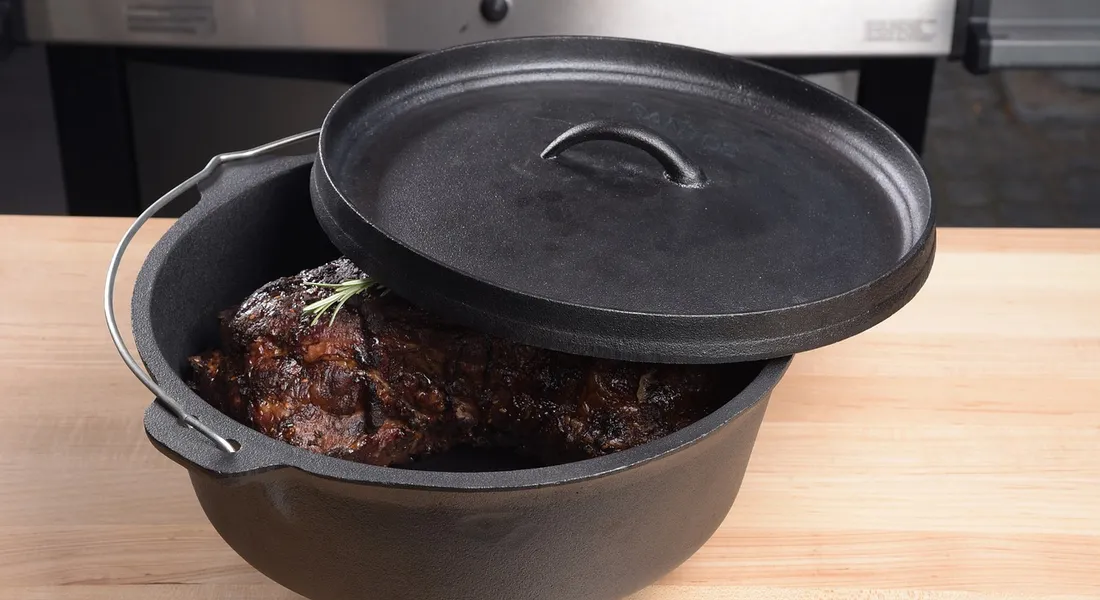
You’ve just scrubbed off the gunk. The pan feels bare, and it probably looks a bit different. That’s because you are now looking at raw, exposed iron. This fresh surface is incredibly vulnerable to rust and needs immediate protection to start building a good foundation again.
The First and Most Important Step: Dry and Protect
Never let a cleaned pan air dry. Water will find every pore. Your job is to get it completely, bone-dry and coated in a micro-thin layer of oil within minutes.
- Place the clean pan on a stove burner over medium heat.
- Let it heat for 2-3 minutes until all traces of moisture evaporate. You’ll see the surface go from wet, to dry, to just starting to feel warm.
- Remove the pan from the heat and let it cool for just a minute, so it’s warm but not scalding hot to the touch.
- Apply a few drops of a high-smoke-point oil (like grapeseed, canola, or sunflower) to the cooking surface.
- Use a folded paper towel to rub the oil over every inch of the pan, inside and out. Then, take a fresh, clean paper towel and aggressively buff the entire surface as if you’re trying to remove all the oil you just put on. What remains is the perfect, whisper-thin coat.
What If You See Black Residue Now?
This step directly answers the common question, “How to clean black residue from cast iron?” If, during that final buffing step, you see black streaks or residue coming off onto your clean paper towel, don’t panic. This black residue means you’ve removed the weak, top layers of gunk, but the underlying polymerized seasoning layer is either incomplete or still compromised. The pan isn’t “dirty,” it’s just not fully sealed. In this case, that simple stove-top oil coat isn’t enough. The iron needs the intense, even heat of your oven to properly polymerize a new base layer. Your pan likely needs a full re-seasoning cycle.
Rebuilding a Strong Seasoning Layer
Whether you did a quick stove-top coat or a full oven seasoning, your pan’s new finish will be thin. The next several cooks are your chance to build it up strong. Think of this new layer as a seedling-it needs the right conditions to grow tough.
- Cook with fats. Start with greasy foods like bacon, sautéed onions, or pan-fried potatoes. The oil from cooking will bake into the surface.
- Avoid long simmers. For the first few uses, stick to frying, searing, and baking. Simmering acidic sauces (like tomato) or boiling water for long periods can weaken the fresh seasoning.
- Clean gently. After cooking, use hot water and a soft brush or sponge. Avoid harsh scrubbing. Dry immediately on the stove and apply that same thin oil coat while the pan is still warm. This post-cook oiling habit is the single best thing you can do to build a durable, non-stick patina over time.
My own daily driver skillet went through this process years ago. After a tough cleanup, I babied it for a week with oily cooks and stove-top oiling. Now, it’s my most non-stick pan. Patience here makes all the difference.
Common Questions
Why does my pan still feel sticky after I clean it?
A sticky feel after cleaning means you removed surface grime but not the underlying, half-polymerized oil layer. This requires the controlled-heat method to liquefy and wipe it away, not more scrubbing. Always follow this with a normal wash, dry, and a proper, thin coat of oil.
How do I know if I should strip and re-season instead of just cleaning?
Strip only if the buildup is a thick, flaking carbon crust over widespread sticky residue, indicating failed seasoning. For isolated spots or a single type of gunk, use the targeted cleaning methods outlined. A full strip is a last resort for a pan that cooking performance has been permanently compromised.
Is black residue on my towel after oiling a bad sign?
Not necessarily. This often means you’ve cleaned down to a thin but sound seasoning layer that is still maturing. It’s a cue to proceed with a full oven seasoning cycle to build a more robust base. Continue with gentle cleaning and regular oiling after use to strengthen it.
Keeping Your Cast Iron in Fighting Trim
The single most important thing you can do is to clean burnt-on messes as soon as your pan is cool enough to handle. Letting residue sit and polymerize into a rock-hard layer makes the job far harder and risks damaging your good seasoning. For a pan that performs effortlessly, learning how to build and maintain a robust seasoning layer is your next logical step.
Further Reading & Sources
- If You See Black Residue on Your Cast-Iron Skillet, This Is What It Means
- How to Clean Black Residue off Cast Iron Skillet [Tips]
- How to Clean – Lodge Cast Iron
Joseph Gerald
A material science expert by profession, Joseph is also an avid cook. He combines his 10+ years expertise in material science and metallurgy with his passion for cast iron cookware to bring you best hands on advice. His expertise ranges from types of cast iron cookware to best seasoning tips as well as restoration of vintage cast iron utensils. Joe is here to help you solve all your cast iron cookware queries and questions.