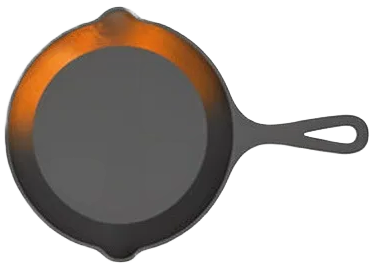
Why Does Cast Iron Retain and Distribute Heat Differently?
If your cast iron skillet sometimes cooks unevenly or stays hot long after the stove is off, you might be puzzled about how to manage it. Knowing why cast iron behaves this way will help you use it better and protect your hard-earned seasoning.
I’ll walk you through the practical science, just like I do in my own kitchen. Here are the key things we’ll cover:
- What makes cast iron so dense and good at storing heat, compared to other pans.
- How this heat retention affects your pan’s seasoning layer and its care.
- Simple steps to preheat and cook evenly without damaging the finish.
- Why this knowledge is useful for restoring and maintaining any cast iron piece.
The Thermal Personality of Cast Iron
To understand your pan, think of heat in two ways: how it moves and how it sticks around. Thermal conductivity is how fast heat travels through the metal. Imagine it as a team of messengers racing to pass energy from one point to the next.
Heat retention is different. This is your pan’s ability to store that thermal energy, like a savings account for heat. Cast iron is exceptional at this second job. That steady warmth translates to a better sear and more even cooking. In cooking terms, cast iron heat retention directly affects how your dish finishes.
Technically, cast iron has low-to-moderate conductivity but a very high volumetric heat capacity. In practice, that means it absorbs and holds a tremendous amount of heat. Think of it not as a heat pipe, but as a dense, heavy sponge for thermal energy. Thermodynamics explain this property, particularly how cast iron holds heat so well.
The thickness and mass of your specific piece define its character. A thick-walled Dutch oven is a heat battery, while a thin vintage skillet heats and reacts a bit quicker.
Heat Travel vs. Heat Storage
Let’s separate these ideas completely. Conductivity determines speed-how fast heat zips from the burner ring to the center of the pan. Retention is about capacity-the total amount of heat energy the metal can store.
For cast iron, this split personality is key. It is slow to heat up evenly across its surface because heat doesn’t travel through it quickly. But once that heat soaks in, the pan holds onto it tenaciously and releases it in a steady, even flow. From a thermodynamics perspective, it has high heat capacity. It stores energy and releases it steadily, which is why cast iron excels at heat retention and distribution.
Your cast iron skillet is not a sprinter; it’s a long-distance runner with incredible endurance.
Cast Iron vs. Other Common Materials
Comparing metals shows why cast iron feels unique. Here’s a simple mental ranking for heat conductivity:
- Copper: The speedster. Heat flashes across it almost instantly.
- Aluminum: Very quick and responsive, a close second.
- Stainless Steel: Middling. It often needs a conductive core (like aluminum) to perform well.
- Carbon Steel: The lighter cousin to cast iron. Similar properties, but thinner, so it heats a touch faster.
- Cast Iron: The steady powerhouse. Slow to get going, but unmatched at staying hot and stable.
This is why you can’t treat your cast iron like a thin non-stick aluminum pan. Crank the burner to high, and the spot directly over the flame will get scorching hot while the rest of the pan lags behind, leading to uneven cooking. Cast iron rewards a patient, medium preheat.
How Your Seasoning Layer Affects Heat
A widespread myth suggests that a good seasoning makes your pan conduct heat better. Let’s clear this up: it does not. The polymerized oil layer is, by nature, an insulator.
A thick, gloopy, or uneven layer of seasoning can actually slow heat transfer to your food slightly. It may create tiny insulating spots that lead to minor hot spots.
The real benefit of seasoning is creating a non-reactive, non-stick cooking surface. A smooth, thin, well-maintained layer provides this protection with the smallest possible impact on how your pan handles heat.
The Chemistry of Heat and Polymerization
Seasoning is chemistry you perform in your oven. When you heat oil past its smoke point, it breaks down and re-forms into a hard, plastic-like polymer that bonds to the iron. In chemical terms, it’s polymerization that creates a coating on the iron. This raises the question: does seasoning actually bond to cast iron?
This relates to heat in a useful way. That bonded polymer fills the microscopic pores and valleys of the raw iron. The result is a more uniform, glassy surface. While it doesn’t conduct heat better, this smoothness ensures better, more consistent contact with your food, which translates to superior, even browning.
Can You Burn Off Seasoning with High Heat?
Yes, absolutely. Extreme, prolonged high heat can carbonize and destroy the seasoning layer. We’re talking about the inferno of a self-cleaning oven cycle or leaving a pan directly over roaring coals for hours.
Your practical takeaway is simple. Normal stovetop searing, baking, or oven roasting will not burn off a well-established seasoning layer. The polymer is remarkably resilient to typical cooking temperatures.
The greater risk from high heat isn’t burning off the seasoning, it’s thermal shock-the stress of a sudden, drastic temperature change that can cause the iron itself to crack.
Practical Heat Management for Every Cooktop
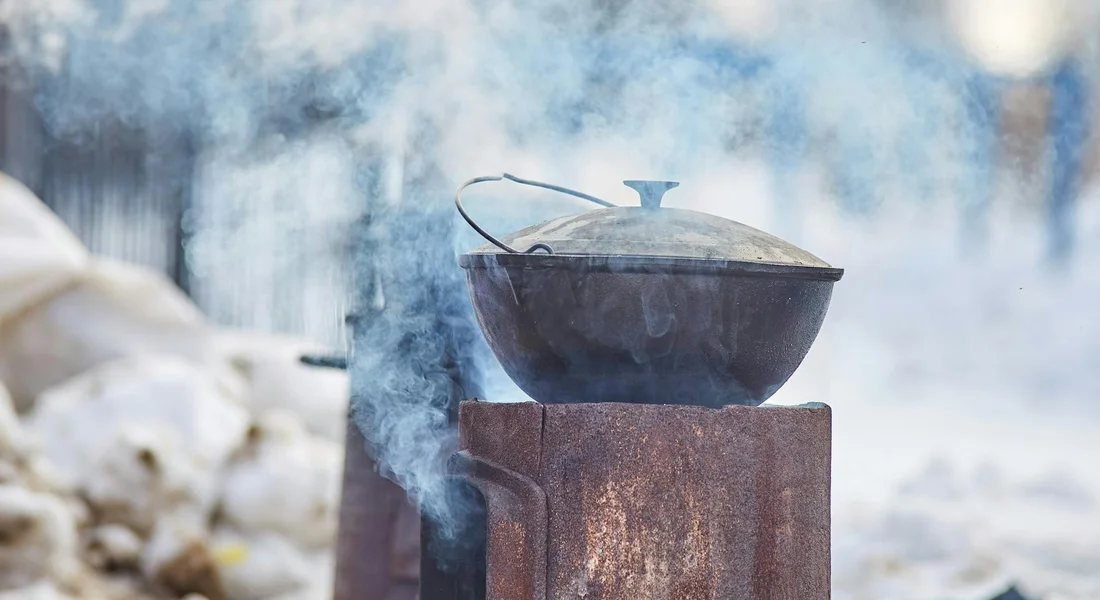
Your stovetop type and your pan’s shape change the rules. The same skillet that sizzles perfectly on gas might frustrate you on electric. The good news is a few simple techniques work for all of them.
Managing heat in cast iron is about patience and anticipation, not speed.
The Right Way to Preheat Cast Iron
Think of preheating like waking the pan up gently, not with a shock. Starting on high heat is the most common mistake. It creates a small, intensely hot spot right over the burner that can warp your pan, especially on electric coils.
Instead, follow these steps:
- Place your dry pan on a cold burner.
- Set the burner to low or medium-low.
- Let it warm for 3-5 minutes.
- Gradually increase to your target cooking temperature over another 2-5 minutes.
How do you know it’s ready? Use the water bead test. Flick a few drops of water onto the surface. If they evaporate instantly, it’s not hot enough. If they dance and skitter around in little beads, the pan is perfectly preheated for searing.
Preheating empty is not only safe, it’s required to get that restaurant-quality sear because it ensures the entire cooking surface is hot, not just the center.
Why Cast Iron Gets Too Hot (and How to Control It)
This is the “thermal lag” effect in action. Cast iron absorbs heat slowly, but it also releases it slowly. It acts like a heat battery. When you turn your burner down, the stored heat in the pan keeps cooking your food. Thermodynamics explains why: cast iron has a high thermal mass, so it stores a lot of energy, and its relatively low thermal conductivity slows heat loss.
I learned this the hard way with my favorite cornbread. I’d take it out of the oven “perfect,” only to find the edges overdone five minutes later because the skillet kept baking.
The trick is to get ahead of it. If your recipe says “cook over medium heat,” set your burner to medium to preheat, then turn it down to medium-low just before you add your oil or food. For oven use, remember that your cast iron dish will stay hotter longer than glass or ceramic. You might need to pull your bake out a few minutes early.
With cast iron, you control the heat source for the temperature you want next, not the temperature you have right now.
Fixing and Preventing Uneven Heating (Hot Spots)
A hotspot is a small area that gets much hotter than the rest of the pan. You’ll see it when one piece of food burns while others are pale. The main causes are:
- Warping (a slightly bowed pan bottom from thermal shock).
- A burner that’s too small for the pan’s base.
- Preheating too fast on high heat.
Prevention is straightforward. Always preheat slowly. Try to match your pan size to a similarly sized burner. On electric or gas stoves, give the pan a quarter turn every few minutes during preheating to even things out.
If you’re stuck with a small burner under a large skillet or a slightly warped pan, a heat diffuser is your best friend. It’s a simple tool that solves these specific problems.
Tools for Troubleshooting Heat: Diffusers and Heat Rings
You don’t need these tools for every pan on every stove. Think of them as clever fixes for specific compatibility issues between your cookware and your cooktop.
What is a Cast Iron Heat Diffuser (or Deflector)?
A heat diffuser is a heavy, flat plate, often made of cast iron, that sits between your burner and your pan. It takes intense, direct heat and spreads it out evenly across the entire bottom of your cookware.
Use one if you have:
- A glass-top stove you want to protect from scratches.
- A powerful gas flame that’s too aggressive for slow simmers.
- A slightly warped pan that rocks on a flat surface.
The trade-off is time. A diffuser adds another layer of metal that must heat up, so preheating will take longer. It’s a tool for control, not speed.
A diffuser turns a focused hot spot into a gentle, even warmth, perfect for delicate tasks or problematic stove setups.
Understanding Heat Rings and Stove Compatibility
Look at the bottom of an old Griswold or Wagner skillet. See that raised, ring-shaped ridge? That’s a heat ring. Its job was to sit snugly inside a hole on a wood or coal cookstove, holding the pan steady and close to the fire.
That historical design affects modern use:
- Gas Stoves: Heat rings work perfectly fine. The flames lick around the ring.
- Electric Coil Stoves: They can work, but the ring might make the pan sit unevenly or rock on the coils.
- Glass Smooth-Top & Induction Stoves: This is the tricky one. The ring prevents the flat cooking surface from making full contact with the pan. Heat transfer is terrible. Your pan will heat very slowly and unevenly.
For glass and induction tops, a completely flat-bottomed modern skillet is ideal. If you love a vintage pan with a heat ring, using it with a cast iron diffuser can bridge the gap, creating a flat surface for contact.
Mastering Heat for Searing, Baking, and Long Cooks
Now that you know why cast iron heats the way it does, let’s talk about how to use that to your advantage. This isn’t about recipes, it’s about understanding your tool’s behavior to get predictable, fantastic results. It’s essential to know how to use cast iron cookware properly to maximize its benefits.
Getting the Perfect Sear: Let the Pan Do the Work
The quest for a perfect crust on a steak or chop is where cast iron shines. It’s all about that heat reserve we talked about. The most common mistake I see is impatience.
You must preheat your pan slowly and thoroughly. I place my skillet over medium-low heat for a solid five minutes, then move it to medium for another two. This gives time for the heat to soak all the way through the metal, building up that valuable energy bank.
When you lay that room-temperature steak down, the pan has so much stored heat it immediately sears the surface without the temperature crashing.
You’ll hear a loud, confident sizzle, not a weak sputter. That’s the retention advantage in real time. The surface browns beautifully before the interior overcooks.
But respect the pan’s limits. Overcrowding the surface adds too much cold mass at once.
If you cover the entire cooking surface with cold food, you will overwhelm the system and end up steaming instead of searing.
Give each piece plenty of room. Cook in batches if you have to. It’s worth it.
Why Cast Iron is a Baking and Roasting Powerhouse
Your oven heats the air, and your cast iron vessel then radiates that heat steadily and evenly. Think of a Dutch oven as a miniature, self-contained brick oven. The heavy walls absorb the oven’s heat and radiate it back onto your bread dough from all sides.
This creates the steamy environment and intense, even radiant heat needed for that crackling, professional-quality crust. It’s not magic, it’s just superior heat distribution.
For pies, crisps, or casseroles, a preheated skillet on the bottom rack is your secret weapon. It provides a powerful, direct blast of bottom heat that most home ovens lack.
This acts like a baking “hearth,” ensuring your bottom crust is crisp and fully cooked, not soggy.
A quick tip for bakers: because cast iron holds heat so well, it continues to cook food even after it’s out of the oven. For delicate items like cornbread or some cookies, you might find they are done a minute or two earlier than a recipe states. Start checking for doneness just a little early.
Caring for Your Pan After High-Heat Use
After a serious sear or a long bake, your pan is extremely hot and stressed. The worst thing you can do is shock it with cold water. Let it cool down on the stovetop or a trivet until it’s just warm to the touch.
Thermal shock is a real risk and can cause hairline cracks. Once it’s cooled, clean it as you normally would.
High heat can sometimes dry out the polymerized seasoning layer, making it look a little ashy or dry.
After washing and drying, I always make a habit of wiping the entire warm pan with the tiniest, almost invisible layer of oil before storing it.
This keeps the seasoning supple and protected. Don’t worry that you’ve damaged your pan. A good seasoning can handle high heat. This type of cooking is exactly what cast iron was made for. For high-heat searing, a well-seasoned cast iron pan shines. Just give it a little TLC afterward, and it will be ready for your next kitchen victory.
Common Questions
On gas stoves, when would I actually need a cast iron heat diffuser?
Primarily for two situations: taming an aggressively powerful burner for a true low simmer, or stabilizing a slightly warped pan that rocks. It’s a tool for control, not a daily necessity. For standard preheating and cooking, your gas flame and proper technique are sufficient.
I have a vintage skillet with a heat ring. Can I use it on my glass-top stove?
You can, but not directly. The ring prevents full contact, leading to slow, uneven heating. The solution is a flat cast iron heat diffuser placed on the glass top first. This creates the necessary flat, stable contact surface to transfer heat effectively to your vintage pan.
Does a well-seasoned pan eventually transfer heat better than a new one?
No. Seasoning is a polymerized oil layer, which is an insulator. A smooth, well-maintained seasoning creates a more uniform surface for consistent food contact, improving browning. However, it does not enhance the underlying iron’s conductivity-that’s a fixed property of the metal itself.
Putting Cast Iron’s Heat to Work
The most important lesson is to respect the slow, steady nature of cast iron. Always preheat your skillet slowly over a medium-low flame, and give it plenty of time to adjust when you change the temperature on your stove. This simple habit is the key to avoiding hot spots and achieving the perfect sear. For more on how to build a surface that makes the most of this heat, read our guides on seasoning and maintenance.
Further Reading & Sources
- Heat distribution | Cast Iron Collector Forums
- r/castiron on Reddit: Heat distribution in cast iron & various pans
- Heavy Metal: the Science of Cast Iron Cooking – Cooking Issues
- r/AskCulinary on Reddit: What do people mean when they say “Cast iron stores more heat”?
A material science expert by profession, Joseph is also an avid cook. He combines his 10+ years expertise in material science and metallurgy with his passion for cast iron cookware to bring you best hands on advice. His expertise ranges from types of cast iron cookware to best seasoning tips as well as restoration of vintage cast iron utensils. Joe is here to help you solve all your cast iron cookware queries and questions.