How to Identify and Date Your Vintage Cast Iron Skillet
You’ve got an old skillet and you’re wondering who made it or when it was cast. Figuring out its history is the first step to giving it the right care and appreciating its unique character.
I’ll share the same hands-on methods I use for my own collection. This article will help you with:
- Reading the hidden clues in logos and markings on the pan.
- Using mold numbers and handle designs to narrow down the date.
- Comparing your piece to known examples from major foundries.
- Finding trustworthy sources to confirm your identification.
Where Do I Even Start Looking for Clues?
Turn your skillet upside down. The underside is your starting point, the title page of your cast iron’s story. This is where the foundry placed its most permanent identifiers. Grab a cloth to wipe off any loose dust or crud for a clearer view.
Under good light, look for these four things in the iron itself:
- Manufacturer Logos: These are the brand names, like the Griswold eagle or the Wagner Ware script.
- Size Numbers: This is the number that corresponds to the skillet’s size (e.g., 5, 8, 10). It’s often near the handle.
- Pattern Numbers: A separate series of digits, sometimes with a letter, that identified the specific mold pattern used to cast the pan.
- Foundry Marks: These can include location markings like “ERIE, PA” or “SIDNEY, O.” and other small symbols.
It’s completely normal for a single vintage skillet to have two, three, or even more different numbers stamped into it. Don’t let that confuse you. Think of them as different parts of a filing system the foundry used. If the marks are faint or filled with old seasoning, a bright flashlight held at an angle can create shadows in the impressions, making them pop. A simple magnifying glass from a pharmacy can be a huge help for tiny, worn lettering.
What Do the Logos and Markings Actually Mean?
The logos and markings are your direct link to the foundry and the era. Major American companies like Griswold and Wagner changed their markings subtly over decades, which gives us clues to a skillet’s age. To identify dates more precisely, consult a vintage cast iron guide that covers Griswold, Wagner, and other makers. In the next steps, those references will serve as implicit links to deeper resources on the brands. For instance, a Griswold skillet marked with a large “ERIE” and a cross is from the late 1800s, while one with a smaller, stylized logo and the word “ERIE, PA” is from the early 1900s.
Wagner Ware often used script lettering, and the shift from “WAGNER WARE” to “WAGNER” alone or the addition of “SIDNEY -O-” can help narrow down a production timeline. I keep a reference book on my workshop shelf just for tracking these changes.
Pattern Number vs. Catalog Number
This is a common point of confusion. The size number (like #8) tells you how big the pan is, while the pattern number (like 704) tells the foundry workers exactly which mold to use. A #8 skillet could be made from several different pattern molds over the years. The pattern number is more useful for identifying extremely specific models and variations for collectors.
The Mystery of Unmarked Pieces
Many great skillets have no visible logo at all. These are often called “unmarked” pieces. You can still identify them by other characteristics. Look at the handle shape, the style of the heat ring on the bottom, the font of the size number, and the overall weight and finish. An unmarked skillet with a distinctive, graceful handle and a small size number on the top of the handle is often an unmarked Wagner. The details become your evidence. These cues also help you identify fake vintage cast iron skillets. Spotting subtle inconsistencies in markings, weight, and finish can reveal counterfeits.
In the end, treat the marks like a car’s badge and VIN number combined-one tells you the brand and general model, while the other gives you the specific, unique identifier. Learning to read them is the first, most practical step in uncovering your cast iron’s history. A concise guide to identify vintage cast iron brands and marks will follow. It explains how to read the marks and match them to manufacturers.
How Does the Handle Help Identify the Pan?

If you’re staring at an old skillet, wondering when it was made, start by looking at its handle. The handle is like a pan’s signature, packed with clues about its age and maker. I’ve identified more pans by their handles than by any other feature, especially when dealing with vintage cast iron and antique cookware.
Handle Shape: From Teardrops to “Spinner” Handles
The classic, older handle design is often called a “teardrop” or “pointed” handle. It’s graceful, with a distinct point at the end and a pronounced dip along the top. This elegant shape is a hallmark of early 20th-century pans from foundries like Griswold and early Wagner. As manufacturing sped up post-World War II, handles became simpler and more utilitarian.
Later handles, especially from the 1960s onward, often have a much blunter end. Some are almost perfectly rectangular. Collectors sometimes call these “spinner” handles, not because the pan spins, but because the design was easier and cheaper to cast. The shift from artful to practical is right there in your hand.
Foundry Fingerprints
Each major foundry had its own handle personality. Once you know them, you can often spot a brand from across a flea market table.
- Griswold: Their classic handles are long, gracefully tapered, and have a smooth, distinct “drop” or curve. The underside usually has a reinforced rib that tapers to a fine point.
- Early Wagner: Similar to Griswold but often slightly more rounded at the end. The Wagner Ware logo periods (Sidney -O-, Sidney -O- with a dash) correlate with subtle handle variations.
- Lodge: Older Lodge handles (pre-1960s) can be quite nice, but they are typically more squared-off and stout compared to the slender Griswold style. Modern Lodge handles are thick and robust with a large, rounded hole.
The handle on my favorite Griswold No. 8 is so slender and comfortable it feels like an extension of my hand, a quality that immediately signals its pre-1950s heritage.
The Attachment Point
Look closely at where the handle meets the pan’s wall. This is a telltale sign of age and manufacturing quality. On very old and high-quality vintage pieces, the handle flows seamlessly from the wall with a smooth, blended curve. There’s no obvious seam or bump.
On later pieces, or those from foundries that used faster production methods, you might see a more abrupt, lumpy transition. Sometimes there’s even a visible “sprue” mark-a small, rough spot where the molten iron was poured into the mold. A perfectly smooth blend often means an older, more carefully made pan.
The Tale of the Pour Spouts
While you’re looking at the rim, check the spouts. There are two main styles, and they point to different eras.
A “continuous pour” spout is part of a smooth, unbroken rim. You can pour from any point around the pan’s edge. This design is generally older, found on most cast iron from the early 1900s through the 1930s and 40s. It’s a beautiful, functional design.
“Broken” or “notched” spouts are two or four distinct, sharp-lipped openings cut into the rim. This design became more common from the 1950s onward. The theory is that notched spouts made it easier for automated machinery to release the pan from its mold. While they work fine, many collectors prefer the clean look of the continuous rim.
One practical note, a continuous rim is slightly easier to wipe clean when you’re drying your pan after washing.
Is It Cast Iron or Cast Steel? How Can I Tell?
Not every heavy, black pan is cast iron. Some are cast steel, and telling them apart matters for how you care for them. The good news is you don’t need special tools, just your senses.
The most reliable test is the sound test, or the “ring.” Gently tap the cooking surface with your fingernail or a wooden spoon. Genuine cast iron will give a dense, low-pitched *thud* or *clunk*. Cast steel, being less brittle and more crystalline, will produce a higher-pitched *ping* or ring, much like a bell or a traditional steel wok. The difference is unmistakable once you’ve heard both.
Next, judge the weight and texture. For two pans of the same size:
- Cast iron is noticeably heavier and feels denser.
- Cast steel is relatively lighter (though still hefty).
- The surface of vintage cast iron often has a slight texture from the sand casting mold. Vintage cast steel can have an almost eerily smooth, machined feel.
Forget the magnet test. It’s a red herring. Both cast iron and cast steel are ferromagnetic, so a magnet will stick firmly to either one. This test tells you nothing.
Why does this identification matter? Vintage cast steel pans, like some lines from Wagner (Magnalite) or Birmingham Stove & Range, are fantastic heirlooms. Cast steel is more thermally even and less prone to cracking than cast iron, but its seasoning can behave differently and may be thinner. It requires the same gentle heating and careful drying, but knowing its material helps you understand its unique history and characteristics. If you’re weighing this against other options, a complete cast iron vs other cookware materials comparison guide can provide a clear, side-by-side overview for quick decisions.
What’s the Deal with Weight and Smoothness?
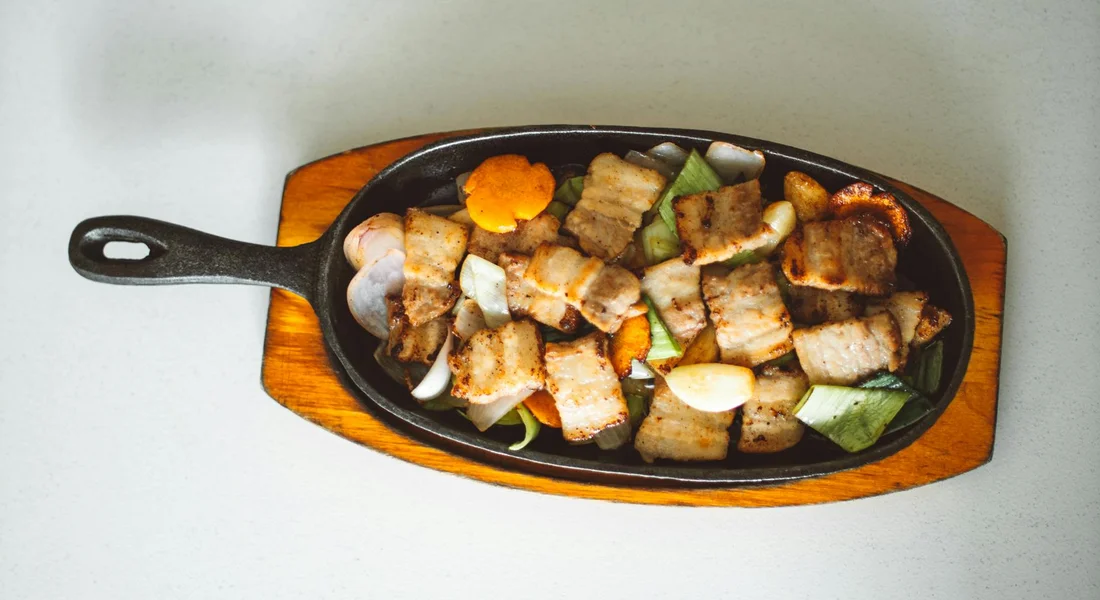
Pick up a modern cast iron skillet. It feels substantial, like a blunt instrument. Now, lift a vintage one from the 1940s in the same size. You’ll likely notice a difference—especially if you know how to identify and value vintage cast iron skillets.
Many older pans are lighter and have thinner walls. Foundries used less metal, and the iron was often of a higher, more consistent quality. This isn’t just about being easier to lift. A thinner pan heats up more evenly and responds faster to changes on your burner.
The real magic, though, is on the cooking surface. Run your fingers across the inside of a vintage Griswold or early Wagner. It often feels smooth as glass. This silky finish is the hallmark of vintage pans that were milled or ground flat at the factory after casting. This process removed the gritty texture of the sand mold, creating an ideal foundation for seasoning and a naturally non-stick surface that many cooks prefer.
Don’t rely on weight alone as your only clue. A hefty #8 skillet from one foundry might be much lighter than the same size from another. Focus on the combination of a relatively light feel and that exceptionally smooth interior.
Your Step-by-Step Identification Checklist
Think of this as detective work, not a final exam. Grab your skillet, a good light, and maybe a magnifying glass. Let’s start the investigation.
1. Start with a Clean Slate
You can’t read a book with mud on the pages. If your pan has crusty buildup or active rust, you need to clean it first. Give it a scrub with soap and water. For stubborn gunk, a brief soak in a lye-based cleaner or a session in a self-cleaning oven can help. The goal is to see bare, clean iron, cleaned after cooking for optimal seasoning.
A thorough cleaning is the most critical first step, as it reveals the hidden markings you need to see.
2. Examine the Bottom Under Bright Light
Sit at a table with a bright lamp or flashlight. Angle the light across the bottom of the pan. This side-lighting will make embossed letters and numbers cast tiny shadows, making them pop. Look at the very center (the heat ring) and the area between the handle and the outer edge.
Note everything. A size number like “8” is common. Look for a pattern number, which might look like “710 B” or “1058”. Most importantly, search for a manufacturer’s name or logo.
3. Decode the Markings You Find
This is where the puzzle comes together. Here’s a quick guide to common marks:
- Griswold: Look for the cross-shaped logo with “GRISWOLD” in an arc. Pans marked “Erie” are the oldest. The presence (or lack) of “Made in USA” helps narrow the date.
- Wagner Ware: Usually has “WAGNER WARE” in an arc, sometimes with “SIDNEY -O-” underneath. Later models say “MADE IN USA”.
- Single Number (“#8”): This is usually the pan’s size, not a date. It refers to the old stove-eye size it was designed to fit.
- Pattern Numbers: These are model numbers for the mold. They help collectors identify specific styles but aren’t usually public date codes.
No markings at all? You likely have an unmarked pan, often made by a major foundry like Wagner or Birmingham Stove & Range for a department store. The handle shape and weight become your main clues.
4. Feel the Cooking Surface & Walls
Close your eyes and run your fingertips lightly over the interior cooking surface and up the sides. Is it uniformly smooth? Does it have a fine, pebbly texture like a modern Lodge? Or are there deep, rough pits from corrosion?
The texture under your fingers tells the story of how the pan was finished at the factory and how it has been treated over its lifetime. That “smooth as glass” feel is a strong indicator of a pre-1960s machined pan.
5. Study the Handle’s Shape and Details
The handle is a signature. Look at its underside. Is there a visible hole at the end? Older pans often have a small hanging hole. Notice the shape: is it sleek and tapered, or more robust and squared-off?
Some brands have unique identifiers here. For example, early Wagner skillets have a distinctive notch or heat ring on the top of the handle. The shape and details of the handle can often help confirm a brand when other markings are faint or missing.
I’ve Found Some Clues. What Are My Next Steps?
You have a logo, a number, and notes on the handle style. Now it’s time to play detective. Think of this as matching a fingerprint. You need to compare what you see on your pan to documented examples.
Your best tools are trusted online databases and collector books. Sites like the Cast Iron Collector gallery are invaluable. Go to their identification section and use your clues to filter. Look for a maker’s mark that matches your logo, then compare the style of the numbers, the handle shape, and even the pattern of the heat ring. This is the point where you identify vintage cast iron skillets by marks, brands, and dating techniques. By recognizing maker’s marks and historical styles, you can better assess authenticity and age. Do not just look at the first result that seems close; scroll through many examples to see the variations a single foundry produced over decades.
Books like “The Book of Griswold & Wagner” or “The Red Book” are fantastic physical references. I keep my copies right in my workshop. They have clear photos and timelines that show how logos and model numbers changed year by year.
When online searches hit a wall, turn to the community. Reputable forums are full of knowledgeable collectors. The “Cast Iron Cooking, Cleaning, Collecting, & More” group on Facebook is very active. So is the “Griswold & Cast Iron Cookware” forum. When you post, clear photos are everything. Take pictures in good light of the entire cooking surface, the entire bottom, and a close-up of any markings. Tell them what you’ve already noticed. Posting clear, well-lit photos with a description of your clues is the fastest way to get a reliable answer from experienced eyes. A complete guide to buying and identifying cast iron cookware can provide a clear roadmap. Use it to interpret markings, finishes, and condition alongside community tips.
Remember, you are rarely looking for one perfect match. You are eliminating possibilities. Your pan has a raised number, but the maker you’re researching switched to incised numbers in 1920? That’s a huge clue. The handle has a certain notch that only appears on pieces from a ten-year window? You’ve just narrowed it down dramatically. This is a puzzle solved by careful comparison.
Other Options for Mysterious Pieces
Some pieces resist identification. They might be from a small, local foundry that left few records, or they could be “ghost marks” where the branding has worn completely away. This is not a failure.
I have a beautiful, slick-walled skillet in my kitchen that I’ve never been able to positively ID. I call it my “mystery guest.” An unknown pan still has immense value as a tool and a tangible piece of history; its performance is not dependent on its pedigree. You can still restore it, season it beautifully, and cook with it for decades. The story becomes the one you create with it.
For these stubborn cases, don’t overlook local resources. Show the pan to reputable antique dealers who specialize in kitchenware. They handle hundreds of pieces and may recognize a pattern. A skilled blacksmith or metalworker might also offer insights into the casting techniques, which can hint at a time period or region. Sometimes, the human eye across a table sees what a database misses.
Quick Answers
How do I know if my vintage skillet is worth restoring?
Check for two critical flaws: significant cracks or a warped, rocking bottom. Both are structural failures that make the pan unreliable for cooking. If the pan is solid but has rust or crud, it is almost always an excellent candidate for restoration with proper cleaning and re-seasoning.
My old skillet has no markings. How should I care for it?
Treat it as you would any high-quality vintage cast iron. Its unmarked status doesn’t change its fundamental care. Focus on building a strong, layered seasoning through controlled baking and gentle stovetop use after cooking. Its performance will prove its worth, regardless of brand identification.
Does a vintage skillet need different maintenance than a modern one?
Yes, primarily in heat management. Vintage iron often has thinner walls and can heat faster. Always use medium or lower heat to prevent thermal shock and seasoning damage. Its smoother surface also holds a slightly more delicate seasoning layer, so avoid harsh scouring and always dry it thoroughly immediately after washing.
Knowing Your Skillet’s Story
The best thing you can do with a dated vintage piece is to care for it in a way that honors its craftsmanship. That means seasoning it thoughtfully and cleaning it gently, preserving both its history and its cooking surface for the next generation. If you’ve just identified a new project, our guides on stripping old seasoning and building a new base layer are practical places to start.
Further Reading & Sources
- Cookware: How Can You Tell How Old a Cast Iron Skillet Is?
- How to Identify the Age of Your Old Cast Iron Skillet
- Vintage Cast-Iron: How Old is My Cast Iron Skillet? – An Off Grid Life
Joseph Gerald
A material science expert by profession, Joseph is also an avid cook. He combines his 10+ years expertise in material science and metallurgy with his passion for cast iron cookware to bring you best hands on advice. His expertise ranges from types of cast iron cookware to best seasoning tips as well as restoration of vintage cast iron utensils. Joe is here to help you solve all your cast iron cookware queries and questions.