How Do You Cook Perfect Pancakes on a Cast Iron Skillet or Griddle?
You love your cast iron, but flipping perfect pancakes without a sticky mess can feel like a mystery. Mastering this breakfast staple is less about a secret recipe and more about honoring your pan’s seasoned surface and managing heat with confidence.
Drawing from my own weekend griddle sessions, I’ll cover the care-focused techniques that make all the difference. You will learn:
- Why a proper preheat is your most important step for non-stick success.
- How to find and hold the ideal temperature for golden-brown, even cooking.
- Simple ways to protect your hard-earned seasoning during the cooking process.
- An after-breakfast cleanup routine that leaves your pan better than you found it.
The Short Answer: Yes, and Here’s Why It Works
You can absolutely cook pancakes in cast iron. More than that, a well-maintained skillet or griddle is one of the best tools for the job.
Cast iron excels at two things perfect for pancakes: holding heat steadily and spreading that heat evenly across its surface. This consistent, gentle heat is what gives you that ideal golden-brown exterior without a raw, doughy center. While a thin non-stick pan might heat up and cool down quickly as you add batter, your cast iron stays reliably hot, cooking each pancake the same way. To get the most out of your cast iron, make sure to season it properly and use the right techniques.
The main difference is in the finish. A non-stick surface offers easy release but can’t develop a good sear. Cast iron, when properly seasoned, provides just enough natural release while allowing for a slightly crisper, more textured edge on your pancake. You also get a piece of cookware that, with simple care, will last a lifetime instead of a few years. When you weigh cast iron vs non-stick for home cooking, most cooks find cast iron’s versatility and heat retention give it the edge. Non-stick still shines for quick weeknight meals and delicate foods.
Your success has nothing to do with a secret batter recipe. It comes down to two factors you control: the quality of your pan’s seasoning and how you manage the heat. Master those, and you will have perfect pancakes.
Getting Your Pan Pancake-Ready: Heat and Surface Prep
This is the most important step, and rushing it is the most common mistake. Cast iron heats slowly. Placing it over high flame from the start creates hot spots that will burn your pancakes.
Start with a clean, dry pan on a low to medium-low burner. Give it a solid 5 to 10 minutes to warm up gradually. You want the entire cooking surface-not just the center-to come up to temperature.
How to Test for the Right Temperature
You have two reliable, low-tech ways to check:
- The Water Droplet Test: Flick a few drops of water onto the surface. If they instantly sizzle and evaporate, the pan is not hot enough. If they bead up and dance around like mercury before disappearing, you are in the perfect zone.
- The Butter Sizzle Test: Add a small pat of butter or a drop of oil. It should melt quickly and foam gently, not immediately smoke and turn brown. A violent, instant sizzle means the pan is too hot.
To Oil or Not to Oil?
This depends on your pan’s personality. My most trusted, jet-black griddle doesn’t need any extra fat. Its seasoning is so good the pancakes slide right off.
If your pan’s seasoning is newer or less perfect, a microscopic amount of fat is your insurance policy. Use a paper towel to rub in less than a quarter teaspoon of a neutral oil or butter, then use a clean towel to wipe it out like you made a mistake. You should only see a faint sheen, not a pool. This ultra-thin layer prevents sticking without making your pancakes greasy. That approach ties into a broader clean, season, maintain routine for your cast iron skillet you’ll see expanded in the next steps. Sticking to this rhythm helps preserve the pan’s nonstick and longevity.
Skillet vs. Griddle: A Heat Management Note
Your tool changes the game slightly. A single skillet is simple. The heat is concentrated, so maintain that steady medium-low.
A large griddle cooking multiple pancakes acts like a heat sink. When you pour several cold batter portions onto the surface at once, the temperature will drop. You may need to nudge the heat up slightly after the first batch to compensate, then dial it back down. Learn to listen to the sizzle when the batter hits. It should be a lively, immediate sound that settles into a steady simmer.
After the Flip: How to Clean Up Without Hurting Your Seasoning
Cleaning your pan right after breakfast is the single best thing you can do for its seasoning. Warm, soft food residue comes off easily. If you wait, it hardens into a crust that’s much tougher to remove.
Here is my go-to method, the same one I use on my own Sunday pancake skillet.
- Let the pan cool on the stovetop until it’s just warm to the touch. You should be able to comfortably hold the handle.
- Pour out any excess pooled oil or grease.
- For a lightly used pan, a simple wipe with a paper towel is often enough. If your pan looks clean after a wipe, you are done and can move to drying.
- For stuck-on bits or a film of batter, add a cup of hot water to the warm pan and use a stiff nylon brush or scraper to loosen debris.
- For stubborn, baked-on edges or sticky syrup residue, use a chainmail scrubber under running warm water. The gentle, abrasive action lifts gunk without scratching your hard-earned seasoning.
- Rinse thoroughly and dry immediately.
Sugar from syrup can be tricky. It creates a sticky, varnish-like film. A quick scrub with your chainmail and hot water right after cooking prevents this syrup from bonding to your seasoning layer. Never let a sugary pan sit.
The final step is non-negotiable. Dry the pan completely with a towel, then place it back on a warm burner for a minute to evaporate any hidden moisture. While it’s still slightly warm from the burner, apply a microscopically thin coat of your preferred oil with a paper towel, then buff it all off like you’re polishing it. This protects the iron until next time. Want the full post-use cleaning flow? Our clean cast iron pan after cooking guide walks you through washing, drying, and reseasoning.
Why Do My Pancakes Stick? A Troubleshooting Guide
If your pancakes are tearing or leaving half their batter in the pan, the issue is almost always with your pan’s condition or temperature, not the recipe. Let’s fix it.
Insufficient or Uneven Preheating
Cast iron heats slower than other metals. A pan that’s not fully preheated has cold spots that batter will instantly grab onto. Your pan needs to be uniformly, moderately hot before any fat or batter touches it. I preheat mine on a medium-low setting for a full 5-7 minutes. A good test is to flick a few drops of water onto the surface. They should skitter and dance, not just sizzle and disappear.
Heat is Too High
This is a classic mistake. High heat burns your oil or butter into a sticky carbon layer before the pancake even cooks. The batter bonds to this carbon, not the seasoning. You want a steady, medium heat for perfect golden-brown pancakes without the blackened glue.
Weak or Damaged Seasoning
Your seasoning is your non-stick coating. If it’s thin, patchy, or new, it doesn’t have the slick polymerized foundation it needs. Sticking that persists after correcting your heat likely means your seasoning needs reinforcement. This isn’t a failure. It’s standard upkeep. Give the pan a good scrub, dry it, and apply 1-2 fresh oven seasoning layers. The difference will be immediate.
Residual Moisture or Improper Drying
Water is the enemy of your temporary non-stick surface. If you washed your pan and didn’t dry it thoroughly before storing it, a micro-layer of rust (flash rust) can form. This is rough and sticky. Always dry your pan on the stove burner and give it that thin protective oil coat after every wash, not just after cooking.
A note on the long game. A skillet or griddle used regularly for pancakes develops a uniquely smooth, glassy seasoning. The gentle fats and consistent, moderate heat create a flawless patina. My pancake-dedicated griddle is the slickest piece I own. It just gets better.
| Tool | Best For Pancakes Because… | Maintenance Consideration |
|---|---|---|
| Cast Iron Skillet (8-12 inch) | Perfect heat for single, thick pancakes. Great edges. | Easy to clean and season on stovetop or in oven. |
| Cast Iron Griddle (Rectangular) | Cooking multiple pancakes at once. Large, flat surface. | Requires careful seasoning of the entire large surface to prevent rust. |
| Modern Non-Stick Pan | Ultra-low fuss, but inferior browning and shorter lifespan. | Cannot be restored or re-seasoned; discard when coating fails. |
What Helped Me: A Note from My Kitchen
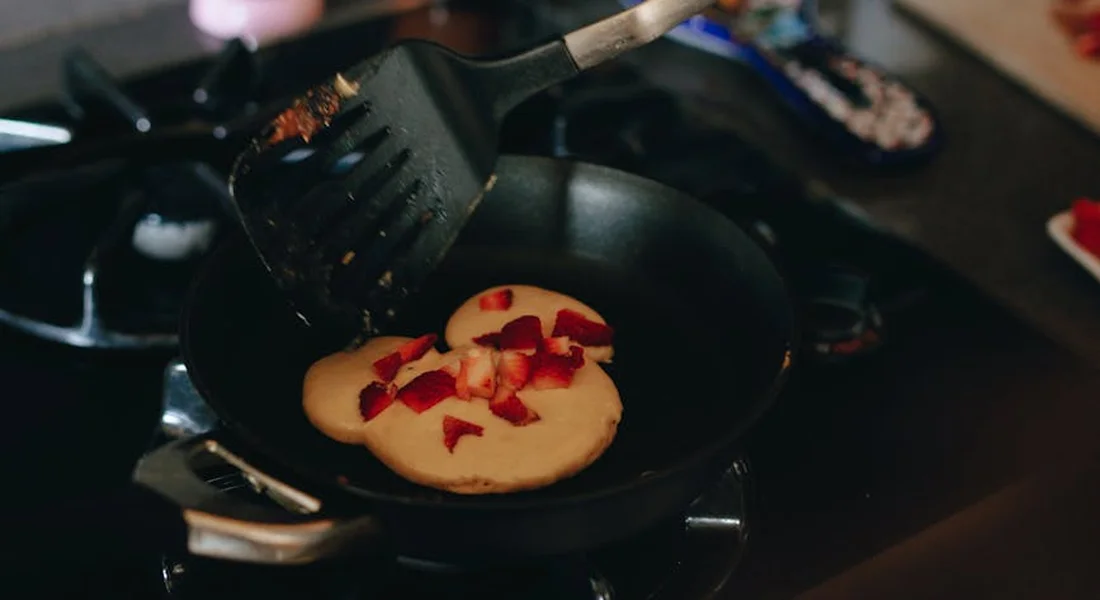
I ruined more than a few pancakes before I figured it out. My kitchen smelled like burnt batter, and my confidence was crumbling faster than those first attempts. I was using a beautiful, vintage griddle I had just restored, and I couldn’t understand why everything was sticking. I was following all the general advice: the pan was seasoned, the heat was medium, I used butter. Yet, the batter kept sticking.
My “aha” moment came when I stopped rushing. I stopped putting batter on the pan the moment I saw a wisp of smoke from the oil. Instead, I let my griddle sit on the burner for a full ten minutes on a low setting. I started testing with a single drop of water. When that drop skittered and danced across the surface instead of sizzling and boiling away, I knew the entire cooking surface was evenly, perfectly hot.
The single biggest factor for perfect pancakes on cast iron is not the batter, but the even, steady, and fully realized heat of your pan. Mastering a cast-iron griddle also means learning essential techniques. It’s all about proper preheating, even heat, and careful seasoning. That griddle, once I learned its rhythm, became my most trusted breakfast tool. Every year, with gentle use and proper care, its seasoned surface gets darker, smoother, and even more reliable. The joy isn’t just in a fluffy pancake, but in using a tool you’ve maintained that performs flawlessly for you.
When to Seek Professional Help for Your Pan
Let’s be clear: when I say “professional help” here, I’m talking about a full physical restoration for your cookware, not a cooking lesson. Most issues you encounter are solvable at home with some scrubbing, patience, and a fresh coat of seasoning, especially if you know the right techniques.
There are a few specific situations where a professional restorer with the right tools is your best option. Trying to fix these problems yourself can sometimes cause more harm than good.
- Severe, Pitted Rust: Surface rust you can scrub off with steel wool is normal. Deep, pitted rust that leaves holes or a rough, cratered texture after cleaning often requires abrasive blasting to remove completely without damaging the iron.
- A Crack or Fracture: Cast iron can crack from thermal shock or an impact. A crack is a structural failure, and while the pan may still hold food, it will heat unevenly and can eventually split completely. This cannot be fixed by seasoning.
- A Thick, Carbon-Caked Surface: Years of burnt-on grease and food can create a layer of carbon thicker than the seasoning itself. If this layer is flaking, gummy, or incredibly thick, a professional stripping tank is the safest, most thorough way to remove it and start fresh.
For the overwhelming majority of problems-like sticking, slight rust, or uneven color-the solution is proper cleaning and re-seasoning, which you can absolutely do yourself. Fixing sticky or flaky surfaces is often solved by seasoning. Minor damage can be addressed with careful cleaning and re-seasoning. Save the professional restoration for the rare cases of significant physical damage, and you’ll be able to enjoy your cast iron for decades.
Common Questions
How can I build a seasoning that prevents pancakes from sticking?
Focus on consistent upkeep: after each use, apply a whisper-thin layer of oil to a warm, dry pan and buff it completely off. This repeated process polymerizes the oil, strengthening the non-stick surface over time. A robust seasoning is your best defense against sticking.
Does a cast iron skillet need different care than a griddle for pancakes?
No-the fundamental care is the same. Both require even preheating, immediate cleaning while warm, and thorough drying followed by a light oil coat. Simply be diligent in drying the griddle’s expansive surface to guard against moisture and rust.
How do I protect my griddle’s seasoning from sticky pancake syrups?
Clean the pan immediately after cooking, while it is still warm. Use hot water and a stiff brush or chainmail scrubber to remove all sugar residue before it cools and bonds. This quick action preserves your seasoning without the need for harsh cleaning.
Keeping Your Cast Iron Pancake-Ready
The most reliable way to cook perfect pancakes is to respect your cast iron’s heat retention by preheating it slowly on a medium flame. That patient start, combined with a well-cured seasoning, builds a surface that releases pancakes cleanly and withstands years of breakfasts. Mastering this heat management is a skill that applies to all your cast iron cooking, from searing meats to baking cornbread. This approach mirrors the cook cast iron pan complete guide, which covers foods, dishes, and techniques. It ties heat, seasoning, and outcomes across recipes.
Sources and Additional Information
- Grandma’s Cast Iron Pancakes | Laura Fuentes
- Cast Iron Pancakes – Field Company
- This Giant Oven-Baked Pancake Is Crispy, Fluffy, and Impossibly Easy
- r/castiron on Reddit: My first cast iron skillet pancakes
- Baked Skillet Pancake Recipe
- Dutch Baby Recipe (Pancake)
Joseph Gerald
A material science expert by profession, Joseph is also an avid cook. He combines his 10+ years expertise in material science and metallurgy with his passion for cast iron cookware to bring you best hands on advice. His expertise ranges from types of cast iron cookware to best seasoning tips as well as restoration of vintage cast iron utensils. Joe is here to help you solve all your cast iron cookware queries and questions.